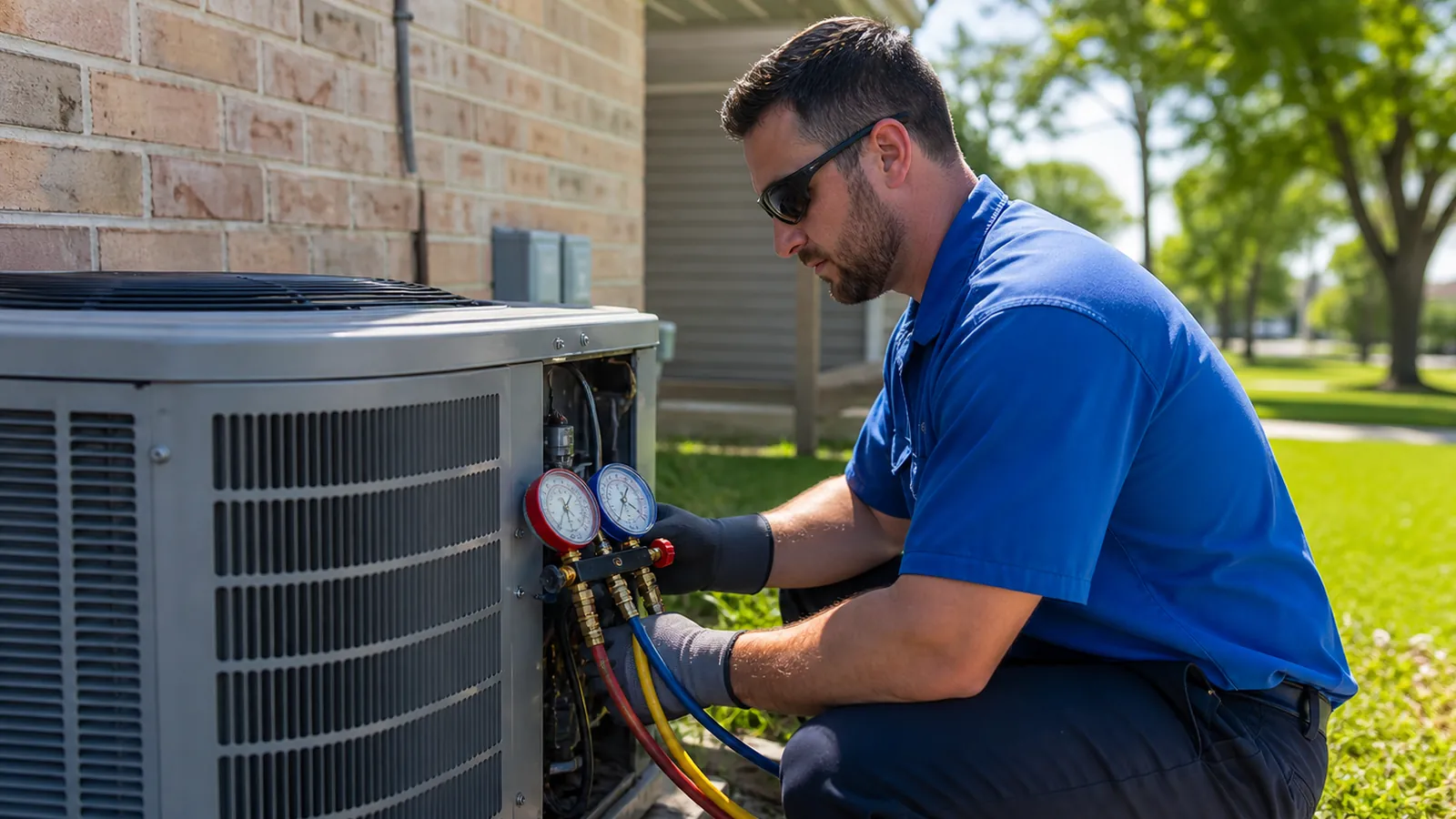
By late June, an air conditioner in Bastrop is running long cycles through hot, humid afternoons, and new sounds tend to show up. An AC unit making noise is usually pointing at a specific part: a motor, a switch, a loose panel or the refrigerant circuit.
Some sounds are normal. Others mean the system should be shut off before a small repair turns into a bigger one. Here is how to tell the difference, what you can check safely and when to call Mark Johnson & Sons Plumbing.
How an AC Makes Noise, and Which Sounds Are Normal
A central air conditioner is two machines joined by copper refrigerant lines. The outdoor condenser holds the compressor, a large fan and the electrical parts that start them. The indoor unit holds the evaporator coil and a blower that pushes air through your ducts.
Each cooling cycle starts when the thermostat sends a low-voltage signal to the contactor, a switch inside the outdoor unit. The contactor closes with a click and sends full power to the compressor and the condenser fan motor. A capacitor gives both motors the electrical boost they need to start and keep running.
Not every unit making noise has a problem. A click at start and stop, a steady compressor hum and the whoosh of the fan are normal. Trouble starts when a part wears out, loosens or loses power: a weak capacitor makes a motor hum without turning, a worn bearing squeals and a loose part rattles.
Outdoor Unit Making Noise: What Each Sound Points To
If you hear the outdoor unit making noise, stand back and listen for the pattern. Each sound points to a different part.
- Loud buzzing with the fan not spinning: the motor is getting power but cannot turn. A failing capacitor or a seized condenser fan motor is the usual cause.
- Chattering or buzzing contactor: the contactor is not closing cleanly. Pitted contacts, low control voltage or insects nesting between the contacts can cause it.
- Rattling: loose access panels, missing screws, twigs inside the cabinet or a fan blade that is bent or loose on its shaft.
- Squealing or screeching: worn bearings in the condenser fan motor.
- Clanking or banging: a serious sign that points at the compressor, such as a loose internal part or a broken mount. Shut the system off.
- Hissing or bubbling: a possible refrigerant leak in the coil or the copper lines. This needs a technician certified to handle refrigerant.
Indoor Sounds: Blower, Ductwork and the Condensate Drain
An indoor unit making noise usually traces back to the blower, the ducts or the condensate drain at the air handler or furnace cabinet.
- Squealing from the blower: worn blower motor bearings, or a worn belt on older belt-drive blowers.
- Rattling ductwork or registers: loose duct hangers, a loose register cover or a screw rattling inside a duct.
- Whistling: air squeezing through a tight space. A clogged filter, closed registers or blocked return grilles are the common causes.
- Gurgling: air and water moving through the condensate drain line. A partial clog or a dry trap in the line can cause it.
In a humid summer, the evaporator coil pulls a lot of moisture from the air. A clogged drain line backs that water up into the drain pan and trips the float switch, which shuts the system down. With an attic air handler, a backup can also mean water above a ceiling.
A Bastrop Scenario You Might Recognize
Picture a family whose AC starts buzzing loudly one hot afternoon in late June. The fan on top of the outdoor unit is not turning, but the unit keeps humming. The air at the registers feels warmer than usual, and the house slowly heats up. After a few minutes the buzzing stops, then starts again later.
That pattern points at the start circuit. The contactor is sending power, but the fan motor, the compressor or both cannot start. A weak or failed capacitor is a common reason, and a seized fan motor can cause the same symptoms. The stop-and-start pattern suggests the compressor is overheating and its internal overload is shutting it down to cool off. An outdoor unit making noise this way should be switched off at the thermostat and tested before it runs again.
What You Can Check Safely, From a Distance
Before calling about an AC unit making noise, a few checks can narrow down the cause without opening anything. Set the thermostat to off before you get close to the outdoor unit.
- Debris: leaves, grass clippings and twigs from summer storms collect on the fan grille and coil fins. Clear what you can reach from outside the cabinet, but do not reach through the grille.
- Panels: look for access panels that sit crooked or have missing screws. Note it, but do not remove any panel.
- Filter and registers: a clogged filter, closed supply registers or blocked return grilles can cause whistling. The ENERGY STAR maintenance checklist lists inspecting, cleaning or changing air filters once a month.
- Drain outlet: if your condensate line ends outside, look for water dripping while the system runs. A dry line on a humid day can point to a clog.
If the sound continues, our AC repair page explains what a repair visit covers.
Safety Notes
- Do not open the service panel on the outdoor unit. Capacitors can hold a dangerous electrical charge even after the power is off.
- Shut the system off at the thermostat right away for grinding, banging, clanking or loud electrical buzzing. Running a damaged motor or compressor can make the damage worse.
- A burning smell or visible smoke is different. Get everyone outside, then call 911 from outside. The NFPA electrical fire safety page has more on electrical hazards at home.
- If the outdoor unit keeps running after the thermostat is set to off, the contactor may be stuck closed. Turn off the AC breaker at the main panel, then call for repair.
- Do not add refrigerant or tighten refrigerant fittings yourself. Under EPA Section 608 rules, technicians who service equipment that can release refrigerant must be certified.
- If shutting the AC off leaves the house hot, treat it as urgent. The National Weather Service heat safety page has official guidance.
When to Call a Professional
Call a professional when a new sound does not go away after the filter and debris checks. Call right away for grinding, banging, clanking or loud electrical buzzing, and for hissing or bubbling near the coil or lines, since refrigerant work requires an EPA Section 608 certified technician.
An outdoor unit making noise with a fan that will not spin should not be left running, because the compressor can overheat while it struggles to start. If the system stops cooling on a hot June day, emergency AC service is the right path.
Squeals and rattles that come and go can often wait for a scheduled visit. AC maintenance includes checking electrical connections and moving parts, where a weak capacitor or a dry bearing can show up early. The ENERGY STAR heating and cooling guidance also recommends a yearly tune-up.
Frequently Asked Questions
Why is my AC unit making noise but not cooling?
A buzz with no cooling usually points to a start problem. The capacitor or contactor may be failing, or a motor may be seized. Shut the system off at the thermostat and have it tested, because running it this way can overheat the compressor.
What does gurgling from the indoor unit mean?
Gurgling usually comes from the condensate drain line. Air moving through a partly clogged line or a dry trap makes the sound. Have the line cleared before it backs up and trips the float switch.
Can a dirty filter make my AC noisy?
Yes. A clogged filter restricts airflow, which can cause whistling at the return and make the blower work harder. Check it monthly during the long cooling season.
Before You Call: Note the Sound, Then Get It Checked
Before you reach out, write down a few details. Note what the sound is like and whether it comes from the outdoor unit or inside. Note when it happens: at startup, the whole time or at shutdown. Note whether the house is still cooling. A short phone video of the sound can also help a technician narrow it down.
With an AC unit making noise in Bastrop, those notes help Mark Johnson & Sons Plumbing arrive ready to test the right parts. Reach us through our contact page or pick a time with online booking. If the unit is buzzing, banging or grinding, leave it off until it has been checked.