September in West Monroe still feels like summer, and the air conditioner is doing most of the work. Later this fall, on the first cool morning, someone will switch the thermostat to heat. Soon after, a furnace burning smell drifts out of the vents.
Most of the time, that odor is harmless dust burning off. Some smells, though, point to a real problem. This guide explains what causes each one, how to test your system before you need it, and when to shut it down and call for help.
Why a Furnace Burning Smell Happens at First Startup
In North Louisiana, the heating side of the system sits idle for most of the year. From spring through early fall, the air conditioner runs hard while the furnace waits, and fine dust settles on the parts that get hot once heating begins.
In a gas furnace, dust collects on the burners and the heat exchanger, the metal chamber that keeps the flame and its exhaust separate from the air you breathe. In a heat pump system, it settles on the electric heat strips in the air handler that supply auxiliary heat.
When the burners light or the heat strips energize for the first time, that dust scorches. The blower then pushes the odor through the ducts. A normal furnace burning smell is dry and dusty, like a toaster that needs cleaning, and it fades as the dust burns away.
On a heat pump, the strips may not engage until a colder night or a defrost cycle, so the smell can appear weeks later.
Normal Smell or Warning Sign: How to Tell the Difference
The type of odor tells you a lot about its source.
- Dusty or lightly burnt: this is the normal first-startup smell, which should fade on its own. If it lingers for days, suspect a clogged filter or a dusty blower.
- Hot plastic or electrical: this can mean an overheating blower motor, a failing capacitor, overheated wiring, or something plastic that fell near the burners. Turn the system off.
- Rotten eggs or sulfur: natural gas and propane carry an added odorant so leaks can be noticed. This smell means a possible gas leak, so leave the house right away.
- Exhaust or chemical fumes: combustion gases may be escaping through a cracked heat exchanger or a blocked vent pipe. Carbon monoxide has no color or odor, so any exhaust smell is a serious warning.
- Musty or damp: after a humid summer of cooling, moisture in the drain pan, around the evaporator coil, or in the ducts can feed mildew. The first warm air carries that odor inside.
A West Monroe Scenario You Might Recognize
Picture a family whose house stays closed up and air-conditioned from May into October. On the first chilly evening, they switch to heat. A dusty smell fills the hallway for a short time, then fades by bedtime. That pattern is the normal burn-off described above.
Now picture a different pattern. The furnace burning smell is sharper, like a hot hair dryer, and it grows stronger instead of weaker. The system starts, runs briefly, shuts off, and starts again.
That combination points toward an airflow or electrical problem. A filter clogged over the summer can starve the furnace of air until the high limit switch shuts off the burners. A failing blower motor can also overheat. Either way, the system should be turned off and checked.
How to Test Your Heat Before You Need It
The best time to find a problem is before the first cold night. Pick a mild day later in the fall and walk through these steps.
- Replace the filter: a fresh filter helps the system breathe after a dusty summer. Our filter replacement page covers sizes and types.
- Clear the area: move boxes, paint cans, gasoline, and cleaning chemicals away from the furnace, whether it sits in a closet, garage, or attic.
- Test your CO alarms: press the test button on each carbon monoxide alarm.
- Run the heat: set the thermostat a few degrees above room temperature, and open a window if the dusty smell is strong.
- Watch and listen: note whether the furnace burning smell fades, whether the burners stay lit, and whether the system cycles on and off.
If the smell fades and the house warms evenly, the system passed. Heat pump strips may stay off during a mild-day test, so have them checked at a maintenance visit.
What a Fall Maintenance Visit Checks
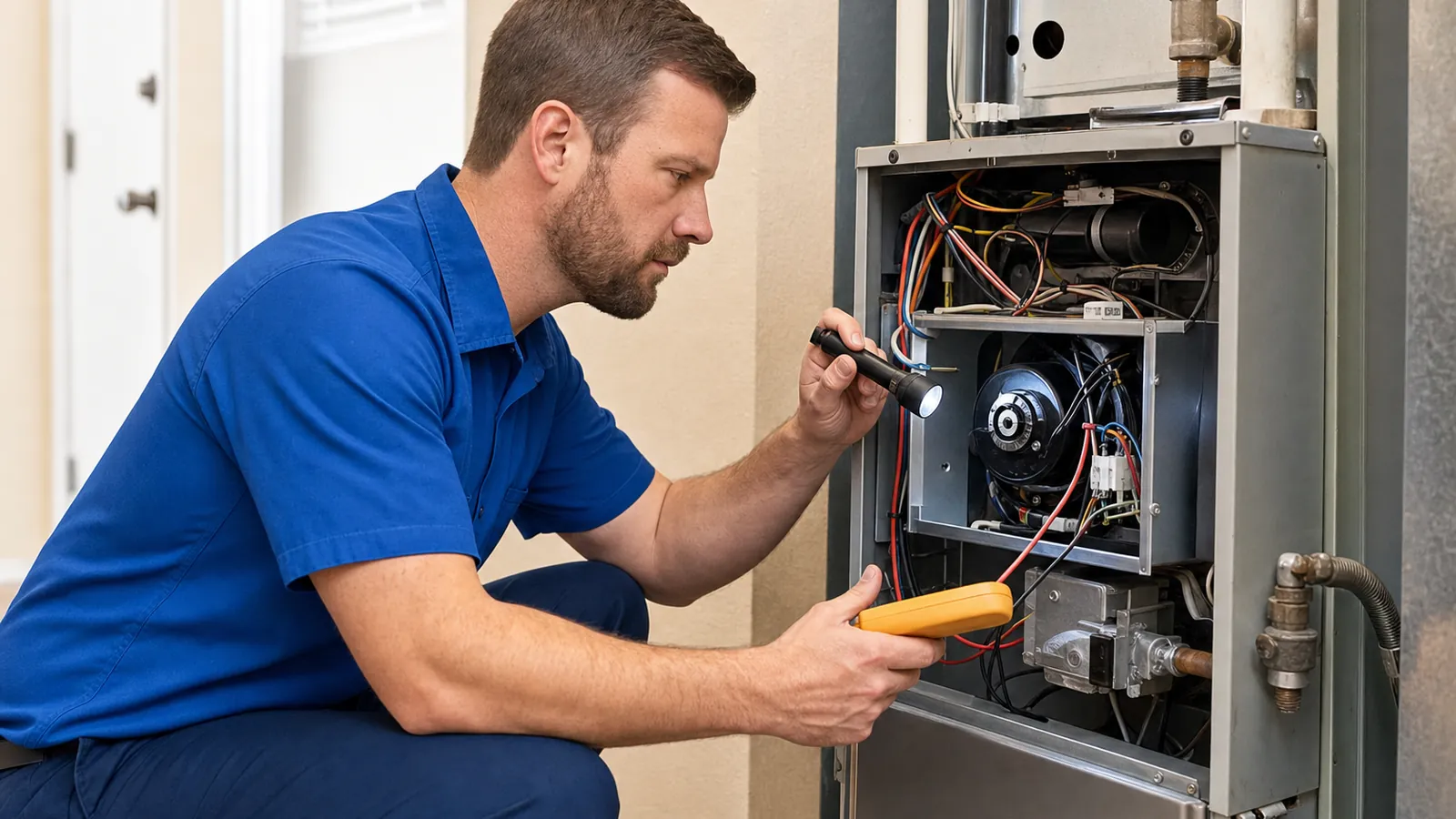
A furnace tune-up is a close look at the parts that burn fuel, move air, and keep the system safe. ENERGY STAR's heating and cooling maintenance checklist covers many of the same items. On a gas furnace, a technician typically checks these parts.
- Burners: cleaned and inspected so the flame burns evenly.
- Flame sensor: cleaned, because a dirty sensor can shut the burners off moments after they light.
- Heat exchanger: inspected for cracks, rust, or signs of overheating.
- Venting: the flue pipe checked for blockages, loose joints, or corrosion.
- Safety controls: the limit switch, rollout switches, and pressure switch tested so they can shut the furnace down when something goes wrong.
- Blower and wiring: the motor, capacitor, and electrical connections checked for heat damage.
Mark Johnson & Sons Plumbing offers furnace maintenance for homes in West Monroe, Monroe, and nearby towns. A tune-up cannot prevent every breakdown, but it can catch worn parts before the heating season begins.
Safety Notes
- Gas smell: if you smell rotten eggs, leave the house immediately. Do not flip switches, adjust the thermostat, or make calls inside. Once outside and away from the house, call your gas utility's emergency line or 911.
- CO alarm: if a carbon monoxide alarm sounds, get everyone into fresh air and call 911 from outside. Headaches, dizziness, or nausea that ease after leaving home can be signs of exposure, so describe any symptoms to responders or a doctor and follow their advice.
- Alarm placement: the NFPA carbon monoxide guidance calls for CO alarms outside each sleeping area and on every level of the home.
- Electrical or plastic smell: turn the system off at the thermostat and at the furnace's service switch, and leave it off until it is inspected.
- Storage and upkeep: keep anything that can burn away from the furnace. The NFPA heating safety page recommends having heating equipment cleaned and inspected by a qualified professional every year.
When to Call a Professional
A dusty odor that fades is not a reason to call. Contact a professional when any of these show up.
- Lingering odor: the furnace burning smell lasts beyond the first few heating cycles, even with a clean filter.
- Electrical signs: you notice a hot plastic, electrical, or metallic smell, or you see smoke.
- Short cycling: the furnace starts and stops over and over instead of running steadily.
- Flame changes: burner flames look yellow, lazy, or uneven instead of crisp and blue.
- Soot or moisture: soot appears near the furnace or vent pipe, or a musty odor returns every time the heat runs.
A gas smell or a CO alarm comes first: leave, then call from outside. Electrical smells, overheating, and cycling problems belong with furnace repair, and the system should stay off until it is checked.
Frequently Asked Questions
How long should a furnace burning smell last?
A normal dust burn-off smell should fade within the first few heating cycles. If it lingers for days or gets stronger, turn the system off and have it inspected.
Why does my furnace smell musty instead of burnt?
A musty smell usually traces back to moisture. After months of cooling in a humid climate, water can collect in the condensate drain pan, around the evaporator coil, or in leaky ducts. Warm air then picks up the odor. A technician can find the moisture source instead of masking the smell.
Can a dirty filter cause a burning smell?
Yes. A clogged filter restricts airflow, so the heat exchanger runs hotter than it should. Dust trapped on the filter and blower can also scorch. A fresh filter is the first thing to check when a furnace burning smell will not go away.
Plan Your First Heat Cycle Now
The first cold night of the fall is a poor time to discover a problem. Test the heat on a mild day and write down what you smell, how long it lasts, and whether the system cycles normally. Note when the filter was last changed, too. Those details help a technician narrow down the cause quickly.
If the smell does not fade, or anything on the warning list shows up, Mark Johnson & Sons Plumbing can help. Reach us through our contact page or book a time online for furnace maintenance or repair in West Monroe. For a gas smell or a sounding CO alarm, leave the house first and call for emergency help from outside.