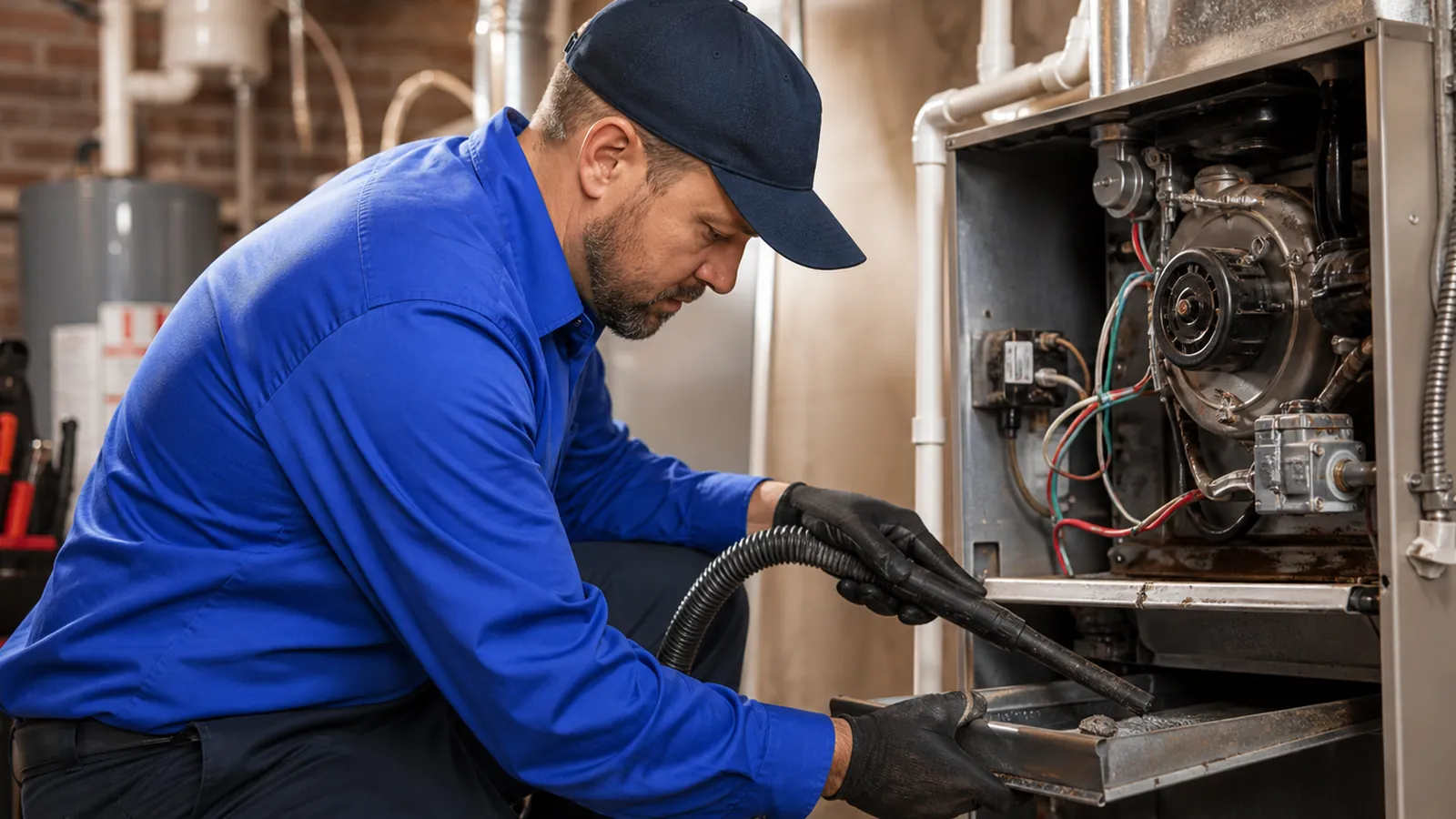
January is usually the coldest stretch of the year in Shreveport, and a cold snap can keep the heat running for hours. That is often when a furnace making noise finally gets noticed. A soft whoosh at ignition and steady airflow are normal, but a boom, squeal, rattle or grinding sound is not. Each one points to a different part of the system, and a few mean you should shut the furnace off today.
How a Gas Furnace Runs, and Where the Noise Starts
A gas furnace runs through the same sequence each time the thermostat calls for heat. First, a draft inducer motor pulls air through the heat exchanger and out the flue, and a pressure switch confirms that draft. Next, a hot surface igniter glows or a spark igniter snaps, and the gas valve opens to the burners. A flame sensor proves the burners lit. Then the blower pushes house air across the warm heat exchanger and into the ducts.
Because each step involves moving parts, burning gas or metal changing temperature, the timing of a sound matters. A furnace making noise only in the first few seconds points to ignition or the inducer. A sound that lasts the whole cycle points to the blower or the ductwork, while a sound after shutdown usually comes from metal cooling.
Loud Bangs or Booms at Startup: Delayed Ignition
A single loud bang or boom right as the burners light usually means delayed ignition, and it is the sound to take most seriously. The gas valve opens, but the burners do not light right away, so gas builds up in the burner area for a moment and then lights all at once with a small burst.
The common causes are dirty or rusted burners, a weak igniter, or burner ports partly blocked by dust. When the flame cannot carry cleanly from one burner to the next, the last burners light late. The ENERGY STAR maintenance checklist notes that a dirty burner or cracked heat exchanger causes improper burner operation.
Repeated ignition bursts put stress on the heat exchanger and the flue connections. If you hear a boom, turn the furnace off at the thermostat and schedule furnace repair before you use it again.
Squealing, Screeching and Grinding From the Blower
When a furnace making noise sounds like a high squeal or screech, the blower is the usual source. On most newer furnaces, the blower wheel mounts directly on the motor shaft, and worn or dry motor bearings squeal as the motor spins up. Older furnaces often use a belt-drive blower instead, where a worn, glazed or loose belt slips on its pulley and screeches at startup.
If a whine starts before the burners light, the draft inducer motor is the more likely source.
Grinding or scraping is more serious. It usually means the blower wheel is rubbing its housing, or a motor bearing has failed and the shaft has started to wobble. Shut the system off and have it checked before the motor seizes.
Rattles, Clicks, Pops and Hums
- Rattling: often a loose access panel, cabinet screw or duct joint. In the blower, it can mean a loose wheel or debris. It can also come from a cracked heat exchanger, which only a technician can confirm, so do not try to diagnose it at home.
- Clicking with no flame: a click or two at startup is normal relay and gas valve noise. Repeated clicking with no ignition points to the igniter or the ignition control board. Burners that light and then shut off within seconds often have a dirty flame sensor.
- Popping or ticking in the ducts: sheet metal expands as warm air moves through it and shrinks as it cools, so light ticking is usually normal. A loud pop when the blower starts is often a duct panel flexing, worth a look during a ductwork inspection.
- Humming: a low hum from the transformer is normal. A loud hum with a still blower can mean a failing motor or run capacitor.
A Shreveport Scenario You Might Recognize
Picture a family in Shreveport during a January cold snap. Their furnace has run well for years, but lately there is a dull boom from the hall closet a few seconds after the heat kicks on. After that, it runs quietly and the house warms normally. The boom seems louder on the coldest mornings, after the system has sat idle overnight.
That pattern points to delayed ignition, not the blower or the ducts. A furnace making noise only at startup, from the cabinet itself, is a strong clue that dirty burners or a weak igniter are involved. The right move is to switch the furnace off at the thermostat and book a visit, so a technician can clean the burners, test the ignition sequence and inspect the heat exchanger.
What You Can Check Safely
A few simple checks narrow the cause. Set the thermostat to off before you touch anything near the furnace.
- Check the filter: a clogged filter starves the blower of air and can make it whistle. The ENERGY STAR checklist suggests inspecting it once a month.
- Check the panel screws: make sure the access panels sit flat and the screws are snug. Do not run the furnace with the blower door off.
- Note the timing: only at startup, through the whole cycle, or after shutdown.
- Note the location: loudest at the furnace cabinet, in the ducts, or at one register.
Write those details down, because a furnace making noise is easier to diagnose when the technician knows when and where it happens. Do not open the burner compartment, relight anything, or reach into the blower.
Safety Notes
- Gas smell: if you smell gas, get everyone outside, then call 911 or the gas utility's emergency line from outside.
- Carbon monoxide alarm: if a CO alarm sounds, get everyone outside, then call 911 from outside. The NFPA carbon monoxide safety page explains alarm placement and testing.
- Why CO matters: carbon monoxide is colorless and practically odorless, and the EPA lists leaking furnaces among its indoor sources.
- Booms and grinding: turn the furnace off at the thermostat and leave it off until it has been checked.
- Clear space: keep boxes, paint and cleaning products away from the furnace cabinet.
- Yearly inspection: the NFPA heating safety page recommends having heating equipment cleaned and inspected every year by a qualified professional.
When to Call a Professional
Call right away for any boom at startup, any grinding or scraping, or a furnace making noise that gets louder day by day. Those point to ignition trouble or failing moving parts, and running the system can make the damage worse.
Schedule a visit soon for a squeal that keeps coming back, repeated clicking without heat, or a rattle you cannot trace to a loose panel. Burner cleaning, heat exchanger inspection and motor work belong with a trained technician, since they involve gas, combustion and line voltage. The team at Mark Johnson & Sons Plumbing can check the burners, ignition and blower in one visit.
Quieter sounds, like light duct ticking, can usually wait for routine furnace maintenance, ideally next fall before the first time you switch to heat.
Frequently Asked Questions
Is it normal for a furnace to make noise when it turns on?
Some sound is normal: the inducer motor starting, a click from the gas valve, a soft whoosh as the burners light, and air moving through the vents. A bang, screech or grinding sound is not part of a normal startup.
Why does my furnace bang when it starts?
A bang at the cabinet usually means delayed ignition, where gas builds up before it lights. A pop in the ducts when the blower starts is more often sheet metal flexing.
Can a dirty filter cause a furnace making noise?
Yes. A clogged filter restricts airflow, which can make the blower whistle or strain. Checking it is the easiest first step.
Should I keep running a furnace that squeals?
A mild squeal is a warning rather than an emergency, but bearings and belts wear faster once they start making noise, so book a repair soon.
Your Next Step: Note the Sound, Then Book a Visit
Before you reach out, write down what the sound is, when in the cycle it happens, and where in the house it is loudest. Add the age of the furnace if you know it, whether the filter was changed recently, and whether the noise is new this winter. Those notes help a technician go straight to the right part.
Mark Johnson & Sons Plumbing handles furnace repair and maintenance for homes in Shreveport and Bossier City. If a furnace making noise has you worried, reach us through our contact page or choose a time with online booking. If the noise is a boom or a grinding sound, leave the furnace off until the visit.