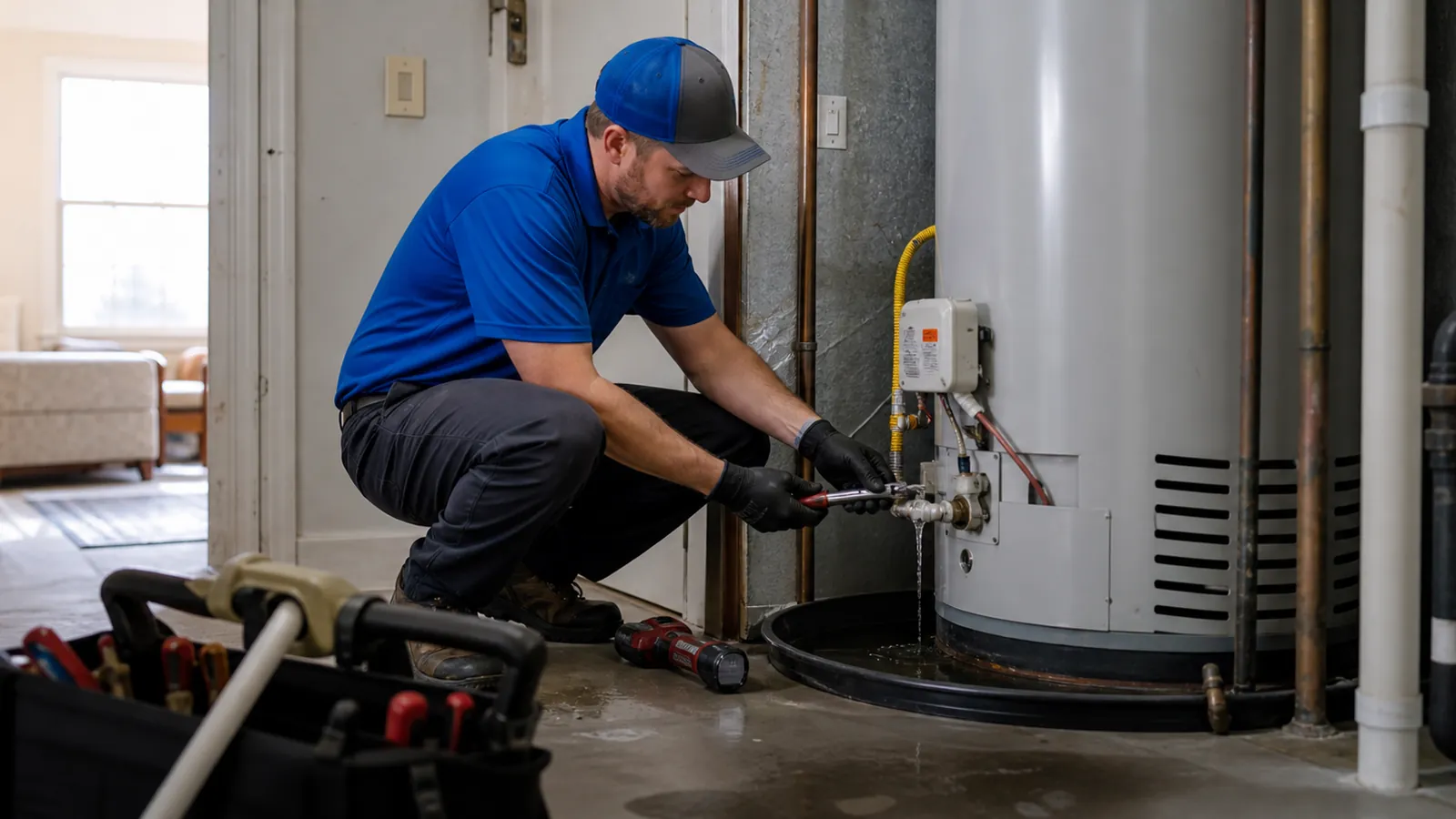
A cold shower on a January morning is often the first clue. When a pilot light keeps going out, the heater is usually telling you something specific. A safety part is not sensing flame, the flame is too weak, or air is moving where it should not. Here is how a standing pilot works, why it drops out in West Monroe homes, and what you can check safely.
How a Pilot Light Stays Lit and Why It Shuts Off
Many gas tank water heaters use a standing pilot, a small flame that burns around the clock and lights the main burner when the tank calls for heat. The pilot also heats a safety sensor that proves to the gas control valve that a flame is present.
On many heaters, that sensor is a thermocouple, a thin metal rod with its tip in the pilot flame. Heat makes it produce a tiny signal, measured in millivolts, that holds open a small magnet valve inside the gas control. Some newer units use a thermopile, a bundle of thermocouples that makes enough power to run the control itself.
When the flame weakens or the signal fades, the magnet lets go and the valve shuts off gas to the pilot and burner. That safety feature keeps unburned gas from flowing with no flame to light it. Units with electronic ignition, including gas tankless heaters, have no standing pilot to lose.
Why the Pilot Light Keeps Going Out: Common Causes
When the pilot light keeps going out, the cause usually falls into one of a few groups.
- Worn thermocouple: the tip degrades after years in the flame, so its signal gets weaker.
- Loose connection: if the thermocouple fitting at the gas control is loose or corroded, the signal can fall short.
- Dirty pilot orifice: dust or debris can partly block the tiny opening, leaving a weak, yellow flame that lifts away from the sensor.
- Drafts: a gust from a garage door, a blocked combustion air intake, or wind pushing down the vent can snuff the flame.
- Flammable vapor sensor: newer units are flammable vapor ignition resistant, or FVIR. Fumes from gasoline, paint or solvents nearby can trip the sensor and shut the heater down.
- Clogged intake screen: lint on the air intake screen at the base can starve the flame, and on some models it can trip the shutdown.
- Failing gas control valve: the magnet inside can weaken with age and stop holding, even with a healthy thermocouple.
A West Monroe Scenario You Might Recognize
Picture a family whose gas water heater sits in a closet off the garage. The pilot lights easily when someone follows the label. It stays lit while the pilot button is held down, then goes out a minute or two after letting go. The flame looks blue and steady, and nothing stored nearby gives off fumes.
When a pilot light keeps going out this soon after release, the flame sensing circuit is the first place to look. The flame is fine, but the gas control is not getting or holding the signal it needs. Likely suspects are a worn thermocouple, a tip that has shifted out of the flame, a loose connection, or a weak magnet in the gas control. A technician would test the signal with a meter before choosing a part.
What the Flame and the Timing Tell You
Two details narrow the cause more than anything else: what the flame looks like and when it goes out.
A healthy pilot flame is mostly blue and wraps steadily around the thermocouple tip. A small, lazy or yellow flame suggests a dirty orifice or too little combustion air. A flame that flickers or bends away from the sensor suggests a draft.
If the pilot light keeps going out right after you release the button, suspect the sensor or gas control. If it runs for days and then fails, look for an outside trigger. That could be a windy day, an open garage door, a dryer running nearby, or a fresh can of paint thinner on the shelf.
Many newer gas controls also have a status light that blinks in a pattern. The label or owner's manual explains what each pattern means.
What You Can Check Safely
Some checks are fine for a homeowner, as long as you stay within the instructions printed on the heater.
- Relight by the label only: follow the lighting steps on the unit's label. Most newer heaters have a push-button igniter and a sealed burner chamber, so do not open it or reach in with a flame.
- Look for drafts: check for an open garage door, a missing access cover, or a fan blowing toward the heater.
- Move stored chemicals: keep gasoline, paint, thinners, solvents and aerosol cans well away from the heater, ideally out of that room.
- Clean the intake screen if allowed: if the manual says the base screen is homeowner cleanable, clean it the way the manual describes, with the gas control off.
If the pilot light keeps going out after one careful relight, stop there. Bradford White's water heater FAQ says a pilot should only have to be lit once, during installation, and that nuisance outages call for a plumbing professional.
Safety Notes
- Gas smell: if you smell gas at any point, get everyone outside, then call 911 or your gas utility's emergency line from outside.
- Carbon monoxide alarm: if a CO alarm sounds, get everyone outside, then call 911 from outside.
- CO alarms: the NFPA carbon monoxide safety page explains that CO forms when fuels such as natural gas burn incompletely. It recommends alarms outside each sleeping area and on every level.
- Scorching or soot: dark marks around the burner door can point to flame rollout or a venting problem. Do not relight the heater.
- No makeshift lighting: do not use a match on a unit with a built-in igniter, and do not remove sealed covers.
- Tripped FVIR sensor: on many models, this lockout is not meant for a homeowner reset.
- Venting: the EPA's carbon monoxide guidance lists back-drafting from gas water heaters as an indoor CO source.
When to Call a Professional
When the pilot light keeps going out after one relight attempt, the next steps involve meters and gas fittings. That is work for a trained technician. Call as well if you see scorching or soot at the burner door, if the FVIR sensor has tripped, or if the status light shows a fault you cannot clear.
A technician can test thermocouple or thermopile output, clean the pilot assembly, check the vent draft, and confirm whether the gas control is holding. Mark Johnson & Sons Plumbing handles this through our water heater repair and replacement service. On an older heater that also leaks or rusts at the base, replacement may make more sense.
If you smell gas near the heater's supply line, get everyone outside and call from outside first. Once the home is cleared, a corroded connector can be handled through our gas line repair service.
Frequently Asked Questions
Why does my pilot go out when I let go of the button?
Holding the button feeds gas to the pilot by hand. Once you release it, the thermocouple or thermopile has to keep the valve open. If the pilot dies right away, that sensor, its connection or the gas control is not doing its job.
Is it safe to keep relighting the pilot?
One relight by the label is reasonable. Repeated attempts will not fix the cause and can hide a venting or vapor problem. Leave it off and schedule a check.
Do tankless water heaters have a pilot light?
A gas tankless water heater has no standing pilot. It uses electronic ignition and fires the burner only while hot water flows.
Can wind blow out a water heater pilot?
It can. Strong wind can push air down the vent, and a gust through an open garage door can reach a nearby heater. If outages line up with windy days, have the vent cap and draft checked.
Next Steps When Your Pilot Won't Stay Lit
Before you reach out, jot down a few details. Note when the pilot goes out: right after lighting, after a few hours, or after several days. Note the flame color, any blinking pattern on the status light, and anything stored near the heater. Snap a photo of the label with the model and serial number, since that tells a technician which parts apply.
If your pilot light keeps going out in West Monroe, Mark Johnson & Sons Plumbing can find the reason instead of just relighting it. Send those details through our contact page or book a time online. If you smell gas at any point, get everyone outside first, then call 911 or your gas utility's emergency line from outside.