When your shower temperature fluctuates in a Bossier City home, the trouble usually starts with a pressure change elsewhere in the house. Someone flushes a toilet or the washer starts to fill, and the showerhead jumps hot or cold for a few seconds. The valve behind the handle is supposed to absorb that change. Here is how it works, why it stops keeping up, and what you can check safely.
How One Valve Mixes Hot and Cold
A shower has two supplies, hot and cold, that meet inside a single valve body behind the handle. The temperature you feel depends on the ratio between those two streams.
Both supplies are shared with the rest of the house. A toilet refills from the cold line, so a flush briefly lowers the cold-side pressure at the shower. Less cold water reaches the mix, the ratio tips toward hot, and the spray turns hot for a moment.
The reverse happens too. A dishwasher or washing machine that pulls hot water lowers the hot-side pressure, and the shower runs cold. A healthy valve corrects these swings before you notice them. When the shower temperature fluctuates every time another fixture runs, that correction has slowed down or stopped.
Pressure-Balancing and Thermostatic Valves
Most single-handle showers use a pressure-balancing valve. Inside the cartridge, a small spool sits between the hot and cold inlets. When the cold-side pressure drops, the spool shifts and throttles the hot side to match. The ratio stays close to where you set it.
A thermostatic valve works differently. It senses the temperature of the mixed water itself and adjusts the blend to hold a set point. They often have separate volume and temperature controls, and they hold steadier when several fixtures run at once.
Section 412.3 of the 2024 International Plumbing Code requires one of these valve types for individual showers. The valves must meet standards such as ASSE 1016 from ASSE International. The code also calls for a way to cap the hottest setting at 120°F, and a valve rated for the flow of the installed showerhead.
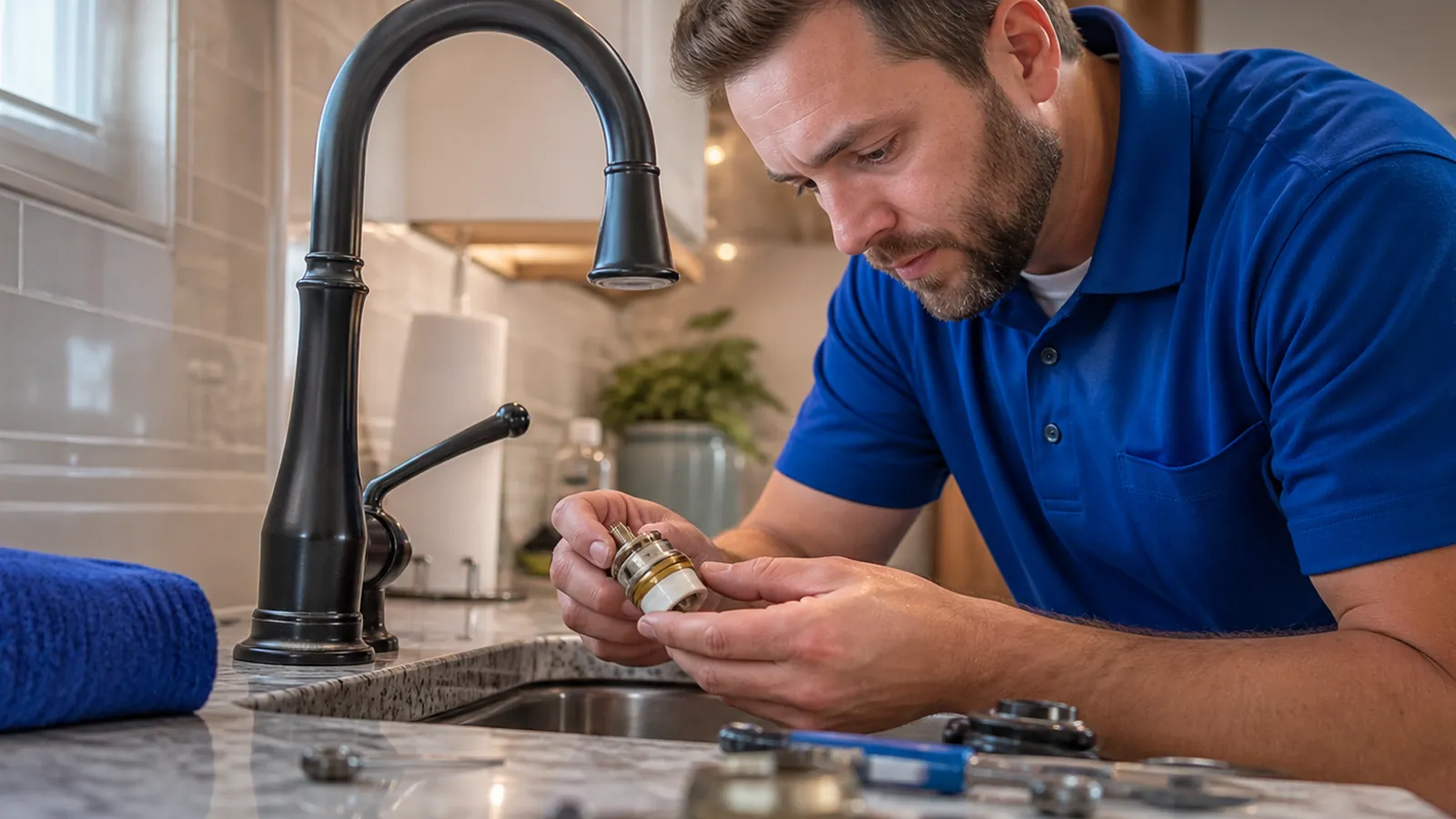
Cartridges are brand-specific, so a replacement must match the valve maker and model.
Why the Shower Temperature Fluctuates Anyway
When the shower temperature fluctuates even with a balancing valve in the wall, one of these causes is usually behind it.
- Worn cartridge or spool: seals and moving parts wear over the years. The spool reacts late, and the correction arrives after the swing.
- Mineral scale: water carrying dissolved calcium and magnesium leaves scale on moving parts. The U.S. Geological Survey explains how heated hard water forms these deposits. A scaled spool sticks.
- Debris in the inlet screens: grit from a water main repair or plumbing work can lodge in the cartridge's inlet screens and choke one side.
- An older two-handle valve: separate hot and cold handles usually have no balancing parts, so every flush reaches the shower.
- Water heater trouble: a failing thermostat or gas control can make the hot supply itself uneven. If the swings show up at every fixture, water heater service is the likely next step.
- Tankless minimum flow: a tankless water heater fires only above a minimum flow rate. A low-flow head or a mostly cold setting can drop below it and cause cold bursts.
- Colder winter inlet water: incoming water is colder in January than in summer. Each shower pulls a bigger share of hot water, so a tank can run short sooner.
A Bossier City Scenario You Might Recognize
Picture a family in a Bossier City home with a tankless water heater. After they switch to a new low-flow showerhead, the water turns cold for a few seconds every minute or so, then warms back up. It happens most when the handle sits only a little toward hot.
The kitchen sink runs steady hot water, and flushing a toilet makes little difference. That pattern points away from the shower valve and toward the heater's minimum flow. With a restrictive head and a mostly cold setting, the hot side may draw too little water to keep the burner lit.
The unit shuts down, the shower goes cold, and flow builds until the heater fires again. A plumber would compare the heater's minimum flow rating with the showerhead's flow, then check the unit's inlet filter and the cartridge screens.
What You Can Check Safely
A few observations narrow the cause before anyone pulls a cartridge or opens a wall.
- Note the trigger: write down whether the shower temperature fluctuates when a toilet flushes, the washer fills or the dishwasher starts, and whether it turns hot or cold.
- Test a sink during a flush: run warm water at a bathroom sink while someone flushes. Sinks have no balancing parts, so a small shift there is normal. If the shower swings just as hard, its balancing parts are failing.
- Check every fixture: if hot water fades or pulses at sinks and tubs too, the trouble is upstream, often at the water heater.
- Clean the showerhead: a scale-clogged head cuts flow, which can push a tankless unit near its minimum. The EPA's WaterSense showerhead page notes that labeled heads use no more than 2.0 gallons per minute.
If a sink faucet also drips or sticks, mention faucet repair when you schedule.
Safety Notes
- Do not turn up the water heater: raising the setting to fix a cool shower makes every hot swing more dangerous. Keep it at or below the setting printed on its label. The CPSC's tap water scald guide recommends 120°F.
- Leave the limit stop in place: the rotational limit stop under the handle caps how far it turns toward hot. Do not remove it or turn it past the maker's setting.
- Shut off the water first: a cartridge sits under full line pressure. Close the valve's built-in stops or the main before you pull one.
- Treat a scalding valve as urgent: stop using that shower until it has been checked and repaired.
- Gas smell near the heater: if you smell gas near a gas water heater, get everyone outside, then call 911 or the gas utility's emergency line from outside.
When to Call a Professional
Call a plumber when the shower temperature fluctuates enough to scald, when the swings are getting worse, or when a new cartridge did not fix it. Call as well if the shower has an older two-handle valve and you want balancing protection. Adding it means replacing the valve body inside the wall and reconnecting the supply lines.
Water heater work belongs with a professional too, especially on gas units. That includes a thermostat or gas control that seems to drift, and a tankless unit that keeps dropping out at low flow. Mark Johnson & Sons Plumbing can match the cartridge to your valve brand, clear the inlet screens and set the limit stop to the maker's instructions. A plumber can also confirm whether the problem sits in the valve, the heater or the supply.
Frequently Asked Questions
Why does my shower turn hot when the toilet flushes?
A refilling toilet draws only cold water. The cold side loses pressure for a moment, and the mix tips toward hot. A working balancing valve throttles the hot side to match, but a worn or scaled one reacts late.
Why does a tankless heater send cold bursts to the shower?
The heater may be dropping below its minimum flow and shutting off the burner. A low-flow showerhead, a clogged head or a handle set mostly toward cold makes that more likely.
Can I replace a shower cartridge myself?
Some homeowners do. It takes the exact cartridge for your valve brand, the water shut off, and the limit stop reset afterward. A scaled cartridge can be hard to remove without damaging the valve body.
Is it normal if my shower temperature fluctuates more in winter?
Colder incoming water means each shower pulls a larger share from the heater. A tank can run short sooner, and a tankless unit has to work harder at the same flow. Swings that felt minor in summer can become noticeable.
Next Steps for a Steady Shower in Bossier City
Before you call, spend a day noting when the shower temperature fluctuates. Write down which fixture triggers the swing, whether the shower turns hot or cold, and whether the sinks change too. Note the valve brand if a logo appears on the handle or trim plate, and whether you have a tank or tankless heater.
Those details help a plumber decide whether to start with the valve, the heater or the supply. Mark Johnson & Sons Plumbing serves homes in Bossier City and Shreveport. Reach out through our contact page or book a time online, and share what you noticed. A technician from Mark Johnson & Sons Plumbing can identify your valve, check the cartridge and inlet screens, and look at the water heater if the pattern points there.