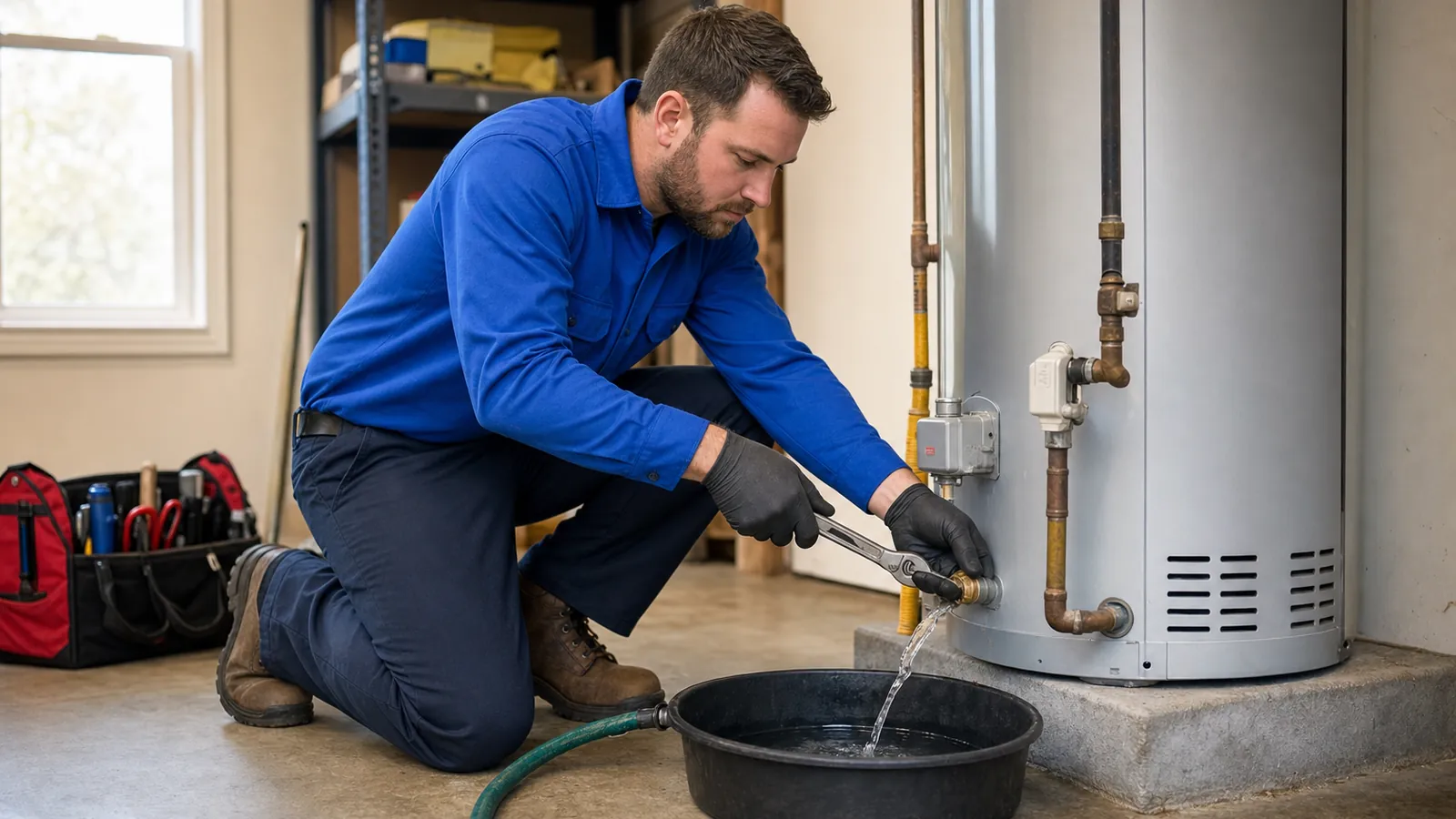
Smelly hot water with a rotten egg odor is unpleasant, but it is rarely a mystery. When only the hot side smells in a Monroe home, the odor usually forms inside the water heater itself. Here is how that happens, how to tell a tank problem from a supply problem, what you can check safely, and which fixes a plumber may use.
How Smelly Hot Water Forms Inside the Tank
The rotten egg odor is hydrogen sulfide gas. Making it takes sulfate in the water, bacteria that feed on sulfate, and a supply of hydrogen. A tank water heater can provide all three at once.
Most tanks contain a sacrificial anode rod that corrodes on purpose so the steel tank does not. Many anodes are magnesium, and the Minnesota Department of Health explains that a magnesium anode can supply electrons that help turn sulfate into hydrogen sulfide.
Sulfate-reducing bacteria do the rest. A. O. Smith's technical bulletin on smelly water says these bacteria need sulfur, hydrogen from reactions inside the tank, and water with little dissolved oxygen. A warm, closed tank fits that description, and the gas leaves with the first hot water you draw.
Hot Side Only, or Hot and Cold? What the Pattern Tells You
The most useful clue is which taps smell. Penn State Extension notes that when the odor shows up only in the hot water, reactions inside the water heater are the likely source. That is the classic case of smelly hot water, and the fix lives at the tank.
If both hot and cold taps smell, the problem likely starts upstream. Sulfur is arriving with the water supply, or bacteria are living in the well, pressure tank, piping or treatment equipment. Hydrogen sulfide occurs naturally in some groundwater, so this pattern shows up more often on private wells.
Then the question becomes water treatment, not heater repair. The EPA's private well guidance notes that private well owners are responsible for the safety of their own drinking water. A water test comes before any treatment choice.
What Makes It Worse: Quiet Tanks, Summer Travel and Softeners
Still water gives bacteria time to work. A. O. Smith lists water softeners, well water and long periods without water movement as factors that raise the odds of this odor. Early summer brings plenty of that last one.
Think about a week away on a June trip, a guest bath nobody uses, or a vacation home that sits empty between visits. The tank water stays warm and still while the anode keeps reacting. The first hot water drawn afterward can carry a strong odor that fades as fresh water moves through.
Softeners matter too. Bradford White's anode rod guide notes that softened water is more conductive, which can speed up how fast an anode is consumed. The anode material deserves a second look when smelly hot water starts after a softener goes in.
A Monroe Scenario You Might Recognize
Picture a family in Monroe just back from a week of summer travel. The first hot shower smells strongly of rotten eggs, but the cold water at every sink smells fine. After a few minutes of running hot water the odor fades, then it returns the next morning.
The family added a water softener last year, and the heater is several years old. Nothing smells in the air around the heater, the range or any other gas appliance.
That pattern points at the tank, not the supply. A hot-only odor that gets worse after the water sits, in a home with softened water, fits the anode and bacteria reaction closely. It suggests flushing and disinfecting the heater and checking the anode material, rather than adding whole-house treatment.
What You Can Check Safely
A few simple observations narrow down the source of smelly hot water before anyone opens the tank.
- Smell each tap after the water sits: the Minnesota Department of Health suggests letting the water sit unused for a few hours, then smelling hot and cold at each faucet.
- Compare hot and cold at one sink: a hot-only odor points to the heater, while odor on both sides points to the supply.
- Note your water source: city water and a private well have different likely causes.
- Look for stains: Penn State Extension notes that hydrogen sulfide can corrode metal and leave black or yellow stains on fixtures.
- Read the heater label: write down the brand, the age and the fuel type.
Skip draining the tank, pulling the anode or changing the thermostat. Those jobs involve line pressure, very hot water and gas or electrical controls.
Fixes a Technician May Use
For smelly hot water that comes from the tank, a plumber may combine several steps.
- Flushing the tank: draining and flushing clears sediment and some of the bacteria living in it.
- Disinfecting the heater: chlorinating the tank and hot water lines by the manufacturer's written procedure can kill the bacteria, as Bradford White's hydrogen sulfide bulletin describes.
- Changing the anode: an aluminum, aluminum-zinc or powered anode can reduce the odor while still protecting the tank.
- Treating the supply: when both taps smell, filtration or oxidation treats the sulfur before it reaches the heater.
Our water heater service page covers tank flushes and repairs, including anode rods. For sulfur in the supply, start with whole-home water filtration, and have any water softener reviewed at the same visit.
Do not pull the anode and leave it out. Bradford White states that removing it completely voids its tank warranty and shortens tank life.
Safety Notes
- Odor near a gas appliance: if the rotten egg smell is in the air near a gas water heater, furnace, range or dryer rather than in the water, treat it as a possible gas leak. Get everyone outside, then call 911 or the gas utility's emergency line from outside.
- Tank temperature: do not raise the heater setting on your own to kill bacteria. Hotter stored water raises the scald risk.
- The anode rod: leave it in place, because the steel tank depends on it for corrosion protection.
- Pressure and heat: the tank holds very hot water under line pressure, so opening any fitting on it is a job for a plumber.
- Well pits: the Minnesota Department of Health advises that only well professionals using proper precautions should enter a well pit where hydrogen sulfide may collect.
When to Call a Professional
Call a plumber when smelly hot water keeps coming back, returns after every quiet stretch, or when you would rather not drain, open or chlorinate a pressurized tank. Anode changes can be harder than they look, since some rods seize in place and some heaters have little room overhead.
Call as well if both hot and cold taps smell. That usually points to water testing and treatment, and on a private well it may involve the well and pressure tank. Black stains, corroded fixtures or slime in toilet tanks suggest the problem reaches beyond the heater.
If the heater is old, leaking or showing rust in the hot water, the odor may be one more sign it is near the end of its service life.
Frequently Asked Questions
Does smelly hot water mean my water heater is failing?
Not by itself. The odor comes from a reaction between bacteria, sulfate and the anode rod, which can happen in a tank that is otherwise sound. If it also leaks or rusts, those symptoms matter more than the smell.
Why does my hot water smell but my cold water doesn't?
The reaction happens inside the heater. Warm, still water, a magnesium anode and sulfate-reducing bacteria create hydrogen sulfide in the tank, and cold water does not pass through it.
Can a water softener cause a rotten egg smell?
It can play a part. Bradford White notes that softened water speeds up how fast an anode is consumed, and A. O. Smith lists softeners among the factors that raise the odds of odor. A different anode material may be recommended in a softened home.
Your Next Step for Smelly Hot Water in Monroe
Start by noting the pattern. Which taps smell: hot, cold or both? Does the odor return after the water sits overnight or after a trip? Is the home on city water or a private well, and is there a softener or filter? Write down the heater's brand, age and fuel type.
Then contact Mark Johnson & Sons Plumbing through our contact page, or book a time online. With those notes in hand, a technician from Mark Johnson & Sons Plumbing can confirm whether the source is the tank or the supply and explain the options.
If the rotten egg odor is in the air near a gas appliance instead of in the water, do not wait for an appointment. Get everyone outside, then call 911 or the gas utility's emergency line from outside.