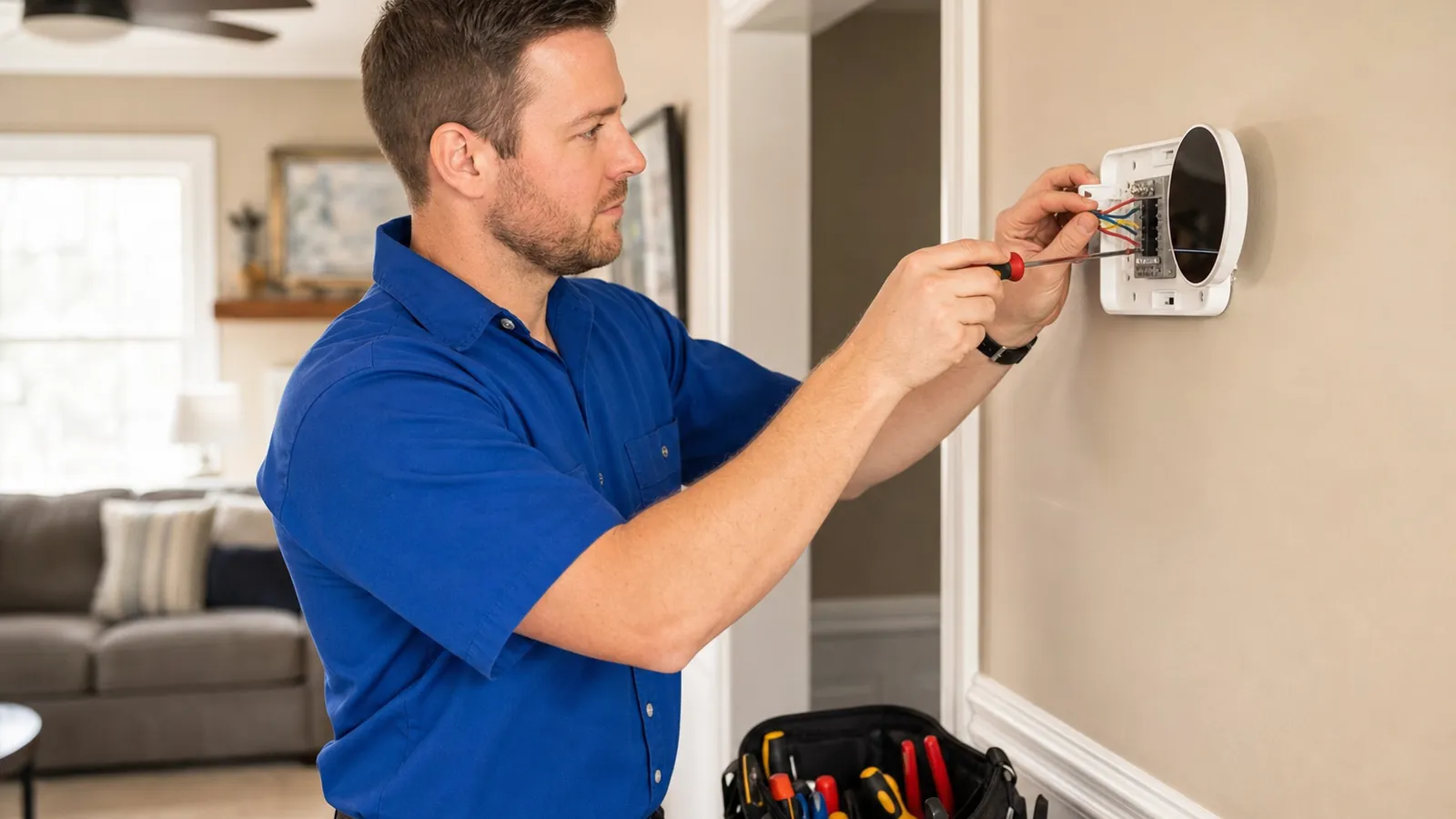
A thermostat not working in a Monroe home usually shows up one of two ways: a blank screen, or a reading the house clearly does not match. The first job is to separate a thermostat fault from a system fault. The thermostat is only a switch that asks your equipment for heat, cooling or fan. When that request never arrives, the problem can sit anywhere along the path.
How a Thermostat Actually Controls Your System
Most central heating and cooling systems run their controls on a low-voltage circuit. A small transformer inside the furnace or air handler steps household power down and sends it up a cable to the thermostat.
The R wire brings that power in. To call for heat, the thermostat connects R to the W wire. For cooling it connects R to Y, which starts the outdoor unit, and the G wire runs the indoor blower. The C wire, or common, completes the circuit so the thermostat itself stays powered.
Several safety devices can cut that control power on purpose. The blower door switch shuts the unit off when its panel is open. A small fuse on the control board protects against shorts. A condensate float switch opens the circuit when drain water backs up. That is why a thermostat not working is often a symptom rather than the actual failure.
Why the Thermostat Screen Goes Blank
A blank display is the clearest sign of a thermostat not working, and it means the thermostat has lost power. The usual causes:
- Dead batteries: many thermostats run the display on batteries even when wired to the system.
- Tripped breaker or service switch: the furnace or air handler has its own breaker, and most furnaces have a nearby switch that looks like a light switch. If either is off, a system-powered thermostat goes dark.
- Blower door switch: the blower panel presses a small switch when seated. A panel put back crooked after a filter change leaves the unit without power.
- Blown control board fuse: a nicked thermostat wire or a short during a thermostat swap can blow the small fuse on the board.
- Condensate float switch: the evaporator coil pulls water from humid air all summer, and after a long humid season algae and sludge can clog the condensate drain line. When water rises, the float switch cuts control power, which blanks the thermostat on many systems.
- No C-wire on a smart thermostat: without steady power, some Wi-Fi models borrow it through the heating or cooling wires, which can cause dead screens, reboots or odd cycling.
Why the Thermostat Shows the Wrong Temperature
A thermostat only knows the air right around it. If that spot runs warmer or cooler than the rest of the house, the system chases the wrong number.
- Supply register nearby: conditioned air blowing across the thermostat tells it the room is comfortable, so the system shuts off early.
- Sunny window: afternoon sun pushes the reading up and keeps the AC running.
- Kitchen or exterior wall: cooking heat, electronics or an outside wall that soaks up summer heat all skew the reading. An unsealed wire hole behind the thermostat can pull wall-cavity air across the sensor.
- Schedule or hold settings: a program or vacation hold may be changing the setpoint without you noticing. ENERGY STAR explains that many smart thermostats learn your preferences, build their own schedules and use geofencing.
- Calibration: set a thermometer beside the thermostat for a while and compare. Many digital models include a temperature offset setting.
Heat Pump Homes: Check the Setup Before You Switch to Heat
Heat pumps and gas furnaces are both common in Monroe, and heat pumps add two settings a thermostat has to get right. The first is the reversing valve, which flips refrigerant flow. Honeywell Home explains that its thermostats energize that valve through an O terminal in cooling or a B terminal in heating, and that heat pump makers do not all use the same one.
If that O/B setting were backwards, the system would have blown warm air all summer, so normal cooling is a good sign. The second setting, auxiliary heat, is different. Backup heat strips only get tested once you switch to heat. The first time you do that this fall, watch whether the house warms steadily and whether "aux" shows constantly or never. Our thermostat repair and installation service covers this setup.
A Monroe Scenario You Might Recognize
Picture a family whose smart thermostat goes blank on a muggy late-summer afternoon. The AC has run hard since spring. The batteries are fresh, the breaker is on, and the indoor fan is silent while the house keeps getting warmer. Under the air handler, the drain pan holds standing water, and the float switch on the pan has tripped.
It looks like a thermostat not working, but the pattern points away from the thermostat. The condensate line is likely clogged after months of heavy cooling, and the float switch cut control power to prevent an overflow. A new thermostat would change nothing. The line needs clearing, and the float switch needs testing before cooling resumes.
What You Can Check Safely
Work through these before assuming the thermostat failed.
- Batteries: replace them even if no low-battery warning has appeared.
- Mode and setpoint: confirm the mode is Cool or Heat, not Off or Fan, and that the setpoint is past room temperature. Clear any hold.
- Breaker and service switch: check the HVAC breakers and the switch near the unit. You can reset a tripped breaker once. If it trips again, leave it off and call a professional.
- Air filter: a clogged filter chokes airflow. ENERGY STAR recommends checking it monthly during heavy-use seasons, since a dirty filter slows airflow.
- Blower door: make sure the panel is seated against its switch.
- Float switch: look for water in the drain pan or a float that has visibly lifted, and note what you see.
Safety Notes
- Turn off power at the service switch or breaker before removing any equipment panel.
- Do not jump wires at the control board to force the system on. A short can blow the fuse, damage the transformer or run equipment with a safety switch bypassed.
- Do not tape down a door switch or bypass a float switch. The float switch keeps a full drain pan from spilling onto the ceiling below an attic unit.
- If you smell gas, leave the house without touching light switches or the thermostat, then call the gas utility's emergency line or 911 from outside.
- If a carbon monoxide alarm sounds, get everyone outside and call 911 from there. The EPA explains why this odorless gas is a serious indoor hazard.
When to Call a Professional
Call when the basic checks do not bring the screen back, or when a thermostat not working keeps returning after resets. A blown board fuse points to a short in the wiring, so a new fuse alone usually blows again. A float switch that keeps tripping means the drain needs attention.
Also call when the thermostat looks fine but the equipment does not respond. If it calls for cooling and the indoor fan runs while the outdoor unit stays silent, the fault is in the system, and AC repair is the right visit. If it calls for heat and the furnace starts, then shuts down, a flame sensor or ignition problem is more likely, and furnace repair covers that.
Mark Johnson & Sons Plumbing works on both sides of this question: the thermostat and the equipment behind it.
Frequently Asked Questions
Why is my thermostat not working after I changed the batteries?
The thermostat may rely on system power that has been cut. Check the breaker, the furnace service switch, the blower door and the float switch. A blown control board fuse is another likely cause.
Can a clogged AC drain line shut off my thermostat?
Yes. Many float switches interrupt the control circuit when the condensate line backs up. Depending on the wiring, the thermostat goes blank or stops calling for cooling.
Do I need a C-wire for a smart thermostat?
Many Wi-Fi models need constant power, and a C-wire is the cleanest way to supply it. Some manufacturers offer an adapter for homes without one. A smart thermostat not working right after installation often traces back to power.
Your Next Step
When you find your thermostat not working, write down what you see before you reach out. Note whether the screen is blank or reading wrong, whether the indoor fan or outdoor unit runs, and whether the drain pan holds water. Add the thermostat brand and model, and whether you have a heat pump or a gas furnace.
Then reach Mark Johnson & Sons Plumbing through our contact page or book a time online. A technician will trace the control circuit from the wall to the equipment and tell you where the fix belongs.