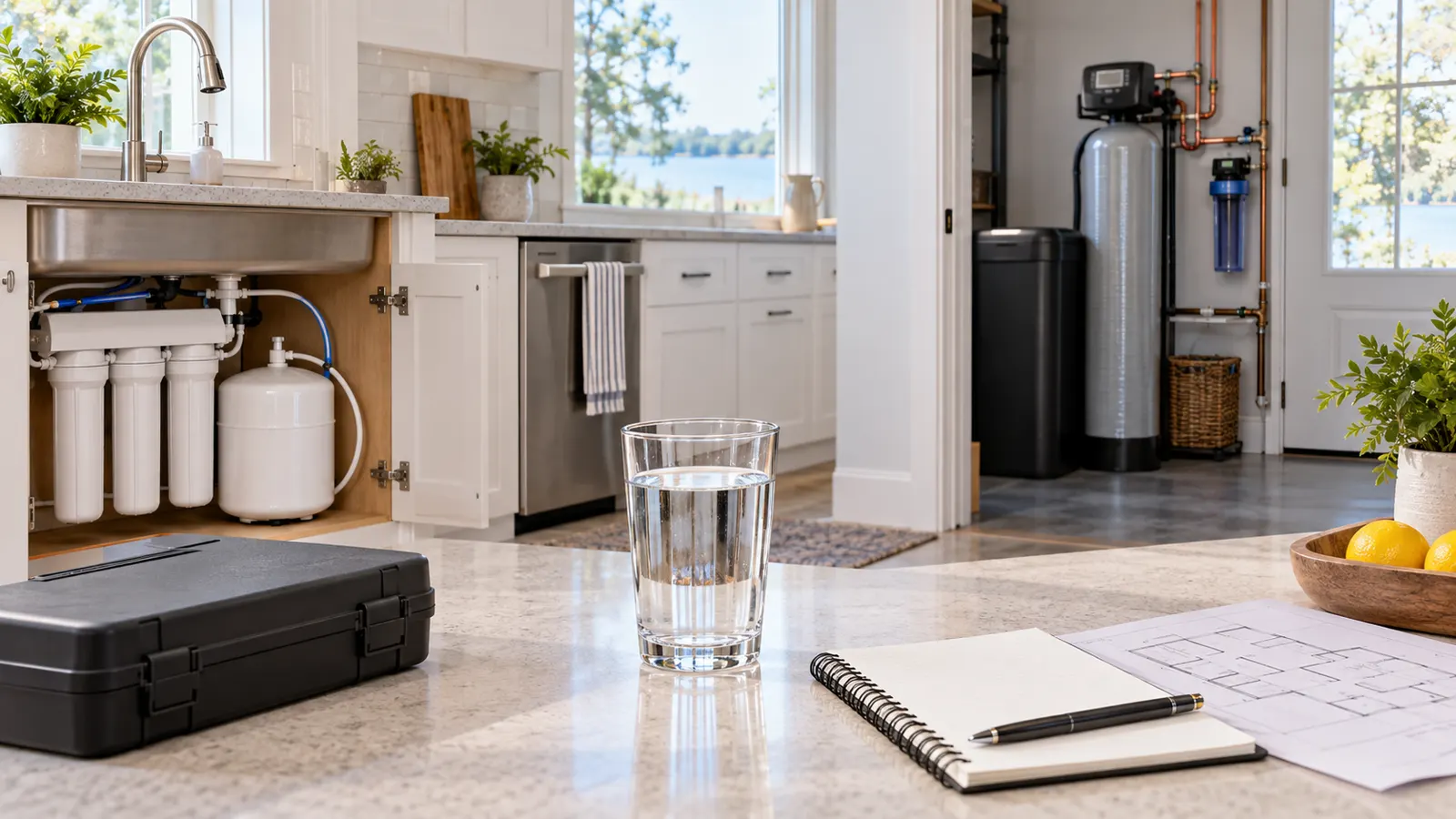
Planning water filtration in West Monroe, LA starts with a record of what the household has noticed and what it wants to change. A useful first conversation is not a guess about equipment. It is a description of the water, the fixtures involved, the household pattern, and the space where a system might be evaluated.
This guide explains what to document before a property visit. It does not identify what is in the water, recommend a filtration method, or select equipment for a home. Those decisions require property-specific information and, where water quality is in question, appropriate testing interpreted by a qualified professional.
Start with the reason for the conversation
Write one sentence describing why you are considering filtration. Keep it tied to something observable or to a household preference. Examples include a recurring taste or odor, visible residue on fixtures, sediment noticed in a container, concern about water used for cooking, or a desire to understand what treatment options exist.
Avoid turning that observation into a diagnosis. A taste does not identify a substance. Residue does not establish its cause. The first sentence should tell the plumber what started the conversation without deciding what the assessment is supposed to find.
If several concerns exist, list them separately and rank which one matters most. A system planned around a vague statement such as "better water" has no clear goal. A written list gives the property visit a defined starting point.
Record where the concern appears
Location helps separate a whole-home pattern from something limited to one fixture, appliance, or line. Walk through the home and note where you notice the concern and where you do not.
- Kitchen cold water, hot water, or both
- Bathroom sinks, tubs, and showers
- Water used by the refrigerator or an existing dispenser
- Laundry, dishwasher, or other water-using appliances
- Outdoor faucets or irrigation, if relevant to the question
- Fixtures where the water seems normal
Negative information matters. If a concern appears at one sink and nowhere else, say that. If it appears throughout the house, say that too. Do not take anything apart or disconnect a line to investigate. The location record is enough for the first conversation.
Write down timing and repeat patterns
Note when you first noticed the condition and whether it is constant or intermittent. If it comes and goes, write down what seems to happen before it appears, while keeping the wording descriptive rather than causal.
Useful details include whether the observation is stronger after water has sat overnight, after heavy household use, only with hot water, or at a particular fixture. Note any recent change to the property, such as plumbing work, an appliance replacement, a long vacancy, or a change to an existing treatment device.
A short dated log is better than a long memory-based summary. Three entries over two weeks can show whether the pattern is stable, changing, or tied to one part of the home. That is information a professional can use without treating it as a test result.
Gather any water information you already have
Bring documents that already exist. These may include a utility water-quality report, records from prior plumbing work, information from an existing filter, or results from a test that was performed through an appropriate source. Keep the original document rather than copying only the number that caught your attention.
Do not use a general article to interpret a result for your household. A report has a date, a source, a sampling method, and limits. Those details matter. If new testing is recommended, ask who should collect the sample, what the test is intended to answer, and how the result will affect the proposed scope.
Mark Johnson & Sons Plumbing lists water filtration service among its plumbing work in North Louisiana. Use the service page as context for the conversation, not as a substitute for information from your property.
Describe the household demand
A filtration plan has to fit how the home uses water. Write down the number of people in the household, the fixtures used most often, and any periods when demand is concentrated. Morning showers, laundry days, cooking, and simultaneous appliance use all help describe the real pattern.
Also note whether the goal applies to all water entering the home or only to water used at one location. Do not decide the equipment configuration yourself. The point is to give the plumber the demand and the goal so the available approaches can be explained in property-specific terms.
If anyone in the household has a medical concern related to water, keep that discussion with the appropriate health professional. A plumbing article and a plumber cannot diagnose a health condition or establish what water treatment a person medically needs.
Map the existing equipment and available space
From a normal standing position, write down what equipment is already present. Note any visible filter housings, softening equipment, dispensers, refrigerator filters, or treatment devices left by a previous owner. Copy visible model information without opening a housing or moving equipment.
Take wide photos of the area only if it is dry and safely accessible. Include the route to the space, nearby walls, the floor, and anything stored around it. A close photo of a label can help, but never remove a cover or handle a connection to get one.
Access can decide whether an otherwise reasonable plan is practical. Note stairs, narrow doors, low clearances, stored belongings, and whether the area is finished. Also identify where someone can park and how equipment would reach the work area.
Ask how maintenance will be handled
Every filtration approach has an ongoing side, and it should be discussed before anything is selected. Ask what routine service the proposed system requires, what the homeowner is expected to do, what belongs to a professional visit, and how maintenance is documented.
Ask how replacement components are identified and where the instructions will be kept. Ask what signs should prompt a service call rather than a routine maintenance step. The answers should be tied to the actual equipment eventually proposed, not to a general schedule copied from a different system.
Leave installation, pressure changes, bypass arrangements, and any modification to the plumbing to qualified professionals. This guide is for preparing information, not for changing an existing setup.
Questions to bring to the West Monroe visit
- Which of my observations can be evaluated during the property visit?
- Does any question require water testing before a scope can be defined?
- Is the concern limited to one fixture or present across the home?
- What information about household demand affects the options?
- Where could equipment be placed, and what access would it require?
- What maintenance would the proposed approach require?
- Which findings and recommendations will I receive in writing?
These questions keep the conversation on evidence, scope, and upkeep. They also make it easier to understand what remains unknown after the first visit and what information would settle it.
Bring one clear record to the conversation
Put the reason for the call, fixture locations, timing, existing documents, household demand, equipment notes, and access details on one page. Attach only the records and photos that add context. A short organized packet is easier to use than a folder of unrelated screenshots.
Mark Johnson & Sons Plumbing serves West Monroe and other North Louisiana communities. When your notes are ready, review the water filtration service information, then contact Mark Johnson & Sons Plumbing to request a property-specific conversation.