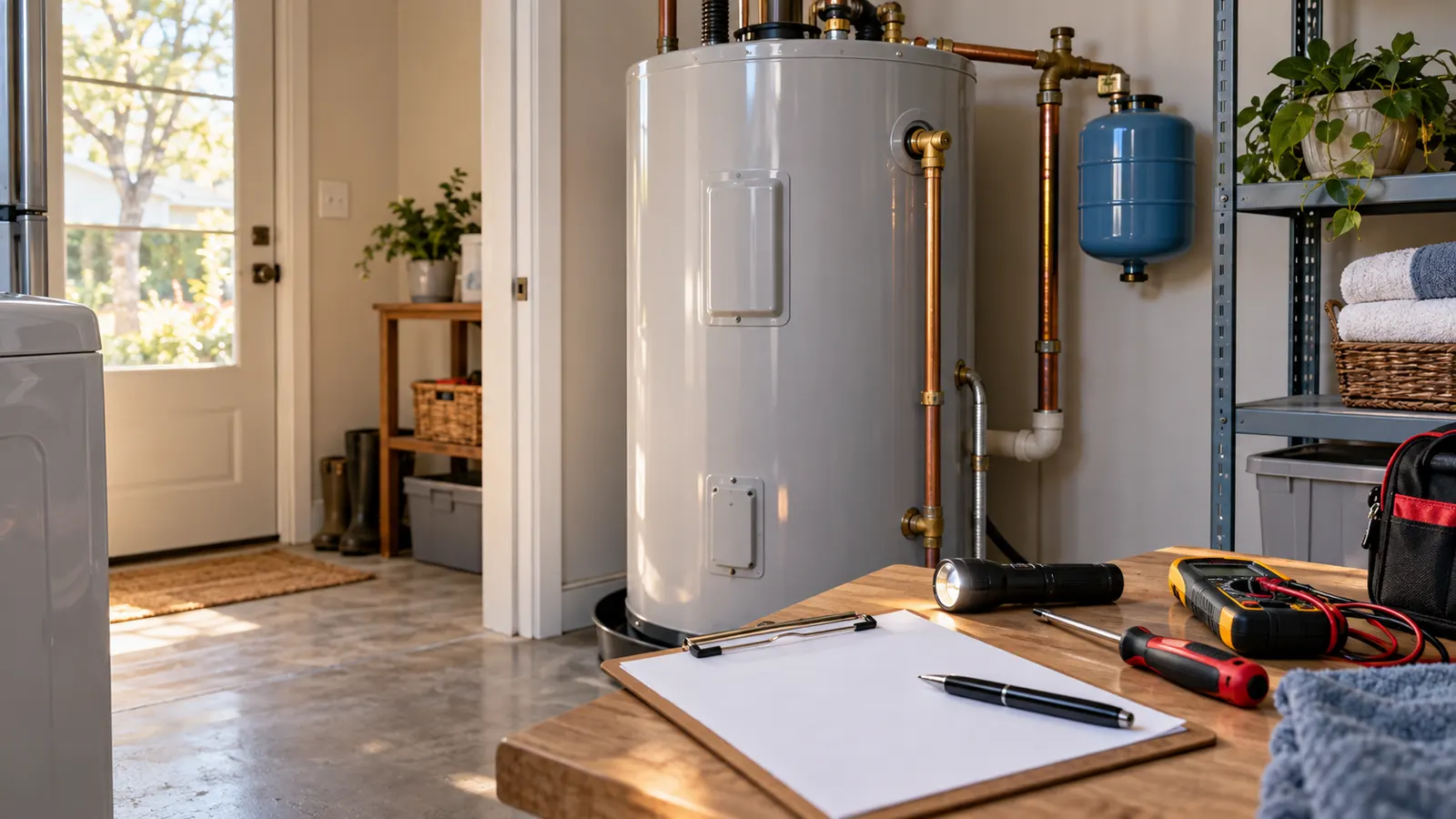
When hot water goes wrong, the question every homeowner asks is the same one: fix it or replace it. Water heaters in Ruston homes get that question answered on site, not from a chart, and the answer comes out of a professional assessment that weighs several things at once.
This article explains what those inputs are and gives you the questions to ask about each during the visit. It does not tell you how long a unit lasts, when yours should be replaced, or what the outcome for your property will be. Those depend on the specific unit, the specific installation, and the household around it. Mark Johnson & Sons Plumbing serves Ruston, LA, and the framework below describes how the repair or replacement question is generally approached.
Why there is no universal rule
The repair or replacement decision is often presented as a single threshold, as if one number settles it. In practice a plumber is looking at several factors together, and the factors can point in different directions on the same unit.
An older unit in good condition with a simple, isolated fault is a different situation from a newer unit with a fault that traces back to the installation or the water supply. Neither can be decided from a distance. The assessment happens with eyes on the equipment.
That is why the useful thing to bring to the visit is not a prediction but a set of questions. The sections below follow the inputs a plumber actually weighs.
Age, as one input among several
Age tells you something. It does not tell you everything, and a date stamp alone is not a verdict.
What age contributes to the assessment is context: how the unit has been treated over that period, whether the design is still serviceable, and whether replacement parts remain reasonably obtainable for it. Two units of the same age in two different homes can be in genuinely different condition.
Questions to ask: How old is this unit, and how do you know? Does its age affect whether parts are available? Is age the main factor here, or is it one input among several?
Condition of the unit and the area around it
Condition is what the plumber can see and test. It covers the tank or heat exchanger, the connections, the valves, the venting or electrical supply, and the floor and walls around the equipment. Mark Johnson & Sons Plumbing's water heater service page gives the service context for that property-specific assessment.
Signs around the unit matter as much as signs on it. Staining, dampness, corrosion at fittings, or evidence that water has been present before all feed into the picture. So does the quality of the original installation, which occasionally turns out to be the real subject of the visit.
Questions to ask: What condition is the unit in, apart from the current fault? Is there evidence of a problem that predates this one? Does anything about how it was installed affect the recommendation?
The failure pattern
How a water heater is failing carries more information than the fact that it is failing. A plumber wants to know the pattern, and you are the only source for most of it.
Note whether hot water is gone entirely or reduced, whether the problem is constant or comes and goes, whether it correlates with heavy use, and when you first noticed it. If the same symptom has appeared before and resolved on its own, that history is worth reporting.
A single isolated fault in an otherwise sound unit is a different case from a symptom that keeps returning in new forms. Repeat patterns often point at an underlying condition rather than a single failed component.
Questions to ask: What does this pattern suggest about the cause? Is this one component or a symptom of something broader? What would make you revise that read?
Utilities and the installation location
A water heater lives inside a set of connections: fuel or electrical supply, venting where applicable, water supply, and drainage. The state of those connections shapes what is possible at that location.
If a replacement is on the table, the existing utilities determine how straightforward it would be and whether anything beyond the unit itself is involved. A change in the type or size of unit can carry implications for the connections it needs. This is also where local code requirements enter the conversation, and they apply to the installation, not just the equipment.
Questions to ask: Do the existing connections suit the unit that is there now? If a replacement were installed, what would need to change at this location? Are there code requirements that affect the options?
Household demand
Equipment that fits the household is a different question from equipment that works. A unit can be functioning correctly and still be a poor match for how the home uses hot water.
Demand is about how many people live there, how fixtures are used, whether use is spread out or concentrated, and whether anything has changed. A household that grew, added a bathroom, or changed its routine may be placing a different load on the same equipment than it did when the unit was installed.
Questions to ask: Does this unit suit how our household actually uses hot water? Has the demand here changed since it was installed? Does that affect the recommendation?
Access
Access is the input homeowners most often forget and plumbers never do. It affects both repair and replacement, sometimes decisively.
What matters is whether the unit can be reached and worked on, whether there is room to remove and bring in equipment along the path it would travel, and whether anything has been built or stored around it since installation. Attics, closets, and tight utility spaces all introduce their own constraints.
Questions to ask: Is access a limiting factor here? Should I clear anything before the work? Does access change which options are practical at this location?
What a repair would actually involve
When repair is recommended, the useful detail is scope. Which component, what the repair addresses, and what it leaves untouched.
A repair can restore function while leaving an underlying condition in place. That can still be the right call, but you want to know which one you are getting. Ask what the repair covers, what remains as it is afterward, and what would be worth watching.
Be wary of any promise that a repair will produce a guaranteed result or a specific lifespan. Water heaters interact with water quality, usage, and installation conditions, and a careful recommendation accounts for what it cannot control.
A short list for the visit
- Which of these inputs is driving your recommendation most?
- What is confirmed, and what is an assessment at this stage?
- If we repair, what stays as it is?
- If we replace, what beyond the unit is involved?
- Can I have the recommended scope in writing before anything begins?
- What will the job record include when the visit is finished?
A note on safety
Leave gas connections, venting, electrical supply, and the relief valve to the plumber. If you smell gas, leave the building first and call from outside. If you see hot water or steam escaping, or the area around the unit is wet and live equipment is nearby, keep away from it and treat the situation as urgent.
Bringing it to the appointment
Write down the failure pattern and when it started. Clear the space around the unit. Note anything you know about the unit's history. Then ask the questions above and expect the findings and recommended scope in writing.
Mark Johnson & Sons Plumbing works in Ruston, LA. You can see what the water heater service covers, or reach Mark Johnson & Sons Plumbing to describe what your unit is doing and schedule a look at it.