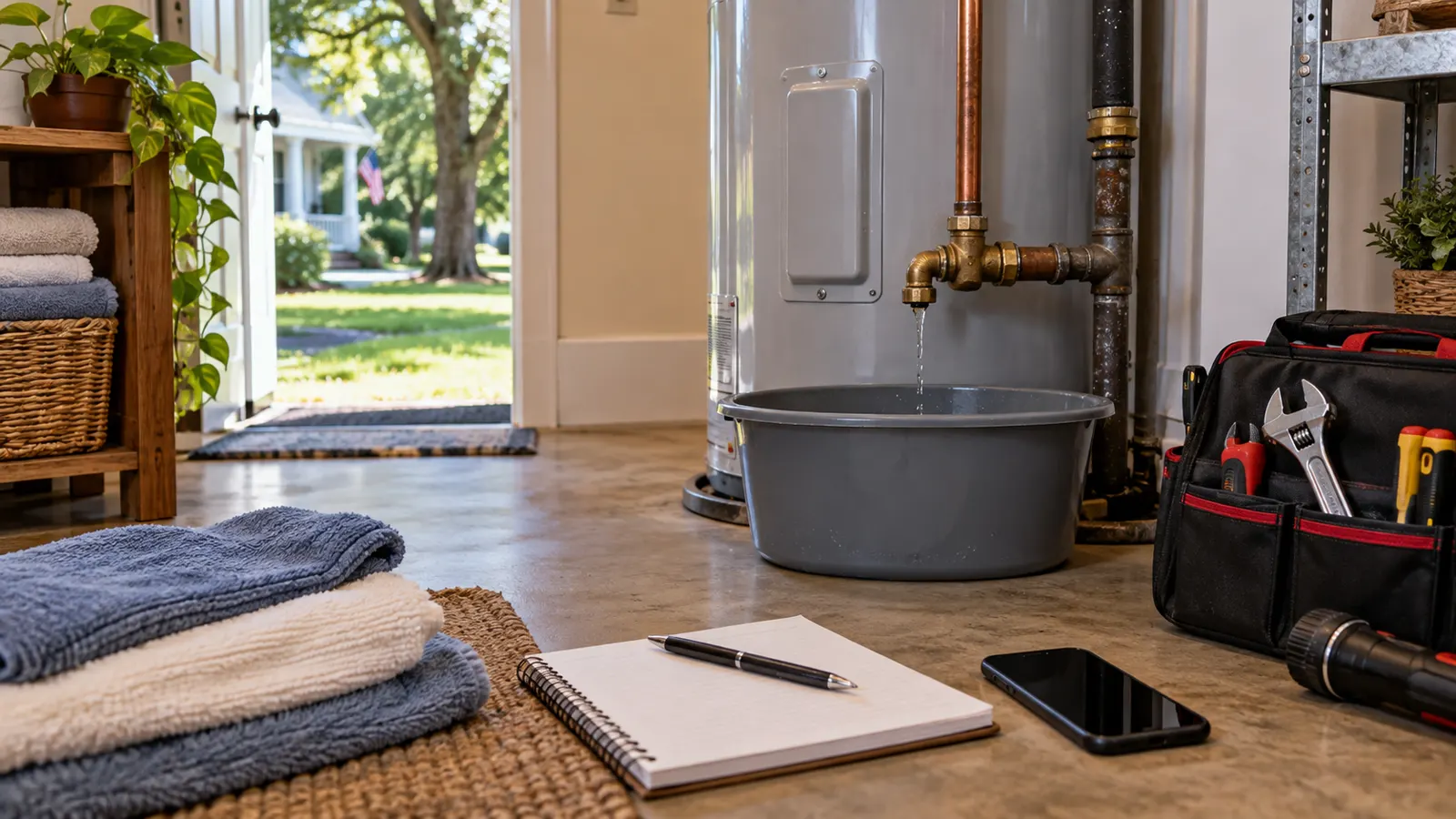
When water is running where it should not be, the first phone call goes better if you already know what to say. A few notes written in the moment give an emergency plumbing team in Ruston something real to work with instead of a guess.
This guide covers what to write down: when the problem started, which parts of the house are affected, what you can actually see, whether you know where a water shutoff is, and anything that looks hazardous. It does not tell you what is wrong at your address, and it does not ask you to open, operate, or repair anything.
Why a short written record helps the call
A plumbing emergency is loud, wet, and disorienting. Most people call and describe the last thirty seconds because that is what is in front of them.
The person taking your call is trying to understand something different. They want the shape of the problem across the whole property so the right technician arrives with the right equipment and the right expectations.
Five lines of notes on a phone or an envelope does that. It also keeps your account consistent if you repeat it to a technician later, which matters more than people expect.
Start with the timing
Write down when you first noticed the problem. A rough time is fine. "Around 9:15 tonight" is useful, and so is "sometime between Thursday and this morning."
Then note whether it is steady, getting worse, or changing. Water that has been seeping for two days is a different situation than water that started three minutes ago and is still rising.
If the problem stops and starts, record what you were doing when it happened. Running a washing machine, filling a tub, or flushing an upstairs toilet are all worth noting, without drawing any conclusion about what that means.
Note which areas of the home are affected
Walk the house if it is safe to do so and note every room where you see a symptom. This is the single most useful thing you can add.
Check the fixtures you are not thinking about. Other bathrooms, the kitchen sink, a utility sink, the laundry area, and any floor drain all tell part of the story. Note the ones that are fine as well as the ones that are not.
Include the level of the home, since a problem in an upstairs bathroom that shows up on a downstairs ceiling is a different report than one that stays in a single room.
Describe what you can see
Report the visible condition plainly and stop there. You are recording observations, not causes.
- Clear water, discolored water, or sewage
- Whether it is dripping, spraying, pooling, or backing up
- Roughly how large the wet area is
- Whether water has reached a ceiling, a wall cavity, or flooring
- Any smell you notice from a distance
- Any sound, such as running water inside a wall
Keep your distance from sewage and from any standing water near outlets, cords, appliances, or a panel. Do not wade in to get a better look, and do not touch anything electrical that is wet. If a condition looks dangerous, leave the area and say so when you call.
Record your shutoff status
The dispatcher will often ask about the water shutoff, so have your answer ready before the question comes.
There are only three honest answers, and all of them are useful. You know where the shutoff is and can reach it safely. You know where it is but cannot reach it, because it is behind stored items, under standing water, or in a locked space. Or you do not know where it is at all.
Say which one is true for your home and leave it there. Do not force a valve that is stuck, do not go into standing water to reach one, and do not guess at a valve you cannot identify. The team can direct you if anything needs to happen, and in a rental or a shared building that decision may not be yours to make.
Write down the hazard notes
Anything that makes the property unsafe belongs at the top of your notes, not at the end of the call. Mark Johnson & Sons Plumbing's emergency plumbing service is the relevant service page for this conversation.
That includes water near an electrical panel, outlet, or appliance. It includes sewage on a finished floor. It includes a ceiling that is sagging, staining, or dripping. It includes any smell of gas, which is an emergency you report to your utility and to emergency services before you worry about a plumbing note.
Also note anyone in the home who changes the picture. Small children, someone with limited mobility, or a pet loose in the affected area are all things a technician should know before arriving.
Photos, only where they are safe
A photo carries detail that a description will miss. Take them only from a dry, safe position, and never as a reason to get closer to sewage, standing water, or anything electrical.
Useful shots are wide enough to show the room, then one closer frame of the wet area. If a shutoff or an appliance is visible and safely reachable, a photo of it helps. Skip anything that requires you to move, open, or reach behind something.
Your one-page emergency note
Here is the whole record in the order a dispatcher tends to ask for it.
- Your address and the best phone number to reach you
- When you first noticed it, and whether it is getting worse
- Every room or fixture affected, and the ones that are fine
- What you can see: clear water, discolored water, or sewage
- Your shutoff status in one sentence
- Hazard notes, including anything electrical
- Who and what is in the home right now
- How to get to the property and where to park
Keep it in one place. If more than one person in the household talks to the plumbing team, everyone should be reading from the same notes.
What happens with your notes
Those details drive real decisions before anyone knocks on your door. Which technician is assigned, what gets loaded on the truck, and what the first move is on arrival all follow from what you reported.
They also set honest expectations. A situation limited to one fixture and a situation showing up across several rooms lead to different conversations about scope, and it is better to have that conversation early.
What your notes cannot do is settle the cause. That takes a look at the property, and no responsible technician will commit to a repair plan from a phone description alone.
When you are ready to call
Get your people and pets clear of the affected area, keep away from anything wet and electrical, and have your notes in hand. Mark Johnson & Sons Plumbing serves Ruston and North Louisiana, and emergency plumbing service starts with that first conversation.
Read your notes out loud when you call, starting with any hazard. You can also reach Mark Johnson & Sons Plumbing here to request service for your Ruston property.