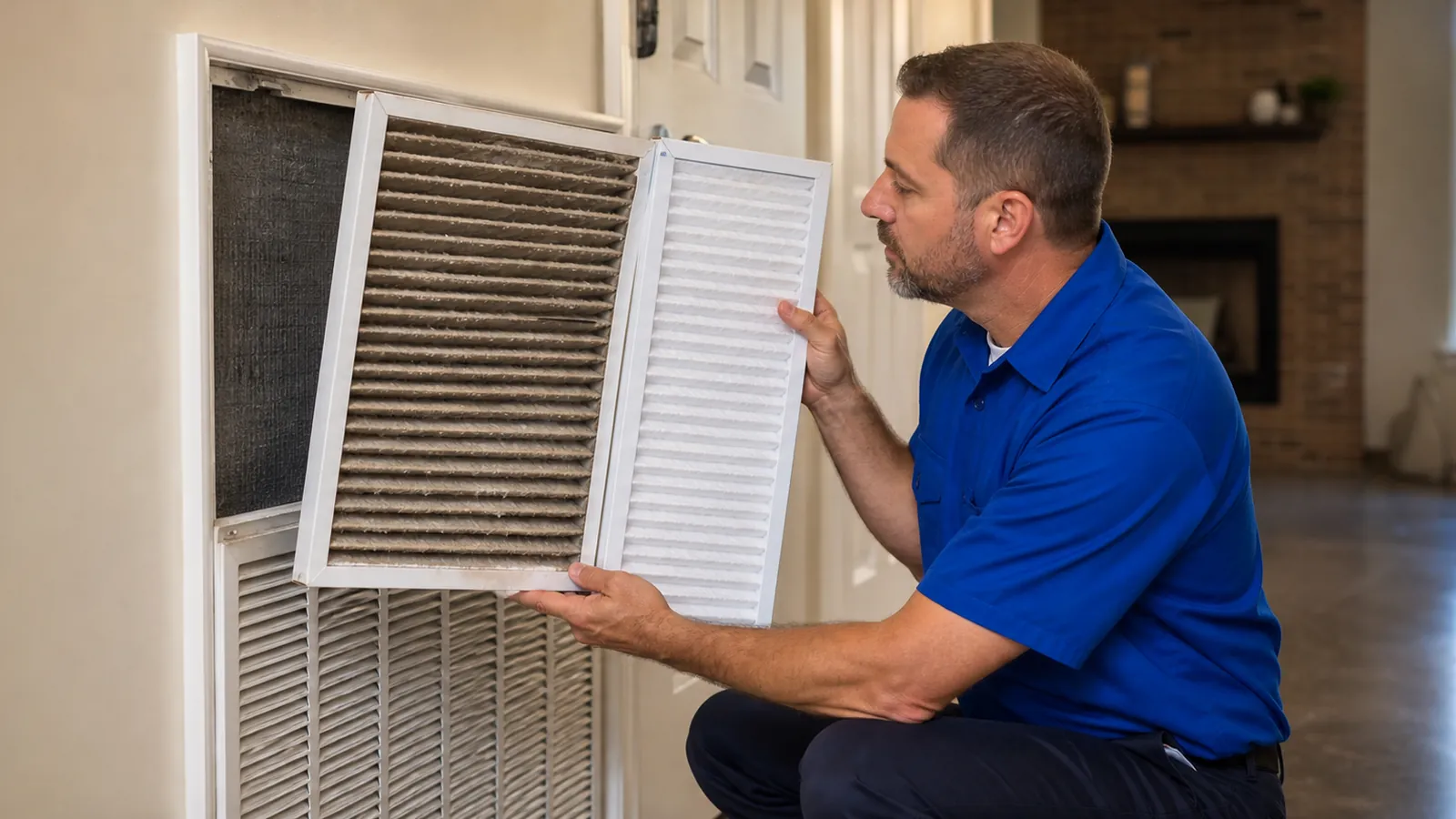
When your AC smells musty in Monroe during the first weeks of steady cooling, the odor is usually tied to water inside the system. An air conditioner pulls moisture from the air, and that water has to drain away and dry. When it sits on the coil, in the pan or in the drain line, it starts to smell. Here is how that happens and what you can safely check.
How Moisture Turns Into a Musty Smell Inside Your AC
The indoor half of a central system is the air handler, built around the evaporator coil. Refrigerant keeps that coil colder than the dew point of the passing air, so water condenses on the fins like beads on a cold glass.
The water drips into a drain pan and leaves through the condensate line, usually a PVC pipe that ends outside. When the pan slopes toward the drain and the line flows, the coil dries between cycles.
The trouble starts when water lingers. Dust that slips past the filter sticks to wet fins and forms a damp film. Microbes feed on that film and on standing water in the pan. The blower then pushes the stale odor into the house, which is why an AC that smells musty is often worst in the first minutes of a cycle.
Common Reasons an AC Smells Musty
Most cases trace back to one of these mechanisms, and more than one can be at work.
- Water that does not drain or dry: the coil and pan stay damp between cycles.
- A slow or clogged condensate line: algae and sludge narrow the line, so water stands in the pan. The ENERGY STAR maintenance checklist notes that a plugged drain can cause water damage and affect indoor humidity.
- A dirty filter and coil: a loaded filter lets more dust reach the coil, where it holds moisture.
- Growth on the coil or in a lined return: fiberglass lining in some returns holds moisture and odor once it gets wet.
- Duct leaks in the attic or crawlspace: a leaky return can pull humid, stale air from those spaces, which ENERGY STAR's duct sealing guide names as common leak locations.
- Thermostat fan set to ON: the blower keeps running after cooling stops and blows moisture off the wet coil back into the house.
A Brief First-Day Odor or a Persistent Problem?
Not every startup odor means trouble. On the first runs of the season, a faint stale smell can come from dust and still air in the ducts. That kind of odor usually fades within the first day of steady running.
A persistent problem behaves differently. If the house smells musty every time the system kicks on, weeks into the season, water is lingering somewhere. A smell that is strongest at one grille or in one room points to a local source, such as a lined return or a leaky duct.
Some smells are not a moisture problem at all. If you smell burning or hot wiring, or you see smoke, get everyone outside, then call 911 from outside. For a rotten-egg gas odor, get everyone outside, then call 911 or the gas utility's emergency line from outside.
A Monroe Scenario You Might Recognize
Picture a family whose AC cooled well last summer. A few weeks into late-May cooling, the house smells musty for several minutes each time the system starts, most strongly near the hallway return. The filter is fresh, and the thermostat fan has been set to ON since winter.
Outside, the condensate line outlet barely drips, even on a sticky afternoon. In the attic, the secondary pan under the air handler holds a shallow puddle.
That pattern points to a drain moving water too slowly, which leaves water in the main pan and on the coil. The fan setting keeps the coil wet between cycles, so the odor does not get a chance to clear. The usual next steps are switching the fan to AUTO, clearing the condensate line and having the coil and pan inspected.
What You Can Check Safely
If your AC smells musty, a few checks help narrow the cause without opening the equipment cabinet.
- Check the filter: hold it up to a light. If light does not pass through, replace it. Our filter replacement page compares common filter types.
- Find the drain line outlet outside: with the AC running on a humid day, it should drip steadily. A dry outlet suggests a clog.
- Look at the secondary pan: attic air handlers often sit over a second pan. Water there means the main drain is backing up. Many systems have a float switch that shuts cooling off when that pan fills.
- Set the fan to AUTO: this lets the coil drain and dry between cycles.
- Look around the grilles: dark spots or growth on a register or return grille point to a local moisture problem.
What a Technician Does About a Musty AC
A technician from Mark Johnson & Sons Plumbing starts by finding where the water sits. That means checking the evaporator coil and drain pan for buildup, confirming the pan slopes toward the drain, clearing the condensate line and testing the float switch.
EPA guidance on air duct cleaning recommends asking for coil and drain pan cleaning when a system is maintained. When the odor comes from one area, the return and nearby ducts get inspected for leaks or wet insulation.
Please do not spray household cleaners, bleach or air freshener into the coil, return or ducts. Some chemicals can corrode thin coil fins, the fumes get blown through the house, and a scent only covers the source. Regular AC maintenance helps keep the coil and drain clean before odors start.
Safety Notes
- Stay out of the cabinet: the air handler has a spinning blower and live electrical parts, so leave the panels closed.
- Attic caution: attics get very hot by late May. Go up in the cooler morning, step only on joists and keep clear of wiring.
- No chemicals in the equipment: the EPA's brief guide to mold and moisture does not recommend biocides such as bleach as a routine part of mold cleanup.
- Wet duct insulation: EPA notes that wet or moldy fiberglass duct material cannot be effectively cleaned and should be replaced by a qualified contractor.
- Health note: the same EPA mold guide says molds have the potential to cause health problems.
- Burning, smoke or gas: get everyone outside, then call 911 or the gas utility's emergency line from outside.
When to Call a Professional
Call when the AC smells musty after several days of steady running, or when a new filter and the AUTO fan setting do not help. Call soon if the secondary pan holds water, the float switch keeps shutting the system off, or a water stain appears on a ceiling below an attic unit.
Visible growth on the coil, a grille or duct insulation also calls for a visit, as does one room that smells worse than the rest.
Humidity matters too. The EPA's mold course suggests keeping indoor relative humidity below 60 percent, ideally between 30 and 50 percent. If the house stays sticky after the drain and coil are clean, our indoor air quality page covers options such as whole-home dehumidifiers.
Frequently Asked Questions
Why does my AC smell musty only when it first turns on?
While the system is off, water in the pan and on the coil sits still. The first burst of air carries that stale odor through the vents.
Can an air freshener fix the smell?
No. A fragrance covers the odor but leaves the water and any growth in place.
Does duct cleaning fix a musty AC?
It depends on the source. The EPA does not consider duct cleaning a necessary part of yearly maintenance, but suggests it when there is substantial visible mold inside hard-surface ducts. The coil, pan and drain usually come first.
Does the fan ON setting really matter?
It can. With the fan set to ON, the blower keeps moving air across a wet coil after cooling stops, which keeps the coil damp. AUTO lets the coil drain between cycles.
Get a Musty AC Checked Before Summer Peaks
If your AC smells musty week after week, write down a few details first. Note when the smell appears, which rooms it is strongest in, whether the outside drain line drips while the system runs, and whether the secondary pan holds water. Those notes help a technician narrow down the source.
Then reach Mark Johnson & Sons Plumbing through our contact page or book a time online. A technician can check the coil, drain pan and condensate line, look at the ducts if the pattern points there, and explain what is causing the smell in your Monroe home. Late May is a good time to book it, before the long humid months ahead.