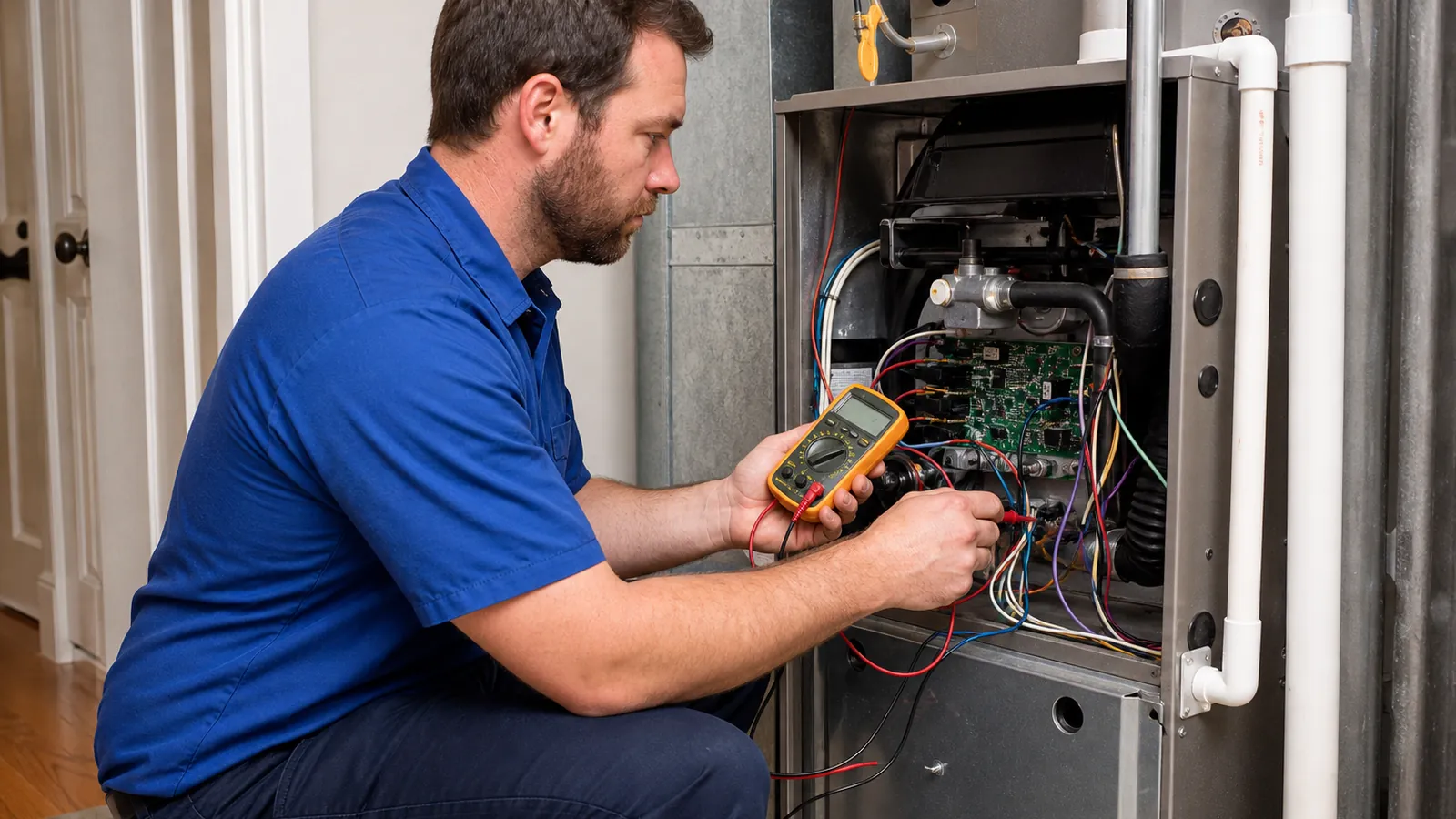
January is usually the coldest stretch of the year in Monroe. Most days stay mild, but cold snaps still roll through, and some winters bring a hard freeze. That is when a furnace blowing cold air gets noticed, because the thermostat calls for heat and the vents deliver cool air instead.
Sometimes that is normal for a few seconds. Other times a safety control has shut the burners off while the blower keeps moving air.
Why a Little Cool Air at Startup Is Normal
A gas furnace does not start blowing the moment the thermostat calls, because the control board follows a set sequence. First, the inducer motor clears the flue and the pressure switch confirms a safe draft. Next, the hot surface igniter glows, the gas valve opens, the burners light, and the flame sensor confirms the flame.
The board starts the blower only after the heat exchanger has had a short time to warm. Even then, the first air out is the air that sat in the ducts, and ducts in a cold attic can make that first push feel cool.
The same thing happens at the end of a cycle. The blower runs briefly after the burners shut off to pull the last heat out of the heat exchanger. A brief cool blast at either end is normal, but a furnace blowing cold air through the whole cycle is not.
How the Burners Shut Off While the Blower Keeps Running
Most cases of a furnace blowing cold air come down to one idea: a safety control has turned off the flame, but the blower is still moving air.
- High-limit switch: a clogged filter starves the furnace of airflow, so the heat exchanger overheats. The high-limit switch shuts off the burners while the blower keeps running to cool things down, a pattern Carrier's furnace troubleshooting guide also describes.
- Dirty flame sensor: the flame sensor is a thin metal rod that sits in the burner flame. Residue on the rod weakens the small signal the control board reads, so the board closes the gas valve seconds after ignition.
- Failed igniter or lockout: a hot surface igniter can crack with age and stop glowing hot enough to light the gas. After a set number of failed tries, the board locks out and flashes a status code on its LED.
- Clogged condensate drain: a high-efficiency furnace makes water as it pulls extra heat from the exhaust. If the drain line or trap clogs, water backs up, the pressure switch cannot prove draft, and the board will not light the burners.
Furnace type changes which of these can happen. A standard-efficiency furnace vents through a metal flue pipe and has no condensate drain, while a high-efficiency furnace vents through white PVC pipe and adds a condensate trap and a drain line. In a hard freeze, a condensate line that runs through a cold attic can also freeze.
Settings, Gas Supply and Duct Problems
The simplest cause of a furnace blowing cold air sits on the wall. If the thermostat fan is set to ON instead of AUTO, the blower runs nonstop and pushes unheated air through the ducts between heating cycles. Our thermostat service page covers other control problems.
The gas supply is another possibility. A manual shutoff valve sits on the gas line next to most furnaces, and when its handle runs crosswise to the pipe, the burners have no fuel. If you are not sure why it was closed, leave it alone and have a professional check it.
Ducts matter too, since many homes around Monroe have ducts in the attic. A leaky return duct there pulls cold attic air into the system, and leaky supply ducts lose warm air before it reaches the rooms. ENERGY STAR's duct sealing guidance explains how those leaks hurt comfort.
A Monroe Scenario You Might Recognize
Picture a family whose furnace ran fine through the mild weeks of December. Then a January cold snap arrives, and the system runs longer. The vents blow warm air for a while, then turn cool while the blower keeps running. A few minutes later, the warm air returns. The filter was last changed in the fall.
That pattern points to airflow. A clogged filter lets the heat exchanger run too hot during long cycles, so the high-limit switch shuts off the burners and the blower runs on to cool it. By contrast, if the burners light and drop out within seconds, again and again, before a light starts blinking, the flame sensor or ignition is the more likely suspect.
Safe Checks Before You Call
These checks are safe for most homeowners and can narrow down a furnace blowing cold air. Stop at any point if something looks wrong or you smell gas.
- Thermostat: confirm it is set to HEAT, the set point is above room temperature, and the fan is on AUTO.
- Filter: hold the filter up to a light, and replace it if little light passes through. Our filter replacement page covers sizes and types.
- Furnace door: make sure the blower door is fully seated, because a door switch cuts power to the furnace when the panel is loose.
- Power: check that the service switch near the furnace is on and the breaker has not tripped.
- Status light: count the LED blinks through the sight glass on the blower door and write the pattern down before removing any panel, since opening the door can clear the code. Then compare it with the chart on the furnace label.
- Resets: one restart after fixing a clear problem, like a loose door, is reasonable. Repeated resets only send the furnace back into a condition its safety controls already rejected.
Safety Notes
- Gas smell: if you smell gas or rotten eggs, get everyone outside right away without flipping switches or adjusting the thermostat. Call 911 or the gas utility's emergency line from outside.
- CO alarm: if a carbon monoxide alarm sounds, get everyone outside, then call 911 from outside. Carbon monoxide has no color or odor, so the alarm is your warning.
- Safety switches: never bypass, jumper, or remove a high-limit switch, pressure switch, or door switch. Those controls shut the burners off because something is wrong.
- Panels and clearance: do not run the furnace with its doors off, and keep anything that can burn away from it.
- Space heaters: if you use one while you wait, follow the NFPA heating safety tips for placement and use.
When to Call a Professional
Call when the simple checks are done and you still have a furnace blowing cold air through whole cycles. Call as well for a status code that points to a flame, ignition, pressure, or limit fault, or a lockout that returns after one restart. Water around a high-efficiency furnace and a closed gas valve you cannot explain also belong with a technician.
Flame sensor cleaning, igniter replacement, condensate drain clearing, and limit diagnosis are standard furnace repair work. A technician also checks the heat exchanger and venting, which a homeowner cannot inspect safely. Mark Johnson & Sons Plumbing handles furnace repair in Monroe, West Monroe, and nearby towns. If the house is losing heat during a hard freeze, treat it as urgent, and see the National Weather Service cold weather safety page.
Frequently Asked Questions
Is a furnace blowing cold air at startup normal?
A few seconds of cool air is normal, because the blower first pushes out the air that sat in the ducts. If the air stays cool after that, look for a thermostat, filter, or ignition problem.
Can a dirty filter make the vents blow cold air?
Yes. A clogged filter restricts airflow until the heat exchanger overheats and the high-limit switch shuts off the burners, while the blower keeps running.
Why does my furnace light and then shut off?
A dirty flame sensor is a common reason, because the control board cannot confirm the flame and closes the gas valve. Cleaning the sensor is part of routine furnace maintenance, and ENERGY STAR's maintenance checklist also lists checking the condensate drain and burner combustion.
Write Down What the Furnace Is Doing, Then Reach Out
Before you call, write down the thermostat and fan settings, when the filter was last changed, and the blink pattern on the status light. Note whether the cool air starts right away or partway through a cycle, whether the burners light at all, and whether the furnace vents through metal or white plastic pipe. Mention any recent work on the furnace, the gas line, or the ducts, too.
Those details help a technician narrow down a furnace blowing cold air quickly. When you are ready, reach Mark Johnson & Sons Plumbing through our contact page or book a time online to schedule furnace repair in Monroe. If the furnace has locked out, leave it off until then instead of forcing more restarts.