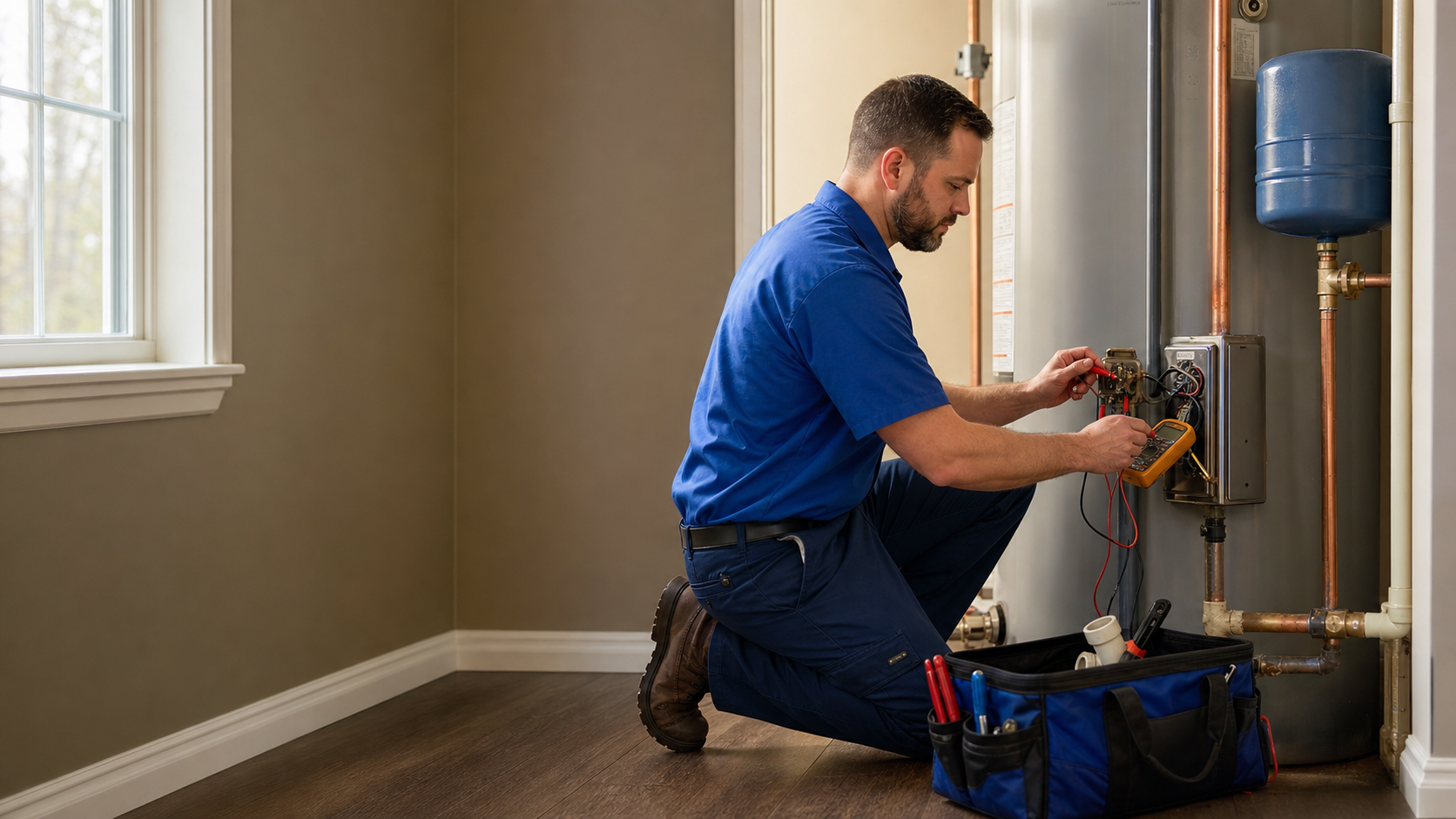
Hot water becomes lukewarm because the temperature reaching your shower depends on heating, storage, and mixing—not simply whether the tank contains water. A storage water heater stays full as cold water replaces the hot water leaving it. Early cooling can reflect depleted usable heat, an element that is not heating, or cold water mixing where it should not. For a West Monroe household, the useful question is where that temperature change begins.
If October routines add overlapping showers or laundry, include that change in the heater discussion.
A sudden change deserves a different investigation from a long-standing problem during overlapping showers. Do not raise the heater setting to compensate for an unexplained change. That can increase scald risk while leaving the failed component in place.
How a full tank can deliver less usable heat
The dip tube is the tube that carries incoming cold water toward the bottom of a storage tank. Hotter water normally leaves near the top. A damaged dip tube can release cold water higher in the tank, mixing it with the hot layer near the outlet. The tank is full, but the outgoing water cools sooner.
Many electric storage heaters use upper and lower heating elements, controlled by thermostats. If the lower element cannot heat its part of the tank, the upper section may still provide a short period of hot water. The result can look like an undersized tank even though household demand has not changed. Electrical testing belongs to a technician; removing an access cover exposes energized components.
A gas heater has a different heating arrangement. Burner operation, controls, and deposits affecting heat transfer need their own checks. A popping sound alone cannot prove sediment caused the temperature problem. Identify the heater type before transferring advice from another model. A. O. Smith's electric heater manual illustrates why troubleshooting must follow the actual equipment.
Separate a shower problem from a heater problem
A shower mixing cartridge combines hot and cold water inside the valve. A malfunction there can produce lukewarm showers while other fixtures still receive hot water. A central thermostatic mixing valve, where installed, can affect a wider group of fixtures. These parts are different from the heater thermostat.
Compare normal observations from separate fixtures without deliberately running dangerously hot water. Does the kitchen also cool after ordinary use? Does the shower improve when another fixture stops? Has a recent faucet or plumbing change introduced the problem? The answers help distinguish stored heat from distribution and mixing faults.
Imagine a West Monroe homeowner whose morning shower cools early, while the bathroom sink remains hot afterward. That hypothetical pattern points toward checking the shower valve before assuming the whole tank failed. If the sink and kitchen also cool after a short draw, the tank and any shared mixing equipment become stronger leads.
Demand and recovery are separate questions
Demand is the hot water used by fixtures. Recovery is the heater's ability to add heat back after that water leaves. Overlapping laundry, dishwashing, and showers can consume stored heat faster than it is replenished. Spreading those activities apart can reveal the pattern, but it does not repair an element or damaged tube.
If the same routine worked previously, ask what changed: fixture flow, household use, heater operation, or plumbing configuration. A replacement discussion should follow those findings. A different heater design is not automatically the answer to a valve problem. Review water heater services as the starting point for an equipment assessment.
Checks that stay outside the heater
Record the model from an accessible label, whether the heater is gas or electric, and which fixtures change temperature. Photograph visible leakage from a safe location. Leave electrical covers, gas controls, and relief valves alone. A relief valve is a safety device, not a temperature troubleshooting tool.
Water near electrical equipment, active tank leakage, a gas odor, or a carbon monoxide alarm changes the priority. Stay clear of wet electrical areas. For a gas odor or alarm, leave the building and contact emergency services or the gas utility from outside. Do not continue experiments to reproduce the symptom.
If unexplained moisture accompanies the temperature complaint, water leak detection addresses a separate question: where water is escaping. Do not treat either symptom as proof of the other.
Contact Mark Johnson & Sons Plumbing to arrange a West Monroe heater check before changing equipment or settings.
What to compare when hot water becomes lukewarm
If hot water becomes lukewarm during your usual routine, collect these observations without opening the heater:
- Note whether the first draw after normal recovery is hot or whether it begins lukewarm immediately.
- Compare the affected shower with other hot-water fixtures used normally, because one mixing cartridge can change one outlet.
- Describe whether laundry or dishwashing overlaps with bathing, and whether that pattern recently changed.
Call Mark Johnson & Sons Plumbing when hot water becomes lukewarm repeatedly despite an unchanged routine. Ask the plumber to compare stored heat, recovery and the fixture mixing path before choosing a repair. The dip tube, heating elements and mixing valves solve different problems; replacing one without evidence can leave the actual cause untouched. Keep access covers closed and leave the temperature setting unchanged pending professional guidance.
Questions about early cooling
Does lukewarm water prove the tank is empty?
No. A storage tank normally remains full. Its available heat and the temperature at the outlet are what change.
Should I flush it before arranging service?
Not as a universal first step. Tank condition, access, and the manufacturer's procedure matter, and hot water can injure you.
Can a water softener repair the heater?
No. Treatment choices and heater repairs solve different problems. A water softener assessment should follow actual hardness findings, not replace temperature diagnosis.
Contact Mark Johnson & Sons Plumbing to schedule a water heater evaluation in West Monroe. Explain which fixtures cool, how the routine has changed, and whether the heater has fully recovered before the symptom starts.