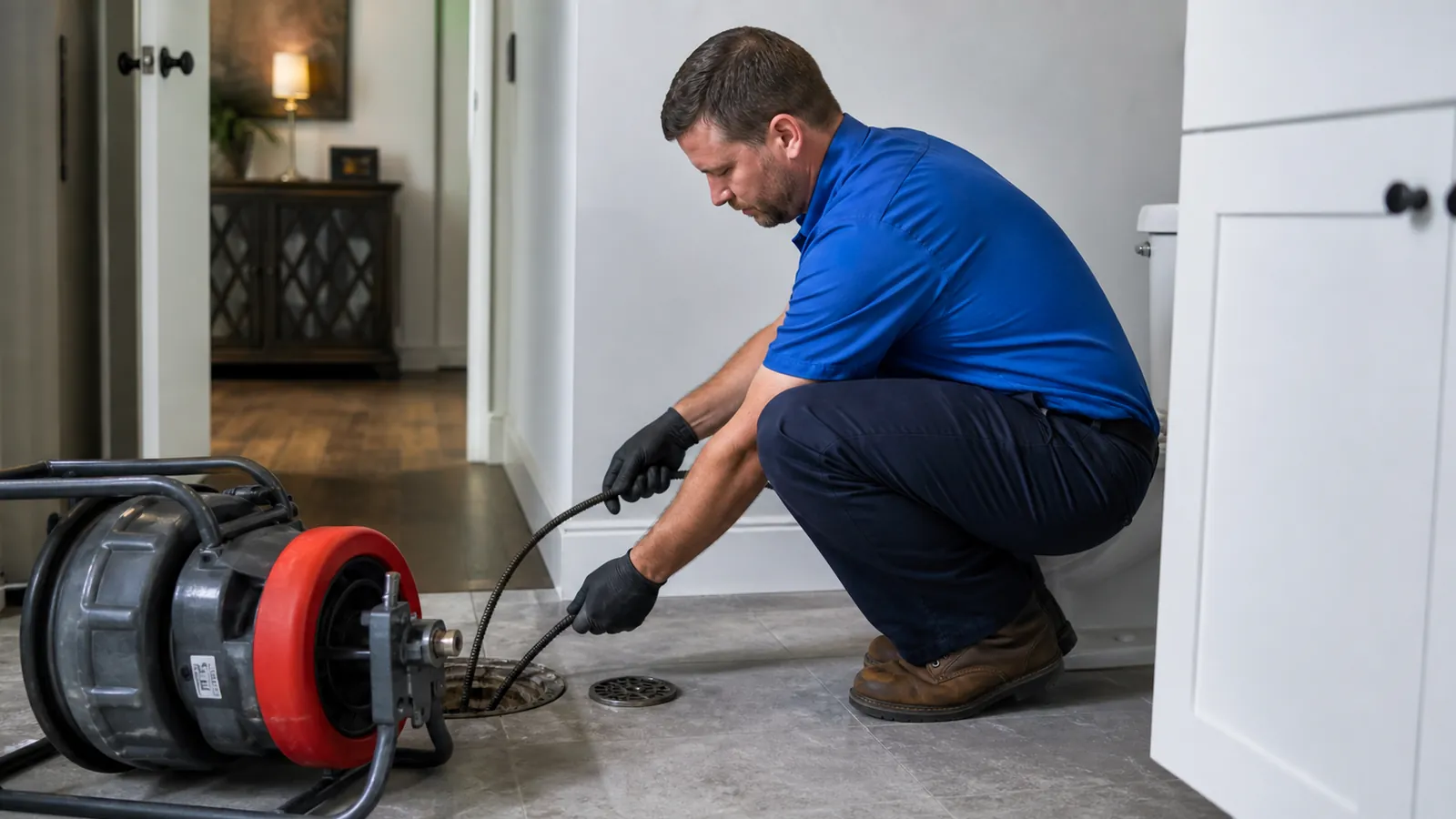
When one sink drains slowly, the clog is usually in that fixture's own pipe. When the tub, toilets and laundry all slow down at once, you may be dealing with a main sewer line clog. The main line is the single pipe that carries all the wastewater out of your Monroe home, so a blockage there affects every drain upstream of it. Here is how to tell the difference and what to do next.
Main Line or Single Drain: The Signs That Tell Them Apart
Every fixture drains into a branch line, and the branch lines join the building drain that leaves the foundation. A branch clog only affects the fixtures on that branch. A main sewer line clog affects the whole house, because nothing downstream is moving. These signs point toward the main line:
- Several fixtures slow at once: the kitchen sink, a bathroom sink and a shower all drain sluggishly.
- The lowest drain backs up first: water rises in the tub, shower or a floor drain when a toilet is flushed elsewhere.
- Gurgling when the washer drains: a toilet bubbles or its water level jumps while the washer pumps out.
- Water at the cleanout: the capped pipe near the foundation is wet, seeping or surrounded by standing water.
One slow sink with everything else normal is usually a local clog that routine drain cleaning takes care of.
How a Main Sewer Line Clog Forms
A main line carries water and solids down a steady slope toward the public sewer. Anything that catches debris or narrows the pipe can start a blockage.
- Tree roots at the joints: older clay and cast iron lines are built from short joined sections. Roots find the moisture seeping from a loose joint, grow inside and form a net that traps paper and waste.
- Grease and wipes: cooking grease cools and sticks to the pipe wall, and "flushable" wipes do not break apart the way toilet paper does. The EPA urges people to flush only toilet paper to keep plumbing and sewers working.
- A belly in the line: when a section settles lower than the pipe on either side, water and solids sit in that low spot.
- A cracked or collapsed pipe: cast iron can corrode from the inside and clay can crack, letting in soil and roots or pinching the opening closed.
A Monroe Scenario You Might Recognize
Picture a family in Monroe whose older house has a large oak in the front yard near the sewer line. For a few weeks, the kitchen sink and the hall bath have drained a little slowly. Then someone starts a load of laundry, and as the washer pumps out, the hall toilet gurgles and gray water rises in the bathtub.
That pattern points past the fixtures to the main line. The tub is the lowest drain in the house, so it shows the backup first. The slow decline over weeks suggests something that grows or collects over time, such as roots at a joint or grease buildup, rather than one object dropped down a toilet. A camera inspection would confirm which one.
What to Do First, and What Not to Do
The moment you suspect a main sewer line clog, stop adding water to the system. With the main line blocked, every flush, shower and load of laundry ends up at your lowest drain.
- Stop running water: pause the washer and dishwasher, and ask everyone to hold off on showers.
- Do not keep flushing: a second or third flush can push sewage out of the tub or floor drain.
- Skip chemical drain cleaners: they are made for small clogs near a fixture and cannot reach a blockage far down the main line. Many are caustic enough to burn skin and eyes, and some can harm older pipes.
- Leave the cleanout cap alone: if the line is full, opening it can release sewage with force.
What You Can Check Safely
A few observations narrow down the problem, and none of them require tools.
- Test one fixture at a time: run a bathroom sink for a minute and watch the tub drain. If water appears there, the backup is below both fixtures.
- Look at the cleanout from a distance: note whether the ground around the capped pipe is wet or the cap is seeping, but do not unscrew it.
- Ask the neighbors: if nearby homes are backing up too, the problem may be in the public sewer. The EPA notes that blockages and line breaks in sanitary sewer systems can send sewage into homes, so call your city's sewer department.
- Think about timing: a slow decline over weeks points toward roots or buildup, while a sudden stop after a heavy flush suggests a single obstruction.
How a Main Line Is Cleared and Why the Camera Comes Next
Clearing a main sewer line clog usually starts at the cleanout. A technician feeds a cable machine, often called a sewer snake, down the pipe. Its spinning cutting head bores through roots and packed debris to get water moving again. For grease, sludge and fine roots coating the pipe wall, hydro jetting is often the better tool, because high-pressure water scours the pipe wall and flushes the loosened material downstream.
Opening the line solves today's backup, but it does not explain why it happened. A video sewer inspection sends a waterproof camera through the cleared pipe to show roots at joints, a belly holding water, cracks or an offset section. That footage tells you whether the line needs periodic cleaning or sewer line repair.
Safety Notes
- Treat backed-up water as sewage. The EPA's page on protecting your health around contaminated water notes that exposure can cause problems such as wound infections and rashes.
- Wear rubber gloves and boots if you have to step into the affected area, and keep children and pets away.
- Wash your hands thoroughly after any contact, and clean hard surfaces with a household disinfectant.
- Do not open a cleanout cap while the line is backed up, because the water behind it can be under pressure and spray out.
- Do not plunge a drain that already has chemical cleaner in it, since splashback can cause chemical burns.
- If you smell rotten eggs and are not sure whether it is sewer gas or natural gas, leave the house and call the gas utility's emergency line or 911 from outside.
When to Call a Professional
Call right away if sewage is coming up into a tub, shower or floor drain, or if several fixtures stay slow after you stop using water. Call as well when backups return after an earlier cleaning, since that usually means roots, a belly or a damaged section. Mark Johnson & Sons Plumbing clears main lines, runs camera inspections and repairs sewer lines for homes in Monroe and West Monroe.
A main sewer line clog is also a poor fit for a rented machine. Main line cables are heavy and can kink or snap on roots, turning a clog into a bigger repair. Model plumbing codes such as the International Plumbing Code set rules for building drains and cleanouts, so work on the line itself belongs with a professional.
Frequently Asked Questions
Why does my toilet gurgle when the washing machine drains?
The washer pumps out a lot of water quickly. When the main line is partly blocked, that water cannot get past, so it pushes air back through the nearest trap. A blocked vent stack can also cause gurgling, but a vent problem alone does not make water rise in the tub.
Will a chemical drain cleaner fix a main sewer line clog?
No. The chemical cannot reach a blockage that far down the line, and it leaves a caustic pool in the backed-up drain. That makes the job more hazardous for whoever clears the line.
Can roots come back after the line is cleared?
Yes. Cutting roots opens the pipe, but the joint they entered through is still there. A camera inspection shows whether that joint needs repair or whether periodic cleaning is the practical plan.
Your Next Step for a Main Sewer Line Clog
Before you reach out, write down which fixtures are slow, which drain backs up first and whether a toilet gurgles when the washer runs. Note roughly how old the house is, whether large trees grow near the sewer line and where your cleanout is, if you know. If a neighbor has the same problem, mention that too, since it can point to the public sewer rather than your own line.
Those details help a technician decide where to start. Contact Mark Johnson & Sons Plumbing through our contact page, or book a time online for a visit. Until someone arrives, keep water use to a minimum and keep people and pets away from any backed-up drain.