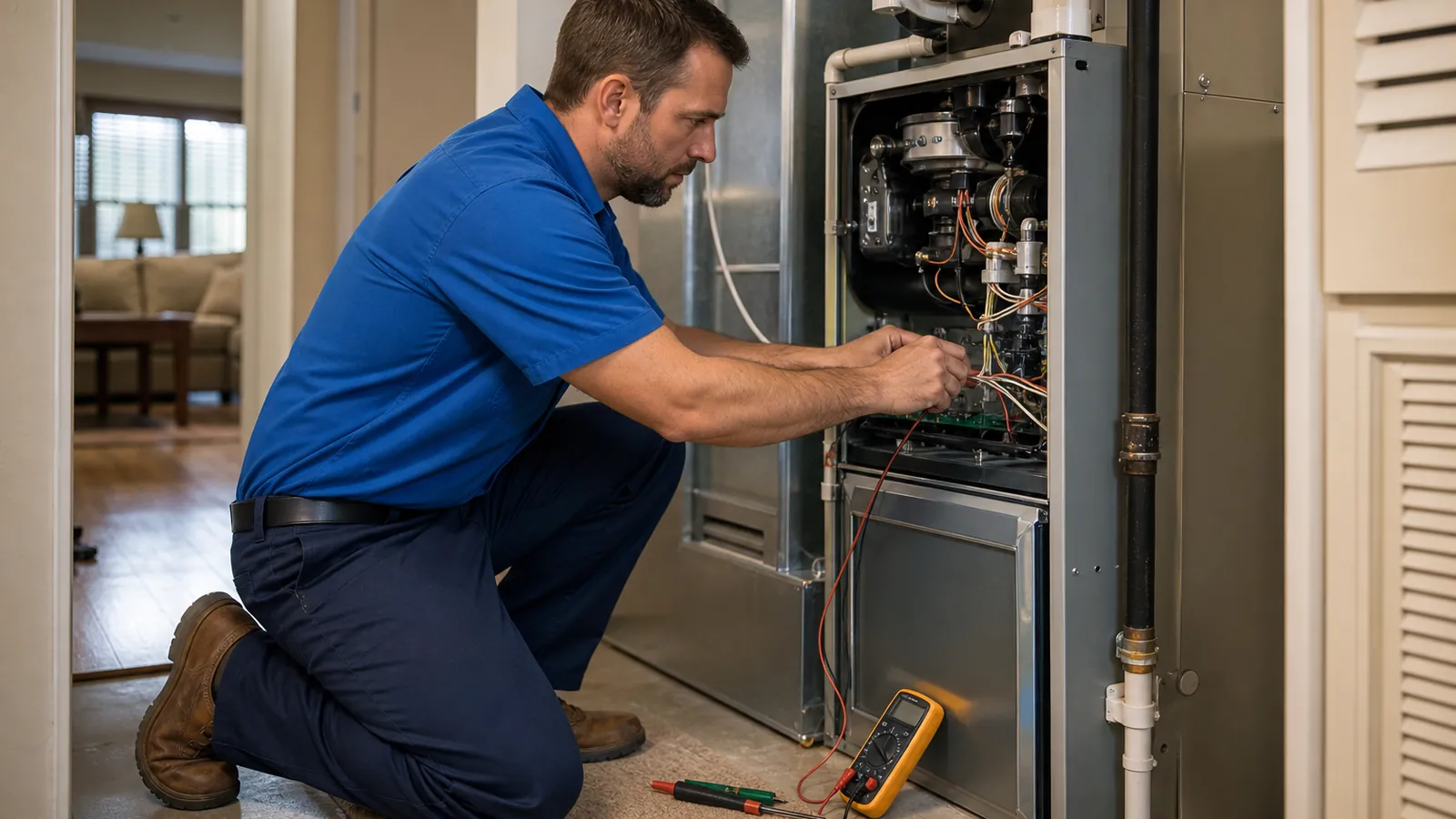
If you have one room always cold in winter, you are not imagining it. In many Ruston homes, a back bedroom, bonus room or addition runs cooler than the rest of the house during a January cold snap. The cause is usually airflow, heat loss or both. Here is how it happens, what you can check safely, and which repairs are worth discussing.
How a Cold Room Actually Happens
Your furnace or air handler pushes warm air into a main trunk, and branch ducts carry it to each room. The room at the end of the longest branch gets its air last, after the longest trip through the attic.
Many North Louisiana homes have ductwork in the attic, and on a cold night that attic sits close to the outdoor temperature. Every foot of duct gives up some heat, so the longest run delivers the coolest air. ENERGY STAR's duct sealing guide notes that in a typical house, about 20 to 30 percent of the air moving through the ducts is lost to leaks, holes and poor connections.
Exposure matters too. A corner bedroom with exterior walls and windows on two sides loses heat faster than an interior room. A bonus room over the garage has cold surfaces on several sides. Combine a long duct run with a room that sheds heat quickly, and you get a room always cold while the hallway feels fine.
Duct and Airflow Problems That Starve One Room
When a room gets too little air, it cannot keep up with its heat loss. These are the common culprits:
- Disconnected flex duct: a branch can slip off its collar at the trunk or register boot, dumping warm air into the attic.
- Crushed or kinked flex duct: storage boxes, foot traffic or a tight bend can pinch it, and ENERGY STAR lists kinked flex ducts as a warning sign.
- Closed balancing damper: a manual damper near the trunk, closed partway for summer, may still be choking winter airflow.
- Closed or blocked register: a shut louver, a rug or furniture over the register limits what reaches the room.
- No return air path: air that enters a room has to get back to the system, so a closed door without a return lets pressure build and slows delivery.
Any one of these can leave a room always cold, and some homes have more than one.
Thermostat Location and Heat Pump Supply Air
Your thermostat only knows the temperature where it hangs. If it sits in a hallway near the kitchen, it may reach its set point and shut the system off while a far bedroom is still cool. Relocating or upgrading a thermostat can help in some homes, though it does not correct weak airflow.
Heat pumps add another wrinkle. A gas furnace delivers air that feels hot at the register, while a heat pump moves heat from outdoor air and delivers air that feels warm rather than hot, over longer cycles. That design works well, as the ENERGY STAR heat pump page explains, but the comfort margin is smaller. A weak duct run that a hotter furnace once covered can leave one room always cold after the switch.
A Ruston Scenario You Might Recognize
Picture a family whose upstairs bonus room, built over the garage, feels chilly every winter evening while the living room holds its set point. The bonus room register blows air, but it feels weak compared with the kitchen register. The kids keep the door closed at night, and the room feels worse by morning.
That pattern points to more than one cause. Weak airflow at a single register suggests a long, restricted or leaking branch, possibly flex duct squeezed where it crosses the attic. A room that gets worse with the door shut suggests a missing return air path, and the garage below adds heat loss. A technician would likely check the branch duct, damper and return path before any talk of new equipment.
What You Can Check Safely
A few simple tests help sort out the cause before anyone opens the attic hatch.
- Compare temperatures at the same time: place a thermometer in the cold room and another in a comfortable room, and read both at the same hour.
- Check the register: make sure the louvers are open and nothing covers them.
- Feel the airflow: hold your hand at the cold room's register, then at a warm room's register, and compare the air volume.
- Try the door test: run the heat for an hour with the door closed, then an hour with it open. Note whether the room warms up.
- Inspect the filter: a clogged filter reduces airflow to the whole house, and the farthest rooms feel it first.
Write down what you find to help a technician trace a room always cold to its cause.
Repair Paths Worth Discussing
The right repair for a room always cold depends on what an inspection finds. Results vary from home to home.
- Duct repair and sealing: reconnecting loose branches, replacing crushed flex duct and sealing joints with mastic or metal tape, not cloth duct tape, as ENERGY STAR advises. Our ductwork services cover this work.
- Balancing: adjusting branch dampers so distant rooms receive a fairer share of the air.
- Adding a return or transfer grille: giving air a path back to the system when the door is closed.
- Zoning: motorized dampers and separate thermostats let separate areas call for heat independently.
- A ductless mini-split: for an addition that is hard to reach with ducts, a ductless mini-split heats and cools that space directly. ENERGY STAR notes that ductless heat pumps suit homes or sections of homes without ductwork.
Attic air sealing and insulation can also help, and ENERGY STAR's seal and insulate guide walks through those projects.
Safety Notes
Most of these checks happen at the registers, but if you climb into the attic, keep these points in mind.
- Attic footing: step only on the joists or a solid walkway, because the drywall between joists will not hold your weight.
- Insulation fibers: wear gloves, long sleeves and a dust mask, and disturb the insulation as little as possible.
- Overhead hazards: bring a bright flashlight and watch for roofing nails poking through the roof deck.
- System off first: turn the heat off at the thermostat before changing the filter.
- No indoor combustion heat: never use a gas oven or a grill to warm a cold room.
- Gas odor: if you smell gas near the furnace, get everyone outside, then call 911 or the gas utility's emergency line from outside.
When to Call a Professional
Call when your checks point to a duct, damper or return problem you cannot see or reach from the living space. Most duct runs sit in the attic, and finding a disconnected branch usually means crawling over insulation. The heating team at Mark Johnson & Sons Plumbing can measure airflow at each register, review the duct layout and explain why one room lags.
Call as well if a room always cold appeared after other work, such as new insulation, a roof repair or a new heat pump. Someone may have stepped on a duct. Reach out before finishing an attic, adding a room or converting a garage, so the new space gets planned heating before the walls close up.
Frequently Asked Questions
Why is one room always cold when the rest of the house is warm?
It usually receives less warm air, loses heat faster, or both, because of long attic runs, damaged flex duct, closed dampers, missing returns and exposed walls.
Should I close vents in other rooms to push heat to the cold one?
It is not a reliable fix. Closing registers raises pressure inside the ducts and can push more air out through leaks instead of into the cold room.
Will a bigger furnace or heat pump fix a cold room?
Not by itself. A larger unit pushes more air through the same restricted duct, and ENERGY STAR stresses proper sizing because an oversized or undersized system will struggle.
Your Next Step for a Cold Room in Ruston
Before you reach out, run the checks above and note which room is cold, when it feels worst, how its airflow compares with a warm room, and whether the door test changed anything. Mention whether you have a gas furnace or a heat pump, and roughly when the system was installed.
Then send those notes to Mark Johnson & Sons Plumbing through our contact page, or choose a convenient time with online booking. A technician can trace the duct run, check the dampers and return path, and explain the repair options that fit your home. A room always cold has a physical cause, and finding it is the first step toward a comfortable house.