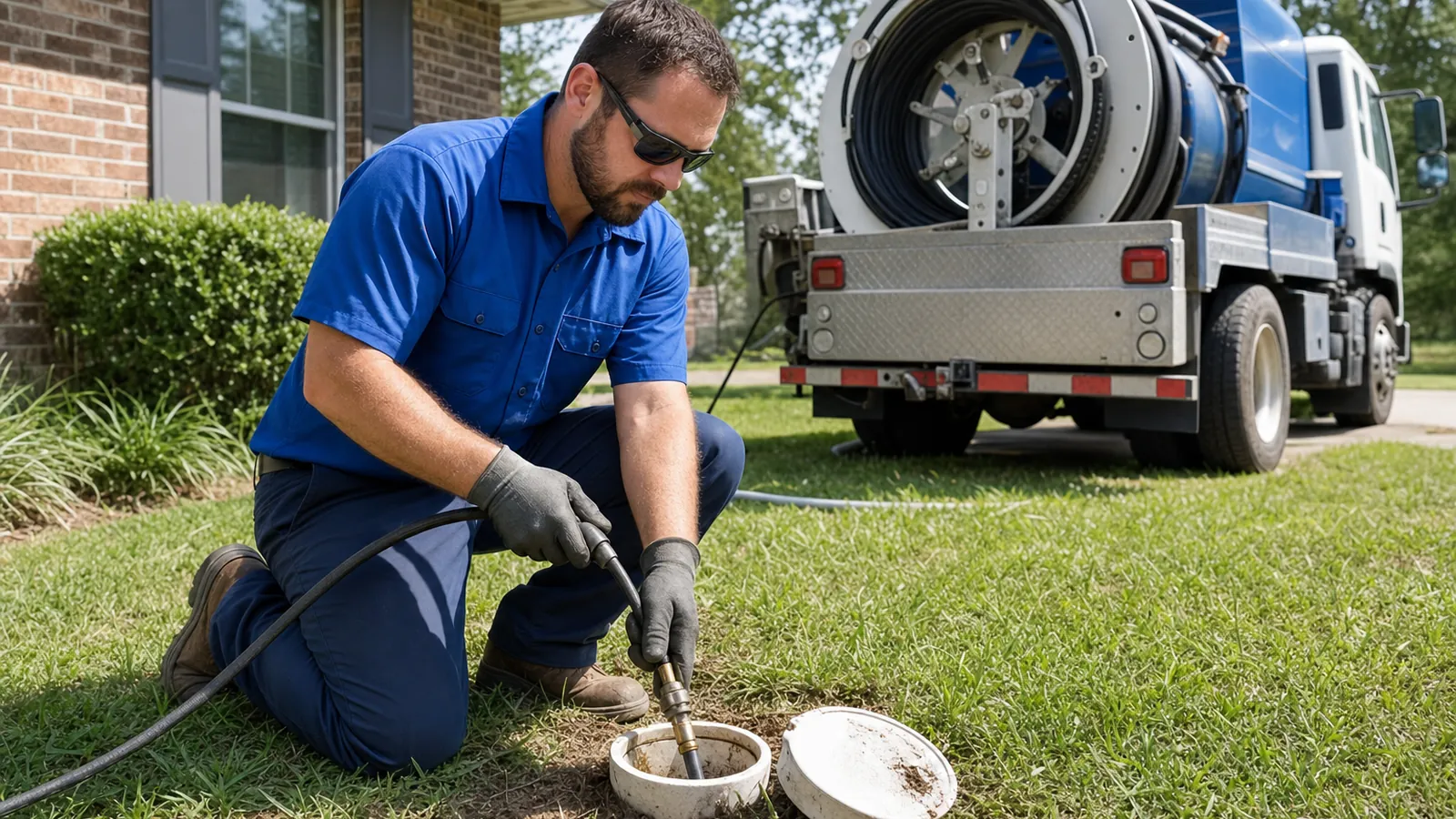
The sewer cleanout is one of the most useful fittings on a Minden home, and one of the easiest to forget. It is a short capped pipe that gives a plumber a straight path into the main drain line. Knowing where yours is, and keeping its cap whole, makes future sewer work faster and cleaner. Here is what the fitting does, where it usually sits and how to protect it.
What a Sewer Cleanout Is and Why Codes Require It
A sewer cleanout is a capped access fitting on the building drain or the building sewer. The building drain collects waste inside or under the house, and the building sewer carries it out to the public main. The cleanout is usually a wye or tee fitting with a riser pipe and a threaded plug on top.
Removing the plug lets a technician feed a cable, jetter or camera straight into the main line. Without it, the way in may mean pulling a toilet off its flange.
The International Plumbing Code chapter on sanitary drainage spells out where cleanouts belong. The 2021 edition calls for one near where the building drain meets the building sewer. It adds others at sharp turns and along long runs. It also says required cleanouts should not be hidden in walls or left below grade. Your local code official decides which rules apply.
Where the Cleanout Usually Sits in a Minden Home
The main cleanout is often a short plastic or cast iron pipe with a round cap, standing a few inches above the soil. Places worth checking around a Minden house:
- Yard near the foundation: look where the drain line leaves the slab or crawlspace, often near the bathrooms.
- Near the property line: some homes have a two-way cleanout that lets a cable travel toward the house or the street.
- Crawlspace: raised homes may have the cleanout on the drain line under the floor, near the foundation wall.
- Wall or floor access: older and slab homes sometimes hide one behind an access panel or as a flush floor plug.
- Buried or covered: sod, mulch, a patio or a deck may have covered it over the years.
If you cannot find one, a video sewer inspection camera with a locating transmitter can show where the pipe runs.
How a Damaged, Missing or Buried Cap Causes Trouble
A cleanout riser drops straight into the main line, and the cap is its only seal. When that seal fails, several things can happen:
- Debris: grass clippings, mulch, soil and small rocks fall in and settle in the fitting or the line downstream.
- Roots: moisture escaping a cracked cap can draw nearby roots toward the riser and into the opening.
- Odor: the plug and its gasket keep sewer gas inside, so a cracked cap lets it escape near patios and windows.
- Stormwater: a broken cap at or below grade acts like a yard drain in heavy rain, sending runoff and sediment into the sewer.
June brings the first summer thunderstorms, so a broken sewer cleanout cap in a low spot can take on water fast. The EPA notes that defects letting in stormwater can overload sewers and contribute to sanitary sewer overflows. Its overflow FAQ lists repairing broken or leaking service lines as one way to cut that inflow. Mowers, string trimmers and landscaping work are common ways caps get broken or buried.
A Minden Scenario You Might Recognize
Picture a family whose back yard has a short capped pipe near one corner of the house. Last summer a mower clipped the cap, and now the top has a crack and a missing edge. Then, after a heavy afternoon thunderstorm, there is a faint sewer odor near the patio, and the pipe holds grass clippings and muddy water.
That pattern points to a broken cap rather than a failing sewer line. The open fitting vents sewer gas into the yard, and during storms it collects runoff and debris. The likely next steps are a new plug or cap sized to the fitting, and possibly raising the riser above the soil. A camera check can confirm whether anything heavy has settled in the pipe below.
How the Cleanout Is Used During a Main Line Backup
When the main line backs up, the sewer cleanout is usually where a plumber starts. With the plug off, a technician can run a cable toward the street, jet out buildup or push a camera in. Both our drain cleaning and hydro jetting services rely on that access.
Here is the catch. If the main line is full, the riser is full too. Every gallon standing in the tubs and toilets above it pushes on that plug. Unscrewing it can send sewage spraying out with real force.
A trained technician opens a backed-up cleanout slowly, from the side, with a plan for where the release will go. If your drains are backing up, leave the cap on and stop running water until help arrives.
What You Can Check Safely
These steps take a few minutes, and none of them require opening the sewer cleanout.
- Find it now: walk the foundation, then check the crawlspace entry, garage walls and any access panels.
- Photograph and mark it: take a photo and note its distance from a corner of the house.
- Look at the cap: check for cracks, missing pieces or a loose fit, without prying it open.
- Keep it visible: pull back mulch, sod or gravel so the cap sits above the surrounding soil.
- Protect it from mowers: a small flag, a stake or a ring of edging keeps blades and string trimmers away.
If only the plug is broken, replacement parts are sold at plumbing supply houses and hardware stores. A cracked, leaning or buried riser is a job for a plumber.
Safety Notes
- Do not open a cleanout while any drain in the house is backed up or draining slowly, because the contents can be under pressure.
- Do not pour chemical drain openers into a cleanout. They can splash back when the plug comes off.
- Do not feed a rented cable machine into the main line, because the cable can kink, snap and get stuck.
- Keep children and pets away from an open or broken cleanout.
- Do not cover the cap with concrete, pavers or soil. The plumbing code says cleanout plugs should not be covered with mortar, plaster or similar materials.
- If sewage reaches the house, keep people out of that area and follow the EPA's flooded homes cleanup guidance for protective gear and cleanup steps.
When to Call a Professional
Call Mark Johnson & Sons Plumbing when you cannot find a cleanout, or when it sits under a slab, deck or patio. Call as well if the riser is cracked, leaning or below grade, or if the plug is seized. Forcing a stuck plug can crack the fitting.
If your home has no outdoor sewer cleanout, adding one is a reasonable upgrade. It means digging to the building sewer, cutting in a new fitting and bringing a riser up to grade, and it may need a permit. If a camera shows a crack, a sag or roots near the fitting, the work moves into sewer line repair.
Frequently Asked Questions
Does every house have a sewer cleanout?
Homes built under modern plumbing codes should have at least one. Older homes may have only an indoor cleanout, or an outdoor one buried by landscaping. A plumber can locate the line and add one where it makes sense.
What is a two-way cleanout?
A two-way cleanout has two openings pointed in opposite directions, one toward the house and one toward the street. It lets a technician clean the line either way from one spot in the yard.
Who is responsible for the cleanout?
In many places, the cleanout and the pipe on your side of the property line belong to the owner. Rules vary by city, so check with your local sewer provider before any digging.
Find Your Cleanout Before You Need It
The best time to find your sewer cleanout is on a quiet afternoon, not in the middle of a backup. Walk the outside of the house, check the crawlspace and garage, and take a photo of what you find.
Write down where it is, what shape the cap is in, and whether it sits above the soil. Note any past main line backups and roughly how old the house is.
Then reach Mark Johnson & Sons Plumbing through our contact page or book a time online. Share what you noted. A technician can check the fitting, replace a broken cap, raise a buried riser or add a cleanout where your Minden home lacks one.