Is your upstairs too hot in Shreveport while the downstairs feels fine? That split is a familiar summer problem in two-story homes and bonus rooms over garages. The air conditioner may run as designed, yet the upper floor still feels warm by late afternoon.
Upper floors take on heat from the roof and attic, and cooled air has the longest trip to reach them. Here is why that happens, what you can check safely and which repairs a technician may discuss.
How the Second Floor Gains Heat
On a summer afternoon, the roof absorbs sun for hours, and the attic above the ceiling can get far hotter than the outdoor air. That heat soaks down through the ceiling drywall into the bedrooms below. Warm air is also lighter than cool air, so warmth from the downstairs drifts up the stairwell and collects on the upper floor.
Bonus rooms over garages face an extra load. The floor sits over a garage that is not cooled, and the side walls often back up to attic space behind short knee walls. Heat comes in from above, below and the sides, and west-facing windows add strong afternoon sun. If it feels upstairs too hot mostly in the late afternoon, these heat gains are a big part of the reason.
Why Cooled Air Struggles to Reach Upstairs Rooms
Heat gain alone does not keep the bedrooms upstairs too hot. The other half is how much cooled air arrives and how easily room air returns to the system.
- Long supply runs through a hot attic: upstairs registers are often fed by ducts that cross the attic, and cool air picks up heat along the way.
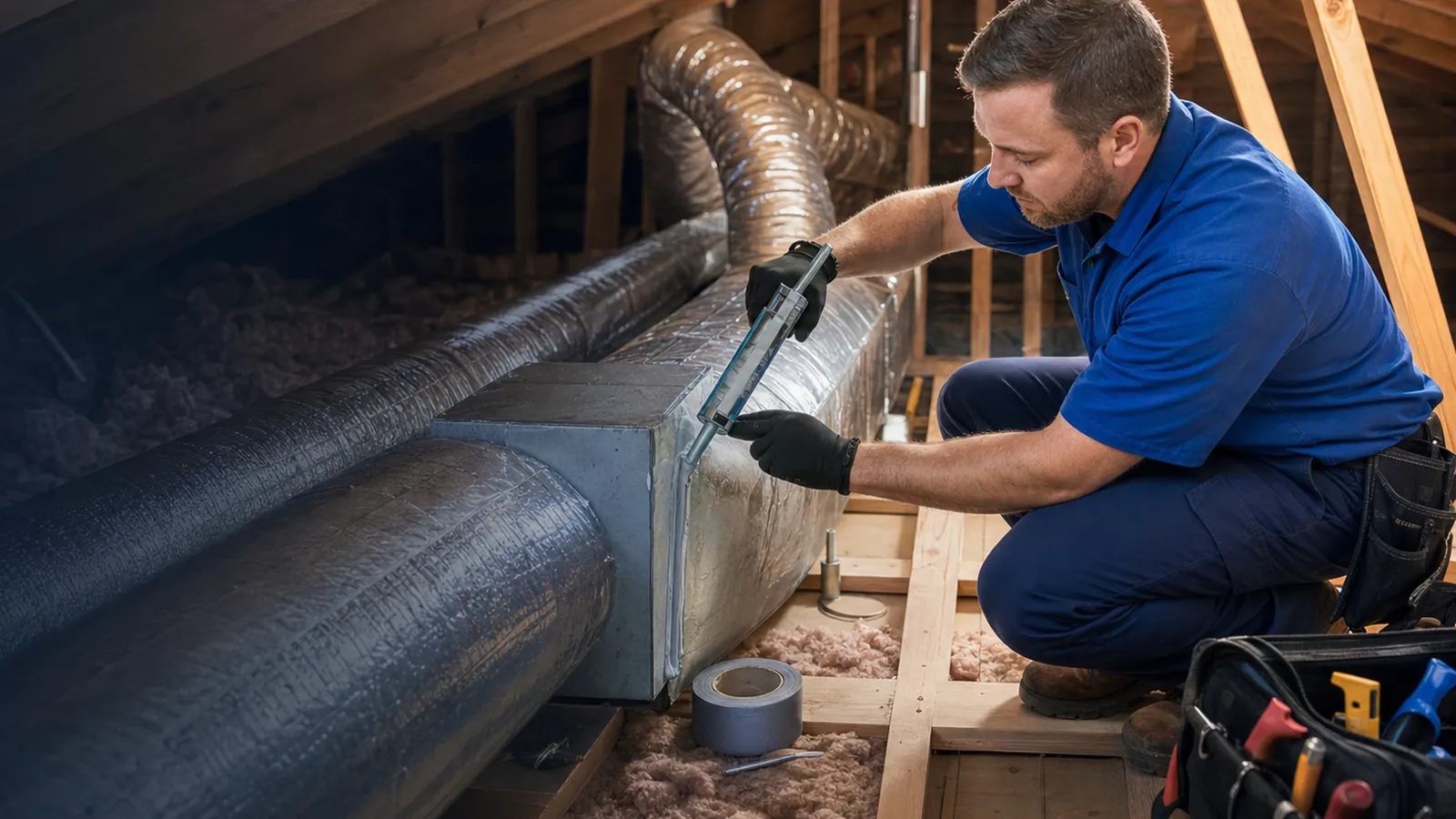
- Leaky or kinked flex duct: a crushed or disconnected flex run delivers much less air. ENERGY STAR's duct sealing guidance lists kinked flexible ducts and rooms that are hard to cool as signs of poorly performing ducts.
- Closed or misset dampers: balancing dampers near the air handler may be set to favor the downstairs.
- Undersized or missing return air: with no upstairs return path, a closed bedroom door traps air in the room and chokes the supply.
- One system for two floors: air takes the easiest path, so rooms nearest the air handler tend to get the most.
- A thermostat that sits downstairs: it reads the cooler floor and shuts the system off while the upper floor is still warm.
A Shreveport Scenario You Might Recognize
Picture a family whose downstairs holds a steady temperature on a July afternoon. Upstairs, the bedrooms feel warm and stuffy by evening, and the bonus room over the garage is the worst. The downstairs registers blow cold air, and the thermostat shows it has reached its setting. That combination leaves the rooms upstairs too hot by bedtime.
This pattern points away from a failed air conditioner and toward air distribution. If the whole house were warm, the equipment would be the first suspect. When only the upper floor lags, the likely causes are weak airflow in upstairs runs, heat gain in attic ductwork, a missing return or a thermostat reading only the downstairs. A technician would confirm which one applies by measuring, not guessing.
What You Can Check Safely
When you find the upstairs too hot, a few simple checks can narrow down the cause. None of them require going into the attic.
- Compare floors at the same time: use one thermometer, read each floor late in the afternoon and log the numbers for several days.
- Open every register: confirm that upstairs supply registers are fully open and not blocked by beds, rugs or curtains.
- Clear the returns: keep return grilles uncovered and bedroom doors open while you compare.
- Check the filter: a clogged filter slows airflow, and the weakest runs feel it first. ENERGY STAR's heating and cooling tips recommend checking it every month during heavy use.
- Feel the airflow room by room: hold a hand or a tissue at each register and note the weak spots.
- Look at the fan setting: AUTO runs the blower only while cooling. ON mixes air between floors, but in humid weather it can return some moisture to the house, so treat it as a test.
Repair Paths a Technician May Discuss
If the checks point to air distribution, the right fix depends on what testing finds in your house.
- Duct sealing and repair: ENERGY STAR reports that a typical house loses about 20 to 30 percent of the air moving through its ducts to leaks, holes and poor connections. Sealing seams with mastic or metal tape, reconnecting loose runs and straightening crushed flex are core ductwork repair tasks.
- Balancing dampers: adjusting or adding dampers can send more air upstairs during the cooling season.
- Adding return air: an upstairs return, or transfer grilles above bedroom doors, gives trapped air a path back to the system.
- Zoning: motorized dampers and a thermostat on each floor let the system cool the upstairs on its own call, if the equipment and duct sizes suit it.
- A ductless mini-split: for a bonus room or addition, a ductless mini-split adds an indoor unit with its own control. ENERGY STAR explains how ductless heat pumps heat and cool a space without ductwork.
Attic insulation and ventilation are worth evaluating too. ENERGY STAR's seal and insulate guidance names attic air sealing and insulation as common places to start. A thermostat upgrade or relocation helps the system read upstairs conditions but adds no airflow. If the downstairs struggles too, AC repair may need to come first.
Safety Notes
A few precautions keep these checks safe.
- Stay out of a summer attic: attic heat can cause heat illness quickly, and a step off a joist can go through the ceiling.
- Cut power before opening equipment: switch off the air handler at its service switch or breaker before removing any access panel.
- Leave wiring and refrigerant lines alone: these need trained hands and proper tools.
- Gas smell near a furnace: leave the home right away and call the gas utility's emergency line or 911 from outside.
- Carbon monoxide alarms: keep working CO alarms on each level if the home has gas appliances, and treat any alarm as an emergency.
- Burning smell or tripped breakers: turn the system off and have it inspected before running it again.
When to Call a Professional
Call for help when the simple checks do not explain the gap, or when it still feels upstairs too hot every afternoon. Other signs include registers with weak airflow, a bonus room that stays warm into the night, water near the indoor unit or ice on the refrigerant lines.
A technician can measure airflow at each register, check static pressure in the ducts, inspect attic duct runs and look at how the return air is sized. That testing separates a duct problem from an equipment problem, which matters because the fixes are very different. For homes in Shreveport or Bossier City, Mark Johnson & Sons Plumbing can look at the whole system rather than a single symptom.
Frequently Asked Questions
Why is my upstairs too hot even when the AC runs all day?
If the upper floor lags during long run times, cooled air is not reaching those rooms or is picking up heat on the way. Weak upstairs airflow, attic duct leaks and missing return air are common causes. If the downstairs is also warm, the equipment itself deserves a closer look.
Should I close downstairs vents to push air upstairs?
Closing a few downstairs registers can shift some air, but closing many raises pressure in the ducts. That can reduce total airflow and strain the blower. Balancing dampers in the duct system are the better tool, and a technician can set them for the season.
Is a ductless mini-split a good fix for a bonus room?
It can be, especially when the bonus room is far from the main system. A mini-split has its own outdoor unit and indoor head, so the room gets cooling on its own control. Whether it fits depends on the room, the wall space and the electrical service.
Your Next Step: Note the Pattern, Then Reach Out
Before you call, write down a few details. Note the temperature on each floor at the same time of day, which rooms feel worst and whether doors were open or closed. Add the date of your last filter change and any registers with weak airflow. Those notes help a technician focus on the right part of the system.
If it still gets upstairs too hot in your Shreveport home, contact Mark Johnson & Sons Plumbing to describe what you are seeing, or book a time online for a visit. Share your notes, and ask the technician to walk you through what the airflow and duct checks show.