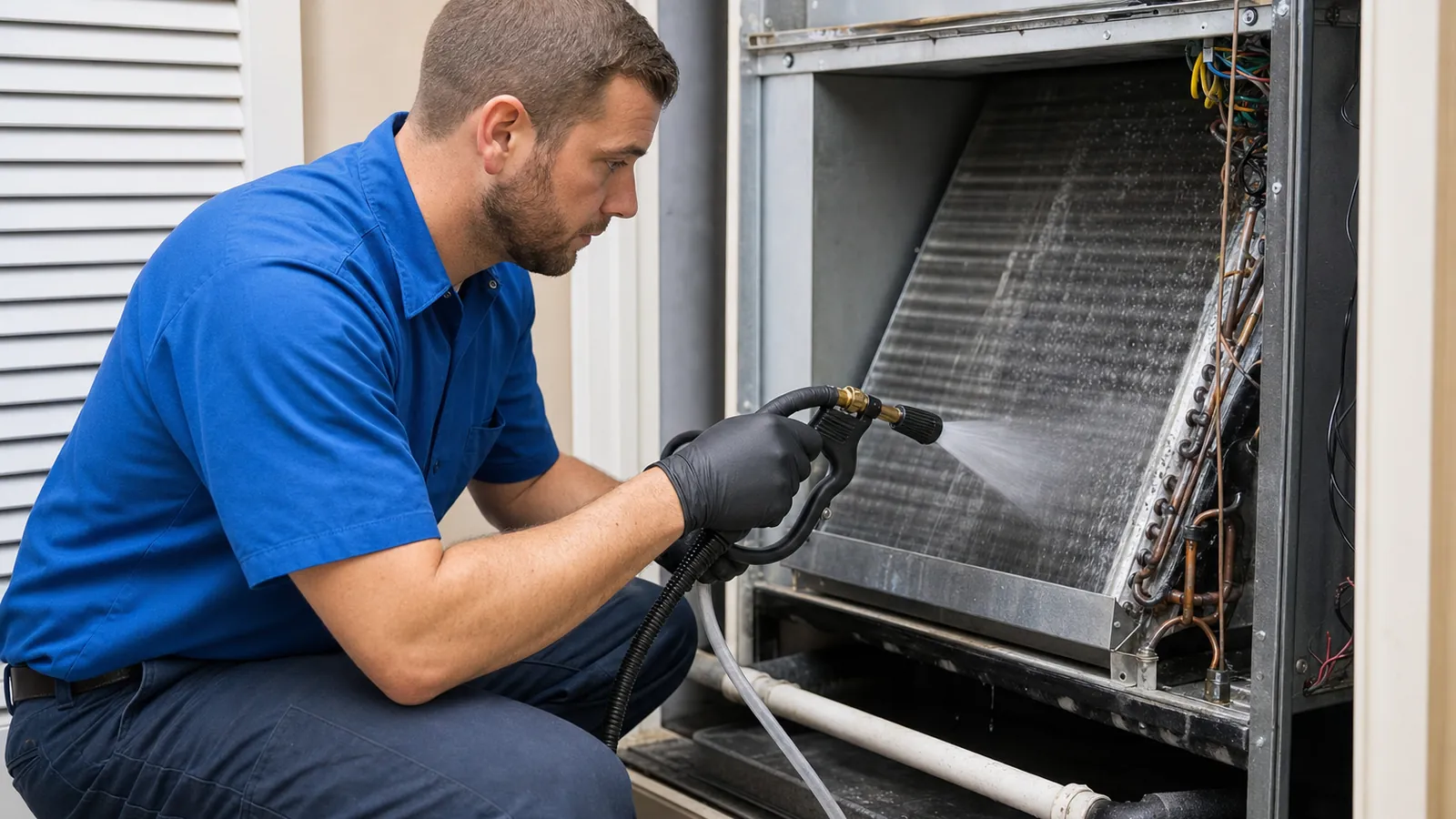
Finding your AC leaking water inside the house in July is unsettling, especially when it shows up as a brown ring on the ceiling. In most cases, that water is condensation the system could not drain away. Mark Johnson & Sons Plumbing explains where it comes from, why the drain backs up in a humid West Monroe summer, and what you can safely check.
How Your AC Pulls Water Out of Humid Air
Your air conditioner cools the air and removes moisture at the same time. Both jobs happen at the evaporator coil, the cold coil inside the indoor unit or air handler.
As warm, humid air blows across that coil, moisture condenses on the cold metal fins. The EPA's mold course section on moisture and condensation explains how humid air turns to water on a cold surface.
The water drips into a primary drain pan under the coil. From there it flows through the primary condensate line, usually a PVC pipe, to a drain or to the outside. Many lines include a trap near the unit so the blower does not pull air backward through the pipe.
The outdoor condenser coil releases heat, not water, so an indoor puddle points to the indoor side of the system. In a North Louisiana summer, that drain runs almost nonstop from May into October.
Why an AC Starts Leaking Water Inside
Once you know the water's path, the reasons for an AC leaking water indoors fall into a short list.
- Clogged primary condensate line: warm, dark, wet pipes are a good home for algae and slimy sludge. In humid summers, that growth can clog the line and back water into the pan.
- Tripped float switch: many systems have a float or safety switch in the pan or drain line. When water rises, it shuts off cooling so the pan does not overflow.
- Cracked or rusted pan: older metal pans can rust through, and plastic pans can crack with age. Water then drips past the pan even when the line is clear.
- Disconnected drain line: a PVC fitting can slip loose at the air handler and empty water into the cabinet, the closet or the attic.
- Failed condensate pump: units that cannot drain downhill use a small pump. A dead motor or stuck float lets its reservoir overflow.
- Frozen evaporator coil: a dirty filter, a blocked return or low refrigerant can let ice build on the coil. When the ice melts, it can release more water than the pan handles.
Why Attic Air Handlers Cause Ceiling Stains
Many homes in this area have the air handler in a hot attic, right above bedrooms and hallways. When the drain backs up, gravity sends the overflow straight into the ceiling drywall.
To guard against that, attic units usually sit in a secondary drain pan, also called an emergency pan. Some secondary pans have their own drain line, often routed above a window or eave where you will notice the drip. Others use a float switch that shuts the system down when water collects.
A ceiling stain means water got past both layers of protection, or that something else is leaking water in the attic. Wet drywall and insulation can grow mold. The EPA's brief guide to mold, moisture and your home advises drying wet materials within 24 to 48 hours to help prevent it.
A West Monroe Scenario You Might Recognize
Picture a family whose house feels warm and sticky on a July afternoon, even though the thermostat is set to cool. The indoor fan seems to run, but the outdoor unit is quiet. Then someone notices a damp spot on the hallway ceiling near the attic access.
That pattern points to a drain problem rather than a refrigerant failure. The primary condensate line has likely clogged with sludge, and the pan filled up. A float switch then shut off the outdoor unit to stop an overflow. The damp spot suggests some water reached the ceiling before the switch tripped, or that the secondary pan has a leak.
A case like this usually starts with clearing the line, checking both pans and testing the switch. The drywall also needs to dry fully before anyone paints over the stain.
What You Can Check Safely
A few simple checks can narrow down why your AC is leaking water.
- Turn the system off: set the thermostat to off so the coil stops making more condensation.
- Find the line outside: look for a PVC pipe near the outdoor unit or foundation. On a humid day it should drip while the system runs. A dry pipe with a wet indoor pan points to a clog.
- Check the secondary pan: only if you can reach it safely, use a flashlight to look under an attic unit. Standing water means the primary drain is not keeping up.
- Look for a tripped switch: a float switch with water around it has likely opened. The system may stay off until the water drains.
- Try a wet/dry vac, with care: some homeowners clear a soft clog by holding a wet/dry vac hose over the outdoor end of the line for a minute or two. It will not clear every clog.
Check your equipment manual before pouring anything into the drain, since manufacturers differ on what belongs in the line.
Safety Notes
- Water and electricity: air handlers, pumps and ceiling lights carry power. Do not touch outlets, wiring or fixtures near water. Turn off the breaker only if you can reach the panel from a dry spot.
- Sagging ceilings: a bulging, wet ceiling can give way, so keep people and pets out from under it.
- Attic footing: step only on the joists or a solid walkway. The drywall between the joists will not hold your weight.
- Attic heat: attics get dangerously hot in July. Go early, keep the visit short and bring water. The National Weather Service lists warning signs of heat illness on its heat safety page.
- Burning smells or sparks: leave the house and call 911 from outside.
- Mold concerns: people with asthma or allergies may react to damp, moldy materials, so leave large or recurring growth to a professional.
When to Call a Professional
Call for service when water keeps returning after the line is cleared, when the float switch trips again, or when you cannot safely reach the unit. An iced coil also needs a visit, since it points to an airflow or refrigerant problem. Refrigerant handling is a job for a trained HVAC technician.
A cracked pan, a failing condensate pump or a separated fitting also needs hands-on repair. Our AC repair service handles these cooling problems.
If the stain is not under the air handler, the source may not be the AC at all. A supply line, an attic water heater or a roof leak can mark a ceiling the same way. Our water leak detection service can help find where the water starts.
Frequently Asked Questions
Why did my AC stop cooling when it started leaking water?
Many systems have a float switch that shuts off cooling when water rises in the pan or drain line. Once the clog is cleared and the water drains, the system can usually restart.
Can I keep running the AC while it is leaking water?
It is safer to turn it off. Running it makes more condensation and adds to the overflow. If the house gets too warm, use fans and call for service rather than bypassing the float switch.
How often should the condensate line be checked?
ENERGY STAR's heating and cooling maintenance checklist lists inspecting the condensate drain as part of routine care, and notes that a plugged drain can cause water damage. A yearly AC maintenance visit before summer is a good time to clear the line, check both pans and test the switch.
Your Next Step for an AC Leaking Water Inside
If you have found your AC leaking water, turn the system off and write down what you see. Note where the water is, whether the outdoor line drips, whether the secondary pan holds water, and whether the system shut itself off. Photos of the pan, the stain and the drain line help too.
Then reach Mark Johnson & Sons Plumbing through our contact page, or book a time online. Share your notes so the technician knows whether to start at the drain line, the pan, the pump or the coil. In a humid West Monroe July, clearing the drain early helps keep one clogged pipe from turning into a ceiling repair.