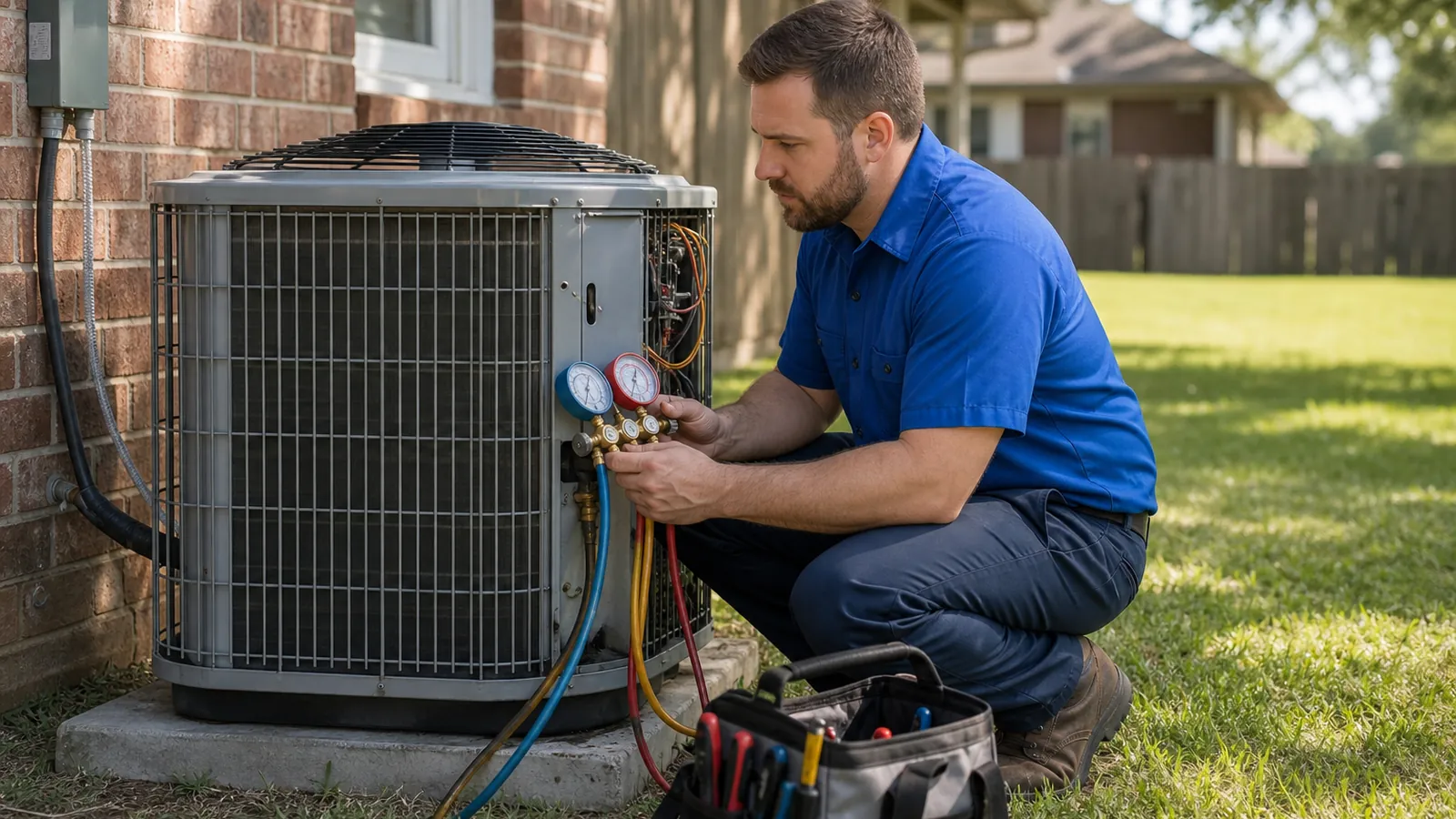
Early June in Ruston means the air conditioner works through long, humid afternoons, so it stands out when the system starts, runs for three or four minutes, shuts off, then starts again a few minutes later. That pattern is AC short cycling, and in a Ruston summer it wears on the equipment and leaves the house clammy. Here is how it happens, what you can safely check, and when to bring in a technician.
What Short Cycling Looks Like and Why It Matters
On a hot afternoon, a healthy cooling cycle runs long enough to reach the set point and wring moisture out of the air. Short cycling cuts that cycle off early. You may hear the outdoor unit click on, hum briefly, then go quiet.
Two problems follow. First, the compressor draws a surge of current at every start, so the capacitor and contactor wear faster when starts pile up.
Second, humidity control suffers. The evaporator coil needs several minutes of steady running before it gets cold enough to condense water and drain it away. The EPA's brief guide to mold and moisture recommends keeping indoor humidity below 60 percent, which is hard to hold when runs stay short.
How Short Cycling Actually Happens
In a central system, the thermostat sends a low-voltage call for cooling. That signal pulls in the contactor at the outdoor unit, which powers the compressor and condenser fan, while the indoor blower moves house air across the evaporator coil.
The cycle ends when that call ends, which happens in one of two ways. The thermostat can decide the room is satisfied, correctly or not. Or a safety device can open the circuit to protect the equipment: a low-pressure switch, a high-pressure switch, the compressor's internal thermal overload, or the float switch at the condensate drain.
Most of these devices reset on their own once conditions settle, so the system restarts, hits the same limit and shuts down again. That loop is what you hear as short cycling, so the real job is finding which device ends each run.
Causes Inside the House
Several causes of short cycling start indoors, at the thermostat or in the airflow path.
- Oversized equipment: a unit with too much capacity satisfies the thermostat before it removes much moisture, leaving a cool but clammy house. Correct sizing starts with a room-by-room load calculation, part of any careful AC installation.
- Thermostat location: a thermostat near a supply register gets hit with cold air and ends the call early. One in direct sun reads its own spot rather than the room.
- Thermostat settings: older mechanical thermostats use an anticipator, and many digital models have a cycle-rate setting. Set wrong, either can end calls too soon. Our thermostat service page covers repair and replacement.
- Frozen evaporator coil: a clogged filter or weak blower starves the coil of airflow until ice forms, and a safety control can stop the compressor. Freezing is one possible cause, not the same problem as short cycling.
Causes at the Outdoor Unit and Drain
Other causes sit outdoors or at the drain line.
- Low refrigerant from a leak: an air conditioner does not use up refrigerant, so a low charge means a leak. Suction pressure drops, and a low-pressure switch, where fitted, stops the compressor. Our refrigerant service page explains how leaks are repaired.
- Dirty condenser coil or failing condenser fan: the outdoor coil sheds the heat pulled from the house. Dirt or a slow fan traps that heat, pressure climbs, and a high-pressure switch or the thermal overload trips.
- Clogged condensate line: algae can block the drain line, so water backs up into the pan. The float switch cuts the cooling call, then can allow a restart once the level drops.
- Weak capacitor or failing contactor: a weak capacitor makes the compressor or fan motor struggle to start and run hot. A pitted contactor can chatter or drop out mid-cycle.
A Ruston Scenario You Might Recognize
Picture a family in Ruston whose air conditioner started acting up in early June. The outdoor unit runs for about four minutes, clicks off, and comes back roughly five minutes later. The filter was changed last month. Indoors, the air feels cool but sticky, and the thermostat reaches its set point easily.
That combination narrows things down. A cool, clammy house with quick, regular cycles points first at oversized equipment, or at a thermostat ending calls early. A recently replaced system, or a thermostat in the path of a supply register, fits that picture.
If the house were warm instead, the cause would lean toward a safety control reacting to low charge or a dirty condenser coil. The pattern itself is the clue.
What You Can Check Safely
A few observations separate a simple fix from a service call, as long as you look without reaching into anything.
- Filter: hold it up to a light, and replace it if light does not pass through. The ENERGY STAR maintenance checklist recommends inspecting air filters once a month.
- Thermostat location and mode: confirm it is set to cool with the fan on auto. Note whether a supply register or afternoon sun hits it.
- Outdoor unit: look for grass or shrubs crowding the coil. From a step back, confirm the top fan spins steadily while it runs.
- Ice: check the larger insulated copper line at the outdoor unit. Frost or ice means turning the cooling off until it thaws completely.
- Drain line and float switch: look at the condensate pan under the indoor unit. Standing water or a raised float switch points to a clogged line.
Safety Notes
- Keep hands, sticks and tools out of the outdoor unit, since the fan can start without warning.
- Do not open the electrical panel on the condenser or air handler. Capacitors can hold a charge even with the power off.
- Do not chip or scrape ice off a coil; let it melt with the cooling turned off.
- Refrigerant work is not a do-it-yourself job. Adding refrigerant without fixing the leak only delays the next failure.
- If you smell burning or see smoke at the air handler or outdoor unit, get everyone outside, then call 911 from outside.
- If the house cannot stay cool during hot weather, treat it as urgent. The National Weather Service keeps heat safety guidance for these situations.
When to Call a Professional
Call when short cycling continues after a clean filter and a clear outdoor unit, or when you see ice, standing water in the pan or a fan that does not spin. Those signs point to a sealed or electrical part of the system.
Refrigerant is the clearest line. EPA rules under Section 608 of the Clean Air Act require technicians who service equipment that could release refrigerants to be certified. A proper visit measures pressures, finds and repairs the leak, then charges the system to the manufacturer's specification.
Capacitors, contactors and pressure switches also call for a technician with the right meters. The AC repair team at Mark Johnson & Sons Plumbing can trace which control ends each cycle. If the system is oversized, the lasting fix is a properly sized replacement.
Frequently Asked Questions
How long should an AC cycle last?
There is no single correct number, since run time depends on the weather, the house and the equipment. On a hot, humid afternoon, a properly sized system tends to run long, steady cycles, so repeated runs of only a few minutes deserve a closer look.
Is short cycling harmful to the air conditioner?
It adds wear, because each start stresses the compressor, capacitor and contactor, and frequent starts add up over a summer. It also leaves more moisture in the air, so the house feels warmer than the thermostat reads.
Can a new thermostat fix short cycling?
Sometimes. If the old thermostat is failing, badly placed or set to the wrong cycle rate, a new one in a better spot can solve it. The ENERGY STAR page on smart thermostats explains useful features. A thermostat will not fix low refrigerant, a dirty coil or oversized equipment.
Your Next Step: Note the Pattern, Then Reach Out
Before you reach out, jot down a few details. Time how long the system runs and how long it rests between starts. Note whether the house feels warm, or cool but clammy, and whether the problem happens all day or mostly in the afternoon. Add what you found at the filter, the outdoor unit and the drain pan, plus any new noises from the outdoor unit.
Those notes give a technician a head start on finding the cause of short cycling. Send them through our contact page, or choose a time with online booking. Mark Johnson & Sons Plumbing serves Ruston and the surrounding North Louisiana towns.