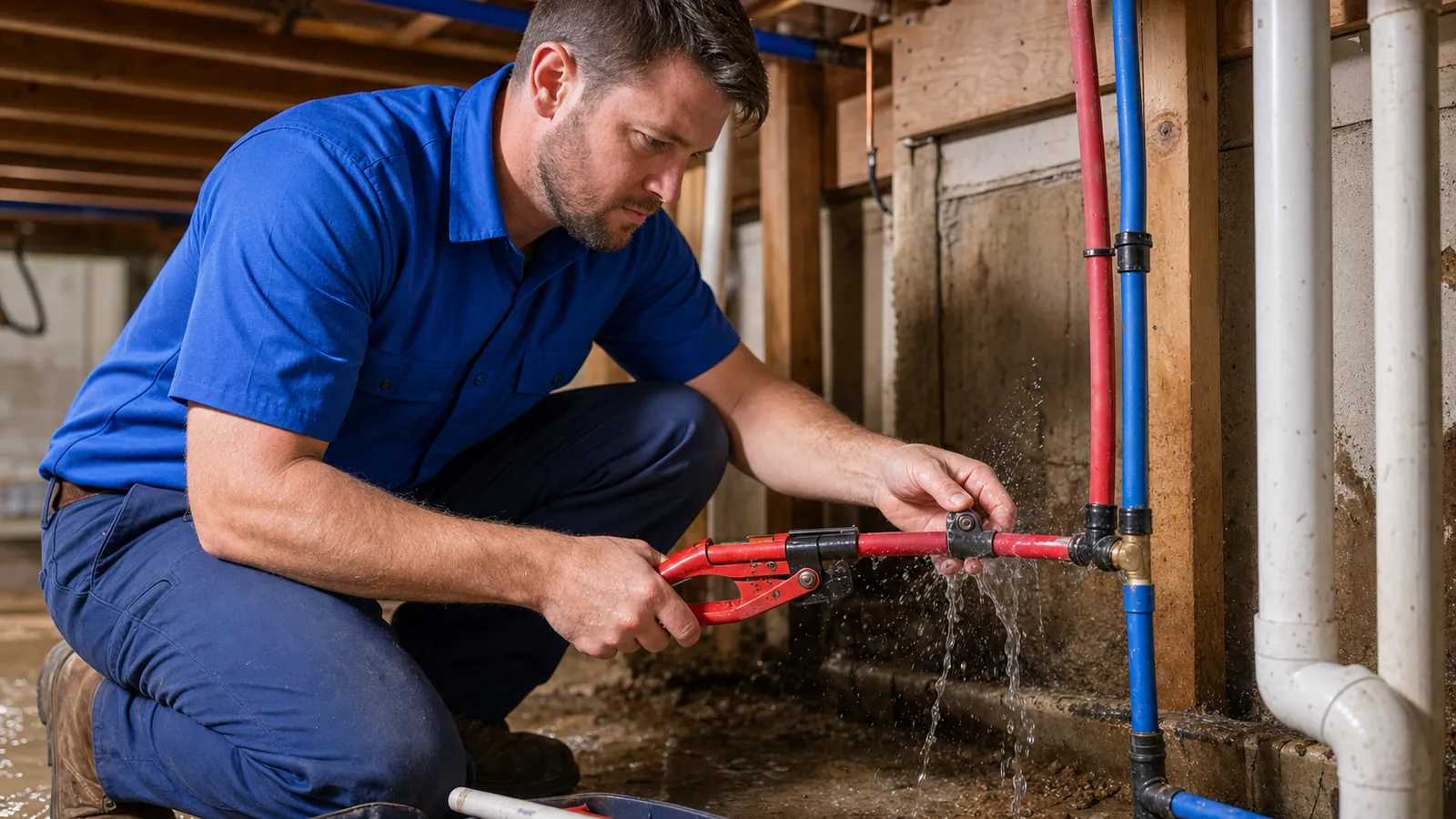
A hard freeze does not come every winter in North Louisiana, but when one arrives, plenty of Ruston homes find out which pipes were never built for it. Freeze damage is easy to miss, because a split pipe can sit quietly while full of ice and only leak as the weather warms. Here is how it happens, where to look, and what you can check safely once the cold snap breaks.
How Freeze Damage Happens Inside a Pipe
Water expands as it freezes, and the American Red Cross notes that this expansion puts tremendous pressure on metal and plastic pipes alike.
When a short section of pipe freezes solid, it forms a plug, and the water between that plug and a closed faucet or valve downstream has nowhere to go. As more ice forms, it squeezes that trapped water and the pressure keeps climbing.
The pipe gives way at its weakest point, often a joint, a fitting or a thin spot in the wall. That point can be several feet from the ice. The crack may sit behind a vanity even though the freeze happened near an exterior wall.
Rigid plastic also becomes brittle in deep cold, and while PEX tubing flexes more than copper or CPVC, its fittings and nearby valves can still crack.
Where Ruston Homes Are Most Exposed
Because hard freezes are occasional here, many homes have supply lines in places that stay cold when the temperature drops. Check these spots first:
- Attic runs: lines routed through the attic to a bathroom or water heater.
- Exterior walls: kitchen and bathroom lines inside outside walls with little insulation.
- Crawlspace lines: pipes under a raised floor, especially near foundation vents.
- Hose bibs: outdoor spigots and the short pipe feeding them through the wall.
- Water heater connections: inlet, outlet and relief lines on a heater in a garage or other unheated space.
- The meter and service line: the meter box and the line running from it to the house.
The Red Cross names the same kinds of locations, including the spot where the water service enters through the foundation. Freeze damage in any of them can stay hidden for days.
Find Your Shutoff Before You Start Checking
The most useful thing to know after a hard freeze is how to stop the water, because a split pipe spraying inside a wall can soak framing and insulation quickly.
Your main shutoff is often where the line enters the house, in a garage or utility area, or near the water heater. Some homes rely on a valve near the meter, which may need a meter key to turn. Test whichever valve you find so you know it closes fully.
Many homes also have a stop-and-waste valve on the branch that feeds hose bibs or a sprinkler system. It shuts off that branch and lets you drain the water left inside it.
If a valve is stuck or seized, do not force it with a long wrench, since an old valve stem can snap.
What You Can Check Safely After the Thaw
Once temperatures climb back above freezing, walk the house with a plan for spotting freeze damage early.
- Watch the water meter: with every faucet and water-using appliance off, read the meter, then read it again two hours later. The EPA's WaterSense leak guidance says any change probably means a leak.
- Test every faucet: run each tap, hot and cold, and note any that trickle, sputter or lose pressure.
- Open each hose bib: look and listen at the wall behind it, since a spigot that cracked inside the wall may leak only while it runs.
- Look and listen: check under sinks, around the water heater and at crawlspace openings for hissing or dripping.
- Watch ceilings and walls: look for new stains, bubbling paint or sagging drywall over the next few days.
If the meter moves but you cannot find the source, water leak detection can trace a leak hidden in a wall, slab or yard.
Thawing a Line That Is Still Frozen
If a faucet still only trickles, part of that line may still be frozen. The Red Cross advises keeping the faucet open, because running water helps melt the ice. An open faucet also relieves pressure in the line.
Gentle heat is the safe approach. The Red Cross lists an electric heating pad, a hair dryer, towels soaked in hot water, or a portable space heater kept away from anything that can burn. Apply heat until full water pressure returns, then test the other faucets, since other pipes may have frozen too.
University of Missouri Extension experts advise thawing slowly, since soldered joints are the weakest point. Never use a torch, a kerosene or propane heater, or any open flame. If you cannot find or reach the frozen spot, our frozen water line service covers safe thawing and repair.
A Ruston Scenario You Might Recognize
Picture a family whose kitchen faucet slows to a trickle on the coldest morning of a January cold snap. The bathroom sinks work fine, so they wait it out, and by afternoon the kitchen faucet runs normally again.
Two days later, the bottom of the sink cabinet feels damp. The meter's leak indicator creeps along with every fixture turned off. The kitchen sits on an exterior wall.
That pattern points to a supply line inside that outside wall. It likely froze, trapped water behind the ice and split under pressure, then stayed sealed until the ice melted. This is typical freeze damage: quiet during the cold, leaking after it. The next step is to shut off the main, keep the area dry and have the wall checked before the water spreads.
Safety Notes
- Shut the water off first: if water is spraying, running or dripping from a ceiling, close the main shutoff before anything else.
- Stay out from under wet ceilings: drywall sagging with water can come down without warning.
- Keep water away from electricity: stay out of wet areas near outlets, light fixtures or the electrical panel. If you see sparks or smoke, get everyone outside, then call 911 from outside.
- Gas smell: if you smell gas near a water heater or anywhere else, get everyone outside, then call 911 or your gas utility's emergency line from outside.
- No open flames: do not thaw pipes with a torch, lighter or fuel-burning heater.
- Space heaters need room: keep them away from anything that can burn, and do not leave one running unattended.
When to Call a Professional
Call a plumber when the meter shows a leak you cannot find, when water appears in a ceiling or wall, or when a line stays frozen after gentle heat. Pipes you cannot reach, such as attic runs or lines inside walls, also belong with a professional.
Water surfacing in the yard between the meter and the house is another reason to call. So is a hose bib leaking inside the wall or a water heater line dripping after the cold.
If a line has already split, burst pipe repair covers finding the break, cutting out the damaged section and restoring water. Mark Johnson & Sons Plumbing can also check nearby lines that went through the same freeze, since freeze damage in one spot can mean other pipes froze too.
Frequently Asked Questions
Why did the leak show up after the freeze ended?
Ice can seal a crack while the pipe stays frozen, and water escapes once it melts. University of Missouri Extension notes that pipes frozen for several hours may have cracked and can leak once thawed.
How can I tell if a pipe froze without bursting?
Run every fixture, then repeat the meter test with everything off. If pressure is normal and the meter holds steady, the line likely came through without freeze damage.
Can the line from the meter to the house freeze?
Yes. The service line and meter can freeze where they sit close to the surface. Watch for low pressure at every fixture or a soggy patch of yard after the thaw.
Your Next Step After a Ruston Freeze
Checking for freeze damage now is easier than finding it later behind wet drywall. Before you reach out, write down which faucets trickled during the cold, whether the meter moved during your test, and where any stains, damp spots or sounds turned up.
If water is actively leaking, close the main shutoff first. Those details point a plumber toward the right line on the first visit. Contact Mark Johnson & Sons Plumbing through our contact page, or book a time online. Mark Johnson & Sons Plumbing can check your lines, find any hidden freeze damage and explain what needs repair.