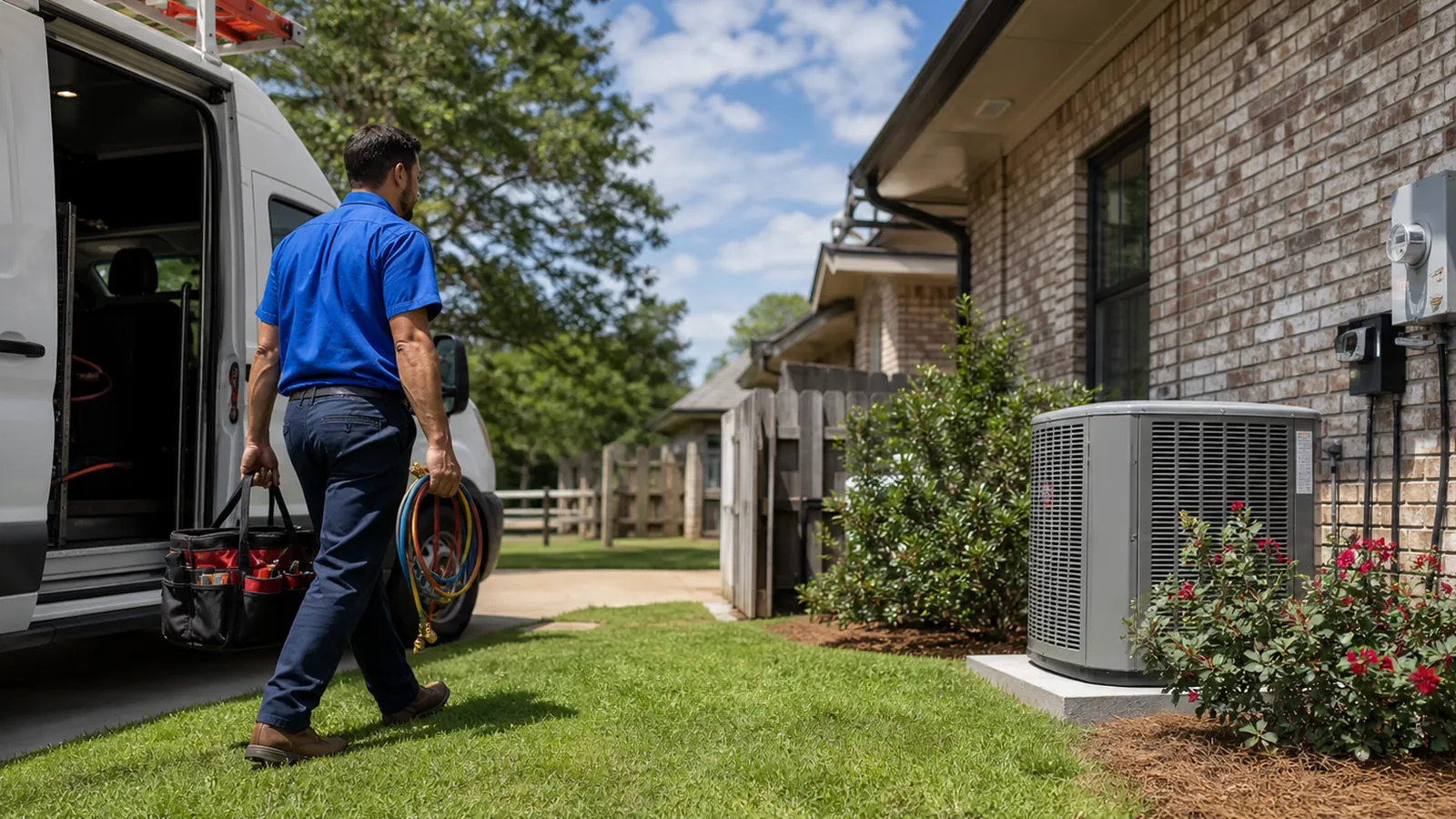
When your AC is not working after a power outage, the cause is often simple: a thermostat that lost its settings, a tripped breaker, or a system still waiting out its restart delay. Sometimes the outage did real damage, because power can return with surges or dips that strain electrical parts. Here is what to check first in a Shreveport home, and which signs point to a repair.
How a Power Outage Can Stop Your AC
Shreveport summers are hot and humid, so the AC runs for much of the day. The National Weather Service notes that severe thunderstorms can bring winds strong enough to break large branches and knock over trees. When a storm cuts the power, the AC is often working its hardest.
Most central systems use two circuits. One breaker feeds the outdoor unit, which holds the compressor and condenser fan. Another feeds the indoor air handler or furnace, which holds the blower and a small transformer that sends low-voltage power to the thermostat and controls.
When power returns, it is not clean every time. Ready.gov notes that power may return with momentary surges or spikes that can cause damage. Brownouts, periods of low voltage, make motors work harder and run hotter. A power outage can also simply reset the thermostat, which looks like a failure but is not one.
Give the System a Few Minutes to Restart
Many AC systems have a built-in delay of a few minutes before the compressor restarts after power returns. The delay lets refrigerant pressures even out, so the compressor does not start against a heavy load. The exact length varies by equipment, and some thermostats add a delay of their own.
During that wait, the indoor blower may run while the outdoor unit stays quiet. Some thermostats show a flashing icon or a waiting message. That is normal behavior, not a sign of damage.
If the power flickers several times, the delay can start over with each flicker. Give the system several minutes of steady power before you decide something is wrong. If the outdoor unit still has not started, move on to the checks below.
What You Can Check Safely After a Power Outage
None of these checks require opening a panel on the equipment.
- Thermostat settings: a power outage can reset some thermostats to factory defaults. Confirm the mode is Cool, the fan is on Auto, and the set point is below the room temperature.
- Blank screen: replace the batteries if it uses them. A thermostat powered by the system can also go blank when a fuse or safety switch cuts its power.
- Wi-Fi thermostats: smart models can lose their connection when the router restarts, and some lose their schedule. Reconnect it in the app.
- Breakers: find the breakers for the air handler and outdoor unit. A tripped breaker often rests in the middle. Push it fully off, then back on, one time only.
- Outdoor disconnect: the metal box on the wall near the outdoor unit has a switch or pull-out block. Make sure it is on, but only if the ground and box are dry.
- Float switch: it shuts the system off when water backs up in a clogged condensate line or drain pan. Look for standing water in the pan under the indoor unit.
If a breaker trips again after one reset, leave it off and schedule an AC repair visit. If the thermostat itself is old or unreliable, our thermostat installation page covers replacement.
Surge and Brownout Damage Inside the Equipment
If the thermostat, breakers and disconnect check out, the outage may have damaged a part.
- Run capacitor: it helps start and run the compressor and outdoor fan motor. A weak capacitor can leave the outdoor unit humming while the fan sits still.
- Contactor: this switch in the outdoor unit closes when the thermostat calls for cooling. A surge can pit or weld its contacts, so the unit will not start or will not stop.
- Control board: it runs the blower and relays thermostat signals. Damage here can leave the whole system unresponsive.
- Transformer and fuse: a surge can blow the low-voltage fuse or burn out the transformer, which shuts down the thermostat.
These parts carry high voltage and stored charge, so testing them is a job for a technician. The ENERGY STAR maintenance checklist notes that faulty electrical connections can cause unsafe operation and shorten the life of major components.
A Shreveport Scenario You Might Recognize
Picture a family whose power drops during an evening thunderstorm and comes back about an hour later. The thermostat shows Cool and the right set point, and the indoor blower moves air through the vents. The air is warm, though. Outside, the condenser fan is not turning, and the unit makes a steady hum.
That pattern suggests the thermostat and indoor controls are working, and the outdoor unit has power but cannot start its motors. A capacitor weakened by a surge fits that pattern. A struggling compressor is another possibility.
In a case like this, the system should be switched off at the thermostat, because a unit that hums without starting can overheat its motors. The next step is a technician's diagnosis, not repeated restarts.
What to Do the Next Time the Power Goes Out
A few habits reduce strain on your equipment. Ready.gov advises turning off or disconnecting appliances during a power outage to avoid damage from surges. For your AC, that means switching the thermostat to Off as soon as the power fails.
Wait until the power has been steady for a few minutes before you switch back to Cool. Power can flicker several times while service is restored, and each restart attempt stresses the compressor.
Surge protection is also worth a conversation. Ask an electrician or an HVAC technician whether a whole-home surge protective device, a surge protector at the outdoor unit, or both make sense for your home. The right choice depends on your panel and equipment.
Safety Notes
Keep these points in mind after a storm.
- Flooding around the outdoor unit: if water has reached the unit, do not run the system and do not touch the unit. Have it inspected before it runs again.
- Burning smell, smoke or sparks: get everyone outside, then call 911 from outside.
- Breakers: reset a tripped breaker one time only. Do not hold it on or keep resetting it.
- Equipment panels: leave the access panels on the outdoor unit and air handler closed. Capacitors can hold a charge even with the power off.
- Portable generators: Ready.gov says to use generators only outdoors and at least 20 feet from windows, doors and attached garages, so do not run one indoors or in a garage.
When to Call a Professional
Call for service when the outdoor unit hums without starting, when a breaker trips a second time, or when the system blows warm air after the restart delay. Call as well if the thermostat stays blank after new batteries, if the float switch keeps shutting the system off, or if the outdoor unit sat in floodwater.
A Shreveport home without cooling warms up fast in summer. If heat is building indoors, treat it as urgent and review the National Weather Service heat safety guidance. Mark Johnson & Sons Plumbing offers emergency AC repair for situations like these.
Before the visit, note whether the indoor blower runs, whether the outdoor fan spins, and whether the unit hums, clicks or stays silent.
Frequently Asked Questions
Why won't my AC turn on after a power outage?
The usual reasons are a thermostat that reset to Off or Heat, a tripped breaker, or the built-in restart delay. If the thermostat, breakers and outdoor disconnect all look right and the unit still will not start, a part may be damaged.
Can a power surge damage an air conditioner?
Yes. Surges and brownouts can damage capacitors, contactors, control boards and transformers. The damage is not obvious in every case, and a weakened part can fail days later.
Should I reset the AC breaker more than once?
No. If it trips again after one reset, something is drawing too much current, and repeated resets can make the damage worse. Leave it off and call for service.
Your Next Step After a Power Outage
If your AC is still not cooling after these checks, write down a few details. Note what the thermostat shows, which breakers tripped, and what the outdoor unit does when the system calls for cooling. Include how long the power was out and whether it flickered on and off before it came back.
Then reach Mark Johnson & Sons Plumbing through our contact page, or book a time online. Share your notes so the technician arrives with a clear picture of the symptoms. If the system hums, trips breakers or sat in water, keep it off at the thermostat until it has been checked.